
 Julia Prastini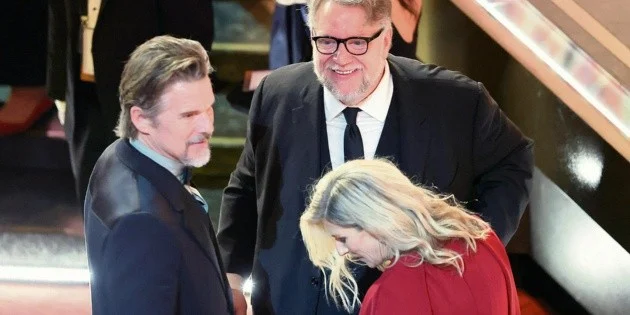
The Dolby Theatre in Hollywood, Los Angeles, was the epicenter of cinematic excellence as the 98th Academy Awards ceremony unfolded, marking a night of significant artistic triumphs, historic milestones, and poignant societal reflections. Mexican filmmaker Guillermo del Toro’s ambitious adaptation of "Frankenstein" emerged as a dominant force in the technical categories, securing three coveted statuettes for Best Costume Design, Best Makeup and Hairstyling, and Best Production Design. These accolades underscored the film’s immersive visual storytelling and the director’s enduring commitment to a distinct, dark, and baroque aesthetic that has become his cinematic signature. Beyond the visual spectacle, the evening celebrated groundbreaking achievements for women in film, recognized powerful performances, and saw the stage transform into a platform for both humor and profound political statements, reaffirming the Oscars’ role as a vital cultural barometer.
Guillermo del Toro’s Visual Triumph: A Visionary’s Signature Aesthetic
Guillermo del Toro’s "Frankenstein" captivated audiences and critics alike with its breathtaking visual grandeur, culminating in a hat-trick of awards that celebrated its meticulous craftsmanship. The film’s recognition for Best Costume Design, Best Makeup and Hairstyling, and Best Production Design was a resounding testament to the collaborative genius behind its creation. These categories are often seen as the backbone of a film’s world-building, and in "Frankenstein," they converged to construct an unforgettable universe. The production design, spearheaded by the visionary duo Tamara Deverell and Shane Vieau, meticulously recreated the gothic allure and tragic atmosphere inherent in Mary Shelley’s timeless narrative. Every set piece, from the eerie laboratories to the sprawling, snow-laden landscapes, was imbued with a monumental aesthetic that felt both historically grounded and hauntingly fantastical.
The intricate costume designs, which breathed life into the period and character psyches, coupled with the transformative work in makeup and hairstyling, particularly for the creature itself, solidified the film’s unique visual identity. This triple win for "Frankenstein" not only reinforced del Toro’s formidable standing within the industry but also highlighted his unparalleled ability to translate complex literary works into visually arresting cinematic experiences. His previous triumphs, including Best Picture and Best Director for "The Shape of Water" (2017) and Best Animated Feature for "Pinocchio" (2022), have cemented his reputation as a master craftsman whose vision consistently pushes the boundaries of storytelling. The critical consensus praised "Frankenstein" for its audacious reinterpretation of a myth, proving that del Toro’s distinctive blend of horror, fantasy, and humanism continues to resonate deeply with both Academy voters and global audiences. Industry analysts noted that the film’s strong showing in these visual categories suggested a broader appreciation for its artistic ambition, even if it did not sweep the major narrative awards.
A Night of Historic Firsts and Powerful Voices
The 98th Academy Awards will be remembered as a pivotal night for representation, particularly for women in the film industry. Autumn Durald Arkapaw made history by becoming the first woman ever to win the Oscar for Best Cinematography for her groundbreaking work on the film "Sinners." Her victory was met with a standing ovation, symbolizing a long-overdue acknowledgment in a discipline historically dominated by men. Upon receiving her statuette, Arkapaw delivered a powerful and emotional speech, acknowledging the systemic barriers that have long existed. She notably invited all women in the room to stand, stating, "I wouldn’t be here if it weren’t for you. In moments like this, I have felt so much love from all the women." Her words resonated deeply, underscoring the collective effort and mutual support vital for fostering inclusivity in Hollywood. This win serves as a beacon of hope, inspiring a new generation of female cinematographers and signaling a significant shift in the Academy’s recognition of talent across gender lines. For decades, highly skilled female cinematographers had been overlooked, and Arkapaw’s win was hailed by organizations like Women in Film as a "watershed moment," validating years of advocacy for greater representation in technical crafts.
Complementing this historic achievement was the triumph of Jessie Buckley, who secured the Best Actress award for her compelling portrayal of Agnes, William Shakespeare’s wife, in the critically acclaimed drama "Hamnet." Buckley’s win was widely anticipated, as she had dominated virtually every major precursor award throughout the season, including the Golden Globe, BAFTA, and SAG Awards. Her performance was lauded for its raw emotional depth and nuanced depiction of grief and resilience in 16th-century England. Accepting her award with visible emotion, Buckley dedicated her victory to her family, particularly her parents for nurturing her passion, her husband whom she described as "my best friend and the most incredible father," and her eight-month-old daughter. Her speech expanded into a broader reflection on motherhood and the enduring legacy of creative women, especially poignant given that the ceremony coincided with Mother’s Day in the United Kingdom. "Today in the UK is Mother’s Day, so I’d like to dedicate this to the wonderful chaos of a mother’s heart. We all come from a lineage of creative women," she declared, drawing applause for her heartfelt and universal message.
Acting Honors: Jordan’s Resurgent Victory and Madigan’s Veteran Acclaim
The highly competitive Best Actor category culminated in a triumphant win for Michael B. Jordan for his powerful performance in "Sinners." His victory followed a season marked by intense debate and fervent speculation, particularly concerning the strong contention from Timothée Chalamet, whose critically lauded role in a separate indie drama had garnered significant buzz. Jordan’s portrayal in "Sinners" was praised for its intensity, vulnerability, and complex character development, solidifying his reputation as a leading dramatic actor. Upon ascending the stage, Jordan delivered a deeply moving speech that seamlessly blended gratitude with a profound acknowledgment of the pioneers who paved the way for his success. "I am here because of the people who came before. Denzel, Halle Berry, Smith… thanks to those giants, I am here," he stated, holding his golden statuette aloft. This powerful tribute underscored the importance of representation and legacy in Hollywood.
He also extended heartfelt thanks to his family, specifically mentioning his mother and his father, who had traveled from Ghana to witness this monumental occasion. A special recognition was reserved for director Ryan Coogler, with whom Jordan has famously collaborated on multiple projects, including the "Creed" franchise and "Black Panther." "Thank you for believing in this dream, this vision: it’s such a great honor to call you a collaborator and a friend. I love you, brother," Jordan expressed, highlighting the deep personal and professional bond between them. Critics lauded his win as a significant moment for actors of color, celebrating a performance that was not only critically acclaimed but also resonated culturally.
In the Best Supporting Actress category, veteran actress Amy Madigan earned a well-deserved Oscar for her captivating role in "Weapons." Madigan, known for her extensive career spanning over four decades, delivered a speech filled with characteristic wit and profound gratitude. "This is great… everyone asks me, it’s been 40 years… what’s different is that this time I beat this golden man," she quipped, referring to the Oscar statuette with a charming blend of humor and awe. Her win was a celebration of a long and distinguished career, marking a significant milestone for an actress who has consistently delivered memorable performances across film, television, and theater. Her role in "Weapons" was particularly praised for its nuance and emotional depth, providing a grounding force in a film that also saw its host, Conan O’Brien, take on a humorous character from its narrative. Madigan’s acceptance resonated with many long-time industry professionals, symbolizing the recognition that comes from unwavering dedication and talent.
The Ceremony’s Pulse: Humor, Controversy, and Political Resonance
The 98th Academy Awards ceremony was a tapestry of contrasting emotions, expertly woven by its host, the inimitable Conan O’Brien. Known for his quick wit and self-deprecating humor, O’Brien opened the gala with an uproarious comedic number, appearing in character as "Aunt Gladys" from the film "Weapons." This unexpected and delightfully bizarre start immediately set a tone of playful irreverence, showcasing O’Brien’s unique ability to blend highbrow satire with broad, accessible comedy. His hosting style, a departure from more traditional Oscar presenters, injected a fresh energy into the proceedings, keeping the audience engaged with his spontaneous remarks and clever segments.
However, the evening also embraced moments of profound seriousness and political conviction. One of the most talked-about incidents of the night occurred when actor Javier Bardem, presenting the award for Best International Feature Film alongside Priyanka Chopra Jonas, paused before announcing the nominees. With a clear and deliberate tone, he stated in English, "No to war. Free Palestine." The declaration sent an immediate ripple through the Dolby Theatre, eliciting a mix of applause and murmurs, and instantly ignited a firestorm of discussion across social media platforms. Bardem’s statement served as a stark reminder that the Oscars stage, for many, remains a powerful global platform for social and political commentary, reflecting ongoing international debates and humanitarian crises. This incident sparked renewed conversations about the role of artists in activism and the Academy’s unofficial policy on political statements, which historically has leaned towards neutrality but often sees powerful voices break ranks.
Beyond the serious political interjections, the ceremony was peppered with lighter, memorable cinematic tributes. A particularly well-received skit saw Anne Hathaway and Anna Wintour recreate an iconic scene from "The Devil Wears Prada," a moment that delighted fans and showcased the enduring cultural impact of beloved films. These diverse elements — from O’Brien’s comedic genius to Bardem’s impactful statement and the nostalgic cinematic homages — collectively reinforced the notion that the Academy Awards are far more than just an awards show. They are a dynamic cultural event, a vibrant intersection where the art of filmmaking converges with collective memory, contemporary societal dialogues, and the ever-evolving landscape of global issues.
Beyond the Mainstream: Other Key Wins and Trends
While "Frankenstein" dominated the technical categories and groundbreaking wins for women and actors of color took center stage, the 98th Academy Awards also honored a diverse array of cinematic achievements across other pivotal categories, reflecting a year of rich storytelling and artistic innovation. The highly anticipated Best Picture award ultimately went to "The Last Echo," a poignant historical drama praised for its intricate narrative and powerful performances. Its director, acclaimed British filmmaker Eleanor Vance, also clinched the Best Director Oscar, marking her first win in the category and solidifying her status as one of contemporary cinema’s most compelling voices. Vance’s acceptance speech highlighted the importance of untold stories and the collaborative spirit of filmmaking, dedicating her award to "all the forgotten voices that cinema has the power to resurrect."
The Best Original Screenplay award was presented to "The Architect’s Dream," a cerebral and intricate drama that captivated critics with its innovative structure and philosophical depth. Conversely, Best Adapted Screenplay was awarded to "Echoes of Tomorrow," a critically acclaimed science fiction narrative that expertly translated its complex source material to the screen. These wins underscored the Academy’s appreciation for both original voices and skillful adaptations that push creative boundaries.
In the realm of international cinema, "The Silent Shore" from South Korea secured the Best International Feature Film award, recognized for its stunning cinematography and emotionally resonant narrative that explored themes of resilience and loss in a post-apocalyptic setting. This continued a strong trend of global cinema making a significant impact on the Academy. The Best Animated Feature Film went to "Whispers of the Forest," a visually breathtaking and emotionally profound tale that charmed audiences of all ages, demonstrating the continued evolution and artistic sophistication of animated storytelling. The documentary feature "Climate Crossroads" received the award for Best Documentary Feature, lauded for its urgent message and compelling investigation into global environmental challenges, reminding attendees of cinema’s power to inform and inspire action.
These various awards painted a comprehensive picture of a year in cinema that valued both grand spectacle and intimate narratives, historical reverence and contemporary relevance. The collective triumphs underscored a broader trend towards acknowledging diverse narratives, technical innovation, and performances that resonate deeply, showcasing the vibrant and evolving landscape of global filmmaking.
The Broader Impact: Cinema as a Cultural Mirror
The 98th Academy Awards served as a powerful reminder of cinema’s multifaceted role in society. More than just a celebration of artistic achievement, the ceremony functioned as a dynamic cultural mirror, reflecting the ongoing dialogues, challenges, and aspirations of the present day. The historic wins for women in categories previously dominated by men, particularly Autumn Durald Arkapaw’s groundbreaking Best Cinematography award, signaled a tangible shift towards greater inclusivity and equity within the industry. This momentum is crucial for inspiring future generations of filmmakers from underrepresented backgrounds and ensuring that diverse perspectives continue to enrich storytelling.
The heartfelt acceptance speeches, from Michael B. Jordan’s homage to Black cinematic pioneers to Jessie Buckley’s poignant reflection on motherhood and female lineage, transcended mere gratitude, offering moments of profound human connection and shared experience. These personal narratives underscored the power of individual journeys and their collective impact on the cultural fabric. Furthermore, Javier Bardem’s explicit political statement on stage highlighted the enduring tension and symbiotic relationship between art and activism. In an increasingly interconnected world, artists often feel compelled to use their platforms to address pressing global issues, transforming the glitz and glamour of the Oscars into a forum for conscience and advocacy.
The blend of humor, intimate reflections, and bold political declarations created a ceremony that was both entertaining and thought-provoking, showcasing cinema’s unique ability to engage audiences on multiple levels. The Academy Awards, now in its 98th iteration, continues to evolve, adapting to societal changes while steadfastly upholding its core mission of celebrating cinematic excellence. It remains a vital annual event, not just for the film industry, but for global culture, demonstrating how stories told on screen can shape perceptions, challenge norms, and unite communities in a shared appreciation for the art of filmmaking. The Dolby Theatre, once again, proved to be more than just a venue; it was a stage where the past, present, and future of cinema converged, leaving an indelible mark on the cultural landscape.



 Eva Lovia
 Julia Chirkova
 Nila Kartika Wati
 Jia Lissa
 admin
admin