
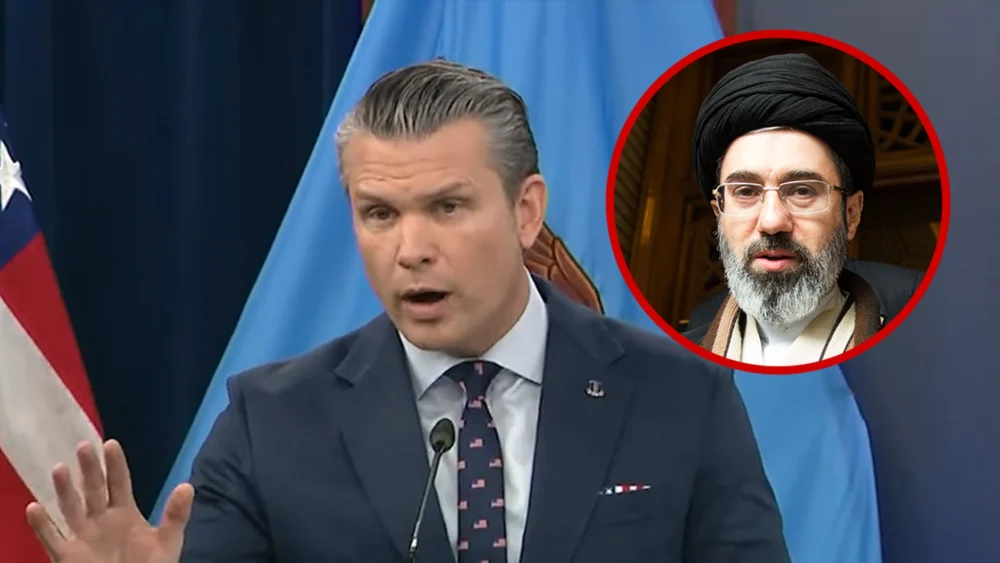
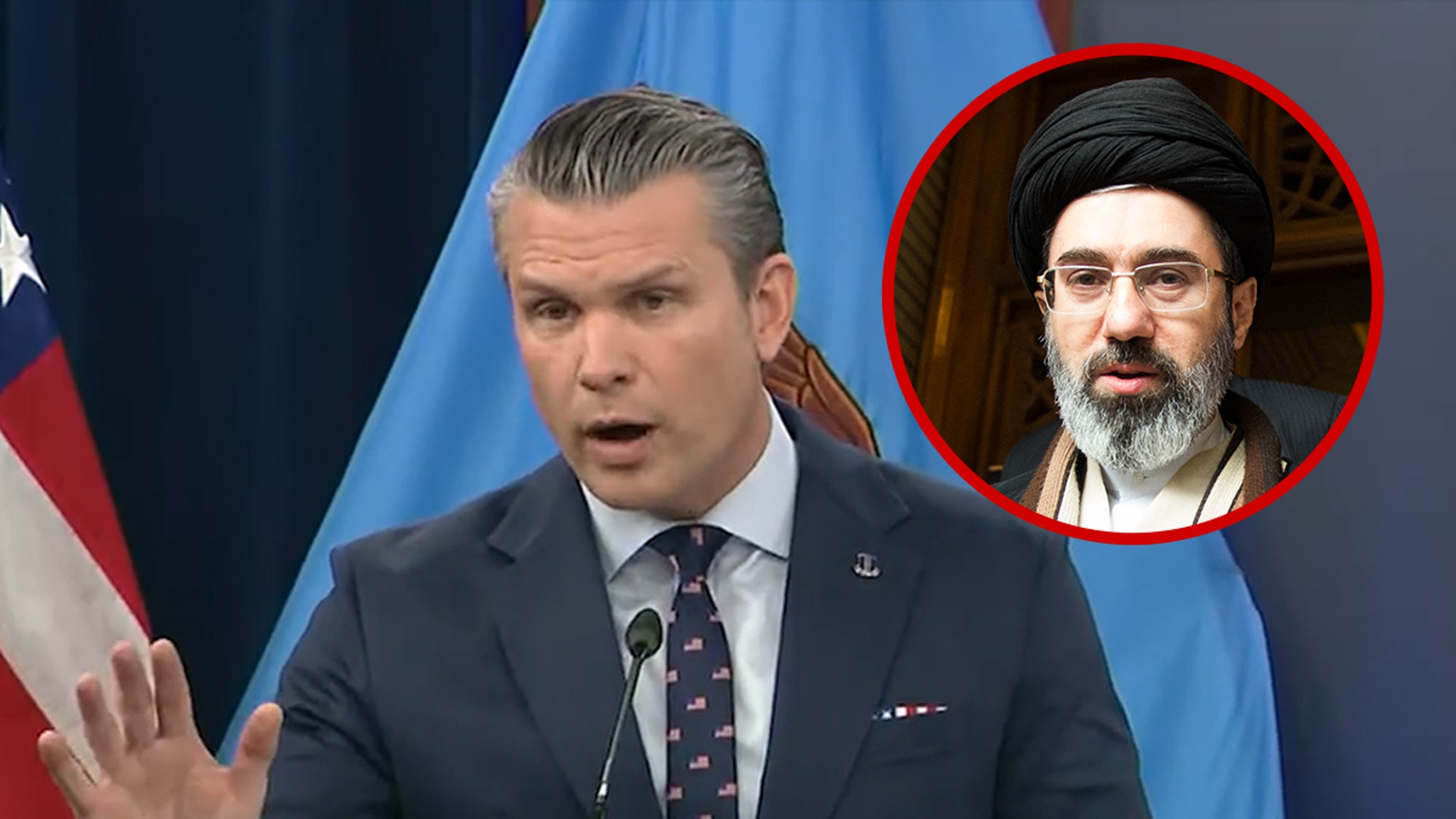
Defense Secretary Pete Hegseth issued a provocative challenge to Iran’s newly installed Supreme Leader, Mojtaba Khamenei, on Friday, March 13, 2026, demanding his public appearance amidst swirling rumors regarding his health and the legitimacy of his sudden ascension to power. Hegseth’s blunt remarks, delivered during a Pentagon briefing, accused Khamenei of deliberately concealing himself, suggesting injury or fear following the recent U.S.-Israeli strikes that reportedly killed his predecessor and father, Ayatollah Ali Khamenei. This public dare intensifies an already volatile geopolitical climate in the Middle East, drawing stark lines between Washington and Tehran.
The Pentagon’s Direct Challenge
Hegseth’s comments came in response to Mojtaba Khamenei’s inaugural message as Supreme Leader, which was broadcast on Iranian state television not as a live address, but as a written statement read by a presenter. The message, calling for national unity, was widely seen as insufficient by Western observers, particularly the Pentagon chief. "Why isn’t he appearing on camera himself?" Hegseth queried, his tone sharp and direct. He posited several possibilities for Khamenei’s absence: that he is "scared, injured, or on the run" in the wake of the devastating February 28 strikes. The Defense Secretary underscored the perceived weakness of a leader who avoids direct communication with his populace, especially during a period of national crisis and transition. "The message came off weak without any voice or video," Hegseth asserted, noting that Iran possesses ample broadcast infrastructure for a leader wishing to address his public directly. He concluded with a scathing assessment of the Iranian leadership’s perceived desperation, stating, "He doubled down, claiming Iran’s leadership is desperate and hiding underground — adding bluntly, ‘That’s what rats do.’" This pointed rhetoric is indicative of a hardening stance from the United States towards the new Iranian regime.
Mojtaba Khamenei’s Sudden Ascension and Public Absence
The circumstances surrounding Mojtaba Khamenei’s elevation to Supreme Leader are unprecedented and fraught with controversy. His father, Ayatollah Ali Khamenei, who had governed Iran for over three decades, reportedly succumbed to injuries sustained during a series of precision U.S.-Israeli strikes on February 28, 2026. These strikes, targeting several high-value military and intelligence sites within Iran, were framed by Washington and Tel Aviv as retaliatory measures against escalating Iranian aggression in the region and alleged advanced nuclear weapons development. The swiftness of the elder Khamenei’s death and Mojtaba’s subsequent, almost immediate, appointment by the Assembly of Experts surprised many international observers, who had anticipated a more protracted succession process.
Mojtaba Khamenei, 56, previously held significant but largely informal influence within the Iranian power structure, often described as a close advisor to his father and a key figure in the powerful Revolutionary Guard Corps (IRGC) and intelligence apparatus. While he possesses religious credentials, having studied in Qom and holding the rank of Hojjat al-Islam (a mid-level cleric), his religious authority is not as universally recognized or established as that of his father, who held the higher rank of Ayatollah. His public profile prior to his father’s death was notably low-key, fostering an image of a powerful behind-the-scenes operator rather than a public-facing leader.
Since February 28, Mojtaba Khamenei has not been seen publicly. This prolonged absence, punctuated only by a written statement, has fueled intense speculation within Iran and internationally. Rumors range from serious injuries sustained during the very strikes that killed his father, to a deliberate strategy of seclusion to consolidate power away from public scrutiny, or even a struggle for control within the clerical establishment. In a country where the Supreme Leader traditionally serves as the spiritual and political anchor, regularly appearing at public prayers, ceremonies, and delivering televised speeches, this extended withdrawal is highly unusual and deeply unsettling for many Iranians and foreign analysts alike. The lack of visual confirmation of his health and presence directly undermines the traditional sources of legitimacy for Iran’s highest office, raising questions about the stability and transparency of the new leadership.
The Broader Context of US-Iran Tensions
The Pentagon’s aggressive stance and the unusual leadership transition in Iran are deeply embedded in a long and tumultuous history of animosity between the United States and the Islamic Republic. Relations had deteriorated significantly over the past decade, marked by the U.S. withdrawal from the Joint Comprehensive Plan of Action (JCPOA) in 2018, the imposition of crippling sanctions, and a series of tit-for-tat escalations in the Persian Gulf and across the broader Middle East.
By early 2026, the regional landscape was exceptionally tense. Iran had continued its uranium enrichment activities, significantly beyond the limits set by the original nuclear deal, prompting renewed international alarm. Concurrently, proxy conflicts in Yemen, Syria, Lebanon, and Iraq had intensified, with Iran-backed militias frequently clashing with U.S. forces or U.S. allies. Israel, a steadfast adversary of Iran, had also stepped up its covert and overt operations targeting Iranian nuclear facilities and military assets in Syria and beyond.
The February 28 U.S.-Israeli strikes that led to Ayatollah Ali Khamenei’s death represented a dramatic escalation, marking a significant departure from previous, more circumscribed engagements. While details remain officially classified, reports suggested these were coordinated, large-scale operations designed to cripple Iran’s strategic capabilities and degrade its command and control infrastructure. The targeting of sites believed to be central to Iran’s nuclear program and military command had sent shockwaves through the international community, raising fears of a broader regional conflict. Hegseth’s current challenge to Mojtaba Khamenei is thus not an isolated incident but a continuation of this high-stakes confrontation, leveraging the perceived vulnerability of the new Iranian leadership.
International and Regional Reactions
The immediate aftermath of Ayatollah Ali Khamenei’s death and Mojtaba’s unconfirmed public presence has generated a mix of reactions globally. From Washington, while Defense Secretary Hegseth’s remarks were notably aggressive, other U.S. officials maintained a more measured tone, albeit with underlying firmness. A spokesperson for the U.S. Department of State, speaking off the record, reiterated calls for "transparency and adherence to international norms" from Tehran, emphasizing the need for a stable and predictable leadership to engage in any future diplomatic efforts. The White House, while not directly echoing Hegseth’s "rats" comment, issued a statement affirming its commitment to protecting U.S. interests and allies in the region, implicitly endorsing the pressure being applied to the new Iranian regime.
Iran’s state media, predictably, has largely ignored or dismissed Western criticisms regarding Mojtaba Khamenei’s absence. Official channels have focused on portraying a smooth and legitimate transfer of power, emphasizing national unity and resilience in the face of "foreign aggression." Reports within Iranian media have highlighted messages of condolences and allegiance from various military and religious bodies to the new Supreme Leader, aiming to project an image of consolidated authority. Any rumors about Khamenei’s health or public disfigurement are vehemently denied as "malicious propaganda" by the enemies of the Islamic Republic.
Regionally, responses have been varied. Saudi Arabia and other Gulf states, historically wary of Iranian expansionism, have watched the developments closely. While no official statements have directly addressed Hegseth’s comments, a sense of cautious optimism regarding potential shifts in Iranian policy might be inferred from their restrained public posture. Israel, while refraining from commentary on internal Iranian leadership, has reiterated its commitment to preventing Iran from acquiring nuclear weapons and maintaining regional security, implicitly supporting any pressure that weakens the Iranian regime. European powers, already grappling with the implications of the escalating U.S.-Iran tensions, have expressed deep concern. The European Union’s High Representative for Foreign Affairs and Security Policy called for "maximum restraint from all parties" and urged Iran to uphold its international obligations, particularly concerning nuclear transparency. The United Nations Secretary-General also appealed for de-escalation and urged adherence to international law, warning against further destabilization of an already fragile region.
Implications for Regional Stability and Future Relations
The current standoff, characterized by the U.S. Defense Secretary’s confrontational rhetoric and the new Iranian leader’s prolonged public absence, carries profound implications for regional stability and the future trajectory of U.S.-Iran relations.
Firstly, the legitimacy of Mojtaba Khamenei’s leadership is being tested both internally and externally. His physical absence from public view creates a vacuum that can be exploited by rivals within Iran’s complex power structure and undermines the trust of the general populace. Historically, periods of leadership transition in authoritarian states are often vulnerable to internal dissent and external pressure. If rumors of his injury or disfigurement prove true, or if he is perceived as weak or unwilling to face the public, it could spark significant challenges to his authority, potentially leading to widespread protests or even factional infighting.
Secondly, Hegseth’s aggressive challenge can be interpreted as a deliberate psychological tactic, part of a broader information warfare strategy. By questioning Khamenei’s courage and likening the leadership to "rats," the U.S. aims to sow doubt and discord within Iran, diminish the new leader’s standing, and potentially provoke a public appearance that could either confirm or refute the rumors. This strategy is high-risk, however, as it could also galvanize hardliners within Iran, prompting a more defiant and aggressive posture to demonstrate strength in the face of external humiliation.
Thirdly, the current situation significantly heightens the risk of further escalation in the Middle East. With an untested leader in Tehran and a U.S. administration clearly willing to apply extreme pressure, the margin for miscalculation shrinks. Any perceived weakness from Iran could invite further coercive actions, while an overly defiant response could trigger a more direct military confrontation. The immediate aftermath of the February 28 strikes saw a temporary calm, but the underlying tensions remain explosive. The ongoing regional proxy conflicts involving Iran-backed groups will likely intensify, as both sides seek to assert dominance and test the resolve of the new Iranian leadership.
Finally, the prospect of diplomatic engagement appears more distant than ever. The harsh rhetoric from the U.S. and the secretive nature of the new Iranian leadership create an environment inimical to dialogue. International efforts to revive nuclear negotiations or de-escalate regional conflicts will face immense hurdles as long as this climate of mutual distrust and aggressive posturing persists. The international community, therefore, finds itself at a critical juncture, navigating the perilous waters of a region on the brink, with the health and public presence of Iran’s new Supreme Leader becoming a potent symbol of its uncertain future. The coming weeks will be crucial in determining whether Mojtaba Khamenei emerges from the shadows to consolidate his rule, or if his continued absence signals a deeper instability that could redefine the geopolitical landscape of the Middle East.

0 Comments