
 Eva Lovia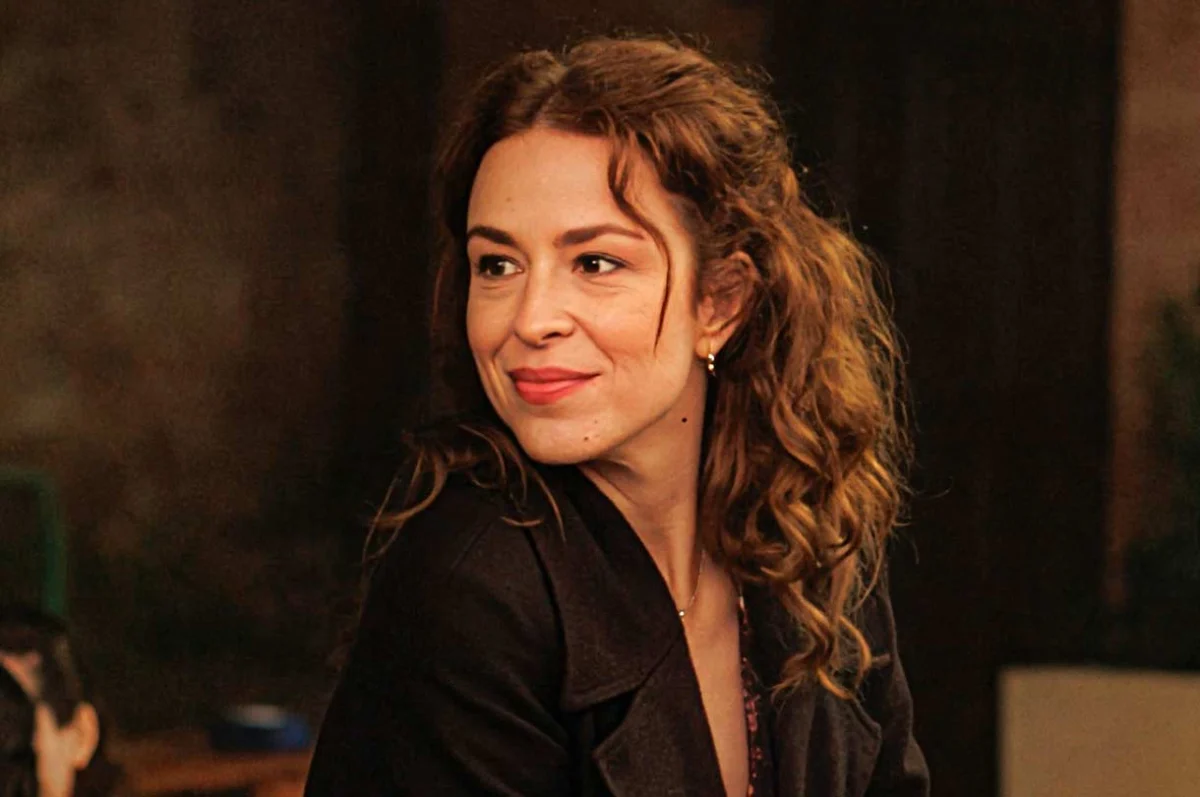
Silvia Abascal has joined the critically acclaimed Spanish drama "Entre Tierras" for its highly anticipated second season, stepping into the role of Estrella. This pivotal character is set to weave a complex familial narrative around Juan Toscano and his daughter, forging a profound emotional connection with María, the series’ protagonist portrayed by Megan Montaner. The series, a co-production between Atresmedia and Boomerang TV, has already cemented its status as a television phenomenon. In 2024, "Entre Tierras" emerged as the most-watched fiction series on Spanish television, captivating an average of over 1.2 million viewers per episode and securing a significant 12.3% market share. Beyond its domestic success, the series has also garnered substantial international acclaim, underscoring its broad appeal.
In an exclusive interview with Cultura en Serie, Abascal shared her insights on her character and reflected on her extensive career in the audiovisual industry. "There are factors that depend on us and others that escape our control," she remarked, alluding to the inherent unpredictability of the acting profession. With a career spanning over three decades, Abascal’s journey began in the television landscape of the 1990s and has since encompassed a diverse range of projects, including recent notable works such as "Asuntos Internos," "Reina Roja," "¡García!," and "La cocinera de Castamar." The Madrid-born actress, a multiple Goya Award nominee, achieved widespread popularity at a young age with series like "Pepa y Pepe," and has since cultivated a robust career in both film and theater.
Embracing the Role of Estrella in "Entre Tierras"
Abascal’s involvement in "Entre Tierras" came about through a direct offer for the second season. Having followed the first season and recognized its considerable success, she was drawn to the project upon reading the scripts. "When I read the scripts, I was very drawn to the project, especially because of the duality of characters I was going to play at that moment," she explained. This opportunity for dual performance was particularly appealing, as she was simultaneously engaged in "Loba Negra," where she portrays the formidable Commissioner Romero. In contrast, Estrella in "Entre Tierras" represents a complete departure, embodying immense generosity and kindness.

The prospect of collaborating with Rodolfo Sancho, who would be her on-screen partner, provided significant confidence, given their prior working relationship. Furthermore, Abascal expressed a strong desire to work with Megan Montaner, a colleague she had not yet had the chance to share the screen with. These combined factors made accepting the role a compelling decision.
Unveiling the Character of Estrella
When asked about Estrella, a character described as dependent and deeply connected to her family, Abascal offered a nuanced perspective, cautious about revealing too much to preserve the unfolding narrative. "I can say little because Estrella’s circumstances mean that revealing too much would spoil part of the plot," she stated. However, she did disclose that Estrella is physically fragile and highly reliant on her immediate family for support. Her existence is largely confined within a protected domestic sphere, with her narrative unfolding within this intimate circle, encompassing her husband, played by Rodolfo Sancho, her daughter, portrayed by Helena Ezquerro, and her significant relationship with Megan Montaner’s character. This closely-knit family unit, Abascal elaborated, exerts a considerable influence on the emotional journey of María.
The Significance of the Rural Setting
The series places a strong emphasis on its rural environment, a backdrop that significantly contributes to the storytelling. Abascal noted that her personal experience with the rural setting was somewhat limited due to the nature of her character’s scenes, which primarily took place indoors. Nevertheless, she found the filming experience in the village to be exceptionally positive. The location, she revealed, was well-accustomed to hosting film crews, having previously served as a shooting location for "Game of Thrones." As an admirer of nature and the countryside, Abascal deeply appreciated the opportunity to film in such an environment. She acknowledged the challenges that can arise from exterior shooting, particularly during winter, affecting both the technical crew and the cinematography. Despite these difficulties, she highlighted the unique appeal of working in open spaces rather than being confined to a studio.
The immersive rural environment, Abascal agreed, significantly enhances the viewer’s experience. "Yes, totally. The series has moments where you can practically breathe the landscape," she commented. The visual presence of the countryside is pervasive, with shots capturing the vast landscapes and scenes of characters like Marina Guerola riding horses through the fields. This rich rural tapestry, she emphasized, imbues the story with depth and lends the series a distinct and powerful identity.

Navigating the Success of "Entre Tierras"
Joining a series that has already achieved considerable success presents a unique dynamic. Abascal expressed the hope that the new season would sustain the momentum generated by its predecessor, bringing fresh storylines and characters to the forefront. She observed the palpable excitement surrounding the series during its presentation at the Málaga Festival, noting the keen interest from both the public and the press. The considerable time elapsed between the first and second seasons, she added, has undoubtedly amplified audience anticipation.
A Celebratory Return to Málaga
The second season’s premiere at the Málaga Festival held particular significance for Abascal, as it coincided with the 20th anniversary of her receiving a Biznaga award at the same festival. She described the experience as deeply gratifying, noting the strong buzz and enthusiasm for the new season, which she felt made the festival an ideal venue for its presentation.
Sustaining a Career in a Dynamic Industry
When questioned about the key to maintaining an active career in the acting profession, particularly after more than 30 years, Abascal emphasized the multifaceted nature of success in the industry. "I don’t know exactly, because if everything depended on oneself, it would be simpler. There are many factors," she admitted. For her, self-confidence, a strong vocation, and a dedicated work ethic are paramount. However, she also acknowledged that many exceptionally talented colleagues have, for various reasons, left the profession. This observation leads her to conclude that while personal commitment plays a crucial role, numerous external factors beyond an individual’s control also significantly influence career trajectories.
The Transformation of Spanish Fiction
Abascal has witnessed firsthand the profound evolution of Spanish fiction over more than three decades. She described the impact of streaming platforms as transformative across all aspects of production. She recalled early career experiences where 25-minute episodes were produced within a week, with limited characters and minimal exterior shooting. Today, she noted, individual episodes of series possess a production quality akin to feature films. The perception of television as a secondary medium for actors has also shifted dramatically, with television fiction now being fully integrated with cinema, both domestically and internationally. Furthermore, the consumption of fiction has adapted to new technologies, with audiences increasingly watching content on mobile devices and tablets, often while multitasking. While this shift presents a personal challenge for her, Abascal recognizes it as an undeniable reality of the contemporary media landscape.

She expressed surprise upon learning about the emergence of "vertical series" with episodes lasting only two to three minutes, indicating that this is a new development for her.
Memorable Roles and Future Aspirations
Reflecting on her career, Abascal identified several roles that hold particular importance. In theater, "Días de vino y rosas," performed alongside Carmelo Gómez during a year-long tour, stands out. Her portrayal of Finea in "La dama boba" is also highly cherished. In cinema, she cited her role in "Asombrosa Elisa" as particularly challenging, where she played a paraplegic woman. She also emphasized the significant impact of her training and work with Juan Carlos Corazza within her acting school.
Looking ahead, Abascal expressed a strong desire to play Lady Macbeth, a character she explored during her studies. The role allowed her to delve into profound emotional depths, and she remains eager for the opportunity to embody her on a professional stage.
Current and Upcoming Projects
In addition to her work on "Entre Tierras" and "Loba Negra," Abascal has several other projects in the pipeline. Her film "Todo arde," directed by Samantha López, is set for release. López also co-directed the series "Asuntos Internos" with María Togores, a project Abascal thoroughly enjoyed. She described her character in "Asuntos Internos" as one of her most fulfilling television roles: a portrayal of an upper-class mother in the 1980s grappling with a daughter’s drug addiction, offering a potent dramatic arc. Abascal regards "Asuntos Internos" as a high-quality series, noting that while it received critical acclaim, its broadcast schedule may have limited its public reception. The series is now available on Disney+, and Abascal highly recommends it.

 Julia Chirkova
 Julia Prastini
 Nila Kartika Wati
 Jia Lissa
 admin
admin