

The global streaming landscape has witnessed a significant shift in the consumption of international content, particularly from South Korea, which has established itself as a powerhouse of genre-defying cinema. Among the most anticipated additions to the Netflix library is Peninsula, the 2020 sequel to the critically acclaimed and commercially successful 2016 film Train to Busan. Directed by Yeon Sang-ho, Peninsula represents a radical departure from the claustrophobic, character-driven horror of its predecessor, opting instead for a high-octane, post-apocalyptic action narrative that mirrors the aesthetic of Western franchises such as Mad Max and Fast & Furious. Its arrival on the world’s leading streaming platform offers a renewed opportunity for audiences to evaluate the film’s place within the "K-zombie" subgenre and its contribution to the broader South Korean cinematic wave.
The Genesis of a Modern Horror Phenomenon
To understand the significance of Peninsula, one must first examine the cultural and financial impact of Train to Busan. Released in 2016, Train to Busan revitalized the zombie genre, which many critics believed had reached a point of saturation in Western media. By focusing on the emotional stakes of a father-daughter relationship and utilizing the confined space of a high-speed KTX train, the film managed to blend social commentary with visceral terror. It premiered in the Midnight Screenings section at the 2016 Cannes Film Festival, where it received immediate international acclaim.
Financially, Train to Busan was a juggernaut, grossing over $98.5 million worldwide against a modest budget of approximately $8.5 million. It became the first South Korean film of 2016 to break the record of over 10 million theatergoers. The film’s success was not merely a local event; it signaled to the global market that South Korea could produce high-budget genre films that resonated across cultural boundaries. This success created immense pressure for a sequel, leading director Yeon Sang-ho to explore a larger canvas for the follow-up.
A Chronological Timeline of the Outbreak
The narrative universe created by Yeon Sang-ho is structured across several media formats and distinct time periods. The timeline begins with Seoul Station (2016), an animated prequel also directed by Yeon, which depicts the initial hours of the zombie outbreak in the South Korean capital. This film was noted for its bleak tone and sharp critique of social inequality and the government’s failure to protect its most vulnerable citizens.
Train to Busan follows immediately after, detailing the rapid collapse of society as the infection spreads across the peninsula via the national rail network. Peninsula picks up the narrative four years after these events. By this point in the chronology, the entire South Korean landmass has been quarantined and abandoned by the international community. The peninsula has become a "no man’s land," where the infected roam the ruins of once-great cities, and the few remaining humans have regressed into a state of tribalism and lawlessness.
Narrative Evolution: From Survival to Heist
Peninsula introduces a new cast of characters, led by Jung-seok (played by Gang Dong-won), a former soldier who managed to escape the initial outbreak but lost his family in the process. Living as a marginalized refugee in Hong Kong, Jung-seok is recruited for a high-stakes mission: return to the quarantined zone to retrieve a truck containing $20 million in cash.
The plot mechanics of Peninsula shift the franchise from the "survival horror" category into the "heist action" genre. Upon returning to the ruins of Incheon, Jung-seok and his team discover that the zombies are not the only threat. They encounter Unit 631, a rogue military faction that has devolved into a sadistic cult, entertaining themselves by forcing survivors into gladiatorial arenas with the infected.

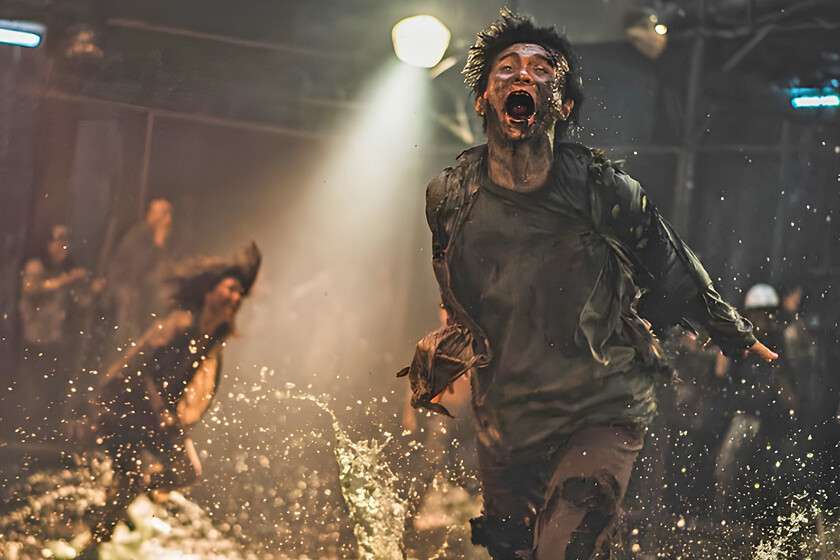
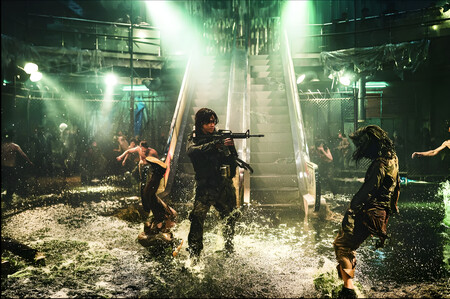
The film’s structure relies heavily on elaborate set pieces, specifically vehicular combat. Unlike the first film, where the zombies were the primary source of tension, Peninsula uses them as environmental hazards. The undead in this world are sensitive to light and sound, a trait the protagonists exploit during high-speed car chases through the skeletal remains of Seoul’s highways. This shift in focus led many critics to describe the film as "zombie-themed action" rather than "horror," a distinction that polarized the original film’s fanbase.
Supporting Data: Commercial Performance and Critical Reception
The production of Peninsula was a significantly larger undertaking than its predecessor, with a budget estimated at $16 million. While this is modest by Hollywood standards, it was a substantial investment for the South Korean film industry. The film was officially selected for the 2020 Cannes Film Festival, though the physical event was canceled due to the COVID-19 pandemic.
The pandemic significantly impacted the film’s box office potential. Peninsula was one of the first major blockbusters to be released in theaters during the summer of 2020, serving as a test case for the industry’s recovery. It grossed approximately $42.7 million worldwide. While this was less than half of the original’s haul, industry analysts considered it a success given the limited theater capacities and the closure of major markets like the United States and Europe at the time of its release.
Critical reception was notably more divided than it was for Train to Busan. On review aggregator Rotten Tomatoes, the film holds a 55% approval rating, compared to the 94% "Certified Fresh" rating of the original. Critics praised the film’s visual effects and technical ambition but often cited a lack of emotional depth and the absence of the "claustrophobic dread" that made the first film a classic. However, the film found a strong audience among action enthusiasts who appreciated its world-building and kinetic energy.
Official Responses and Directorial Intent
In various interviews following the film’s release, Director Yeon Sang-ho addressed the shift in tone. He stated that he did not want to repeat the formula of the first film, believing that the story of the train had been told to its fullest extent. Yeon expressed an interest in exploring a "post-apocalyptic wasteland" aesthetic, citing George Miller’s Mad Max: Fury Road and George A. Romero’s Land of the Dead as primary influences.
"I wanted to show a world that had completely collapsed," Yeon noted in a 2020 press conference. "In Train to Busan, the characters are trying to save society. In Peninsula, society is gone, and the characters are just trying to survive the ruins."
Cast members also highlighted the physical demands of the production. Gang Dong-won, a major star in South Korea, underwent extensive training for the film’s combat sequences. The production team utilized large-scale practical sets and advanced CGI to recreate a decaying urban landscape, a feat that was lauded by the Blue Dragon Film Awards, where the film won for Best Technical Achievement.
Broader Impact and the "K-Zombie" Legacy
The inclusion of Peninsula on Netflix is part of a larger strategy by the streaming giant to capitalize on the "Hallyu" (Korean Wave). The success of the Train to Busan franchise paved the way for other high-profile South Korean zombie projects, such as the period drama Kingdom and the high-school thriller All of Us Are Dead. These productions have collectively defined the "K-zombie" as a creature that is faster, more aggressive, and often more tragic than its Western counterparts.

Furthermore, Peninsula’s transition to streaming allows for a global re-evaluation. Many viewers who missed the film during its disrupted theatrical run can now experience it as part of a trilogy. The film’s themes of refugeeism and the abandonment of a nation by the global community have also gained renewed relevance in the years since its release.
The "K-zombie" phenomenon has also had a significant impact on the South Korean economy. According to data from the Korea Creative Content Agency (KOCCA), exports of Korean broadcasting content reached record highs in the early 2020s, with genre fiction like Peninsula playing a key role in attracting international investment. Netflix alone has pledged billions of dollars in investment toward South Korean content over the next several years, ensuring that the legacy of films like Train to Busan continues to evolve.
Conclusion: A Necessary Chapter in an Expanding Universe
While Peninsula may not capture the lightning-in-a-bottle perfection of Train to Busan, its arrival on Netflix highlights its importance as an ambitious expansion of a beloved cinematic universe. It serves as a bridge between traditional horror and large-scale action, showcasing the versatility of South Korean filmmakers. For the streaming audience, Peninsula offers a visually stunning, albeit different, perspective on the apocalypse—one that prioritizes spectacle and world-building over the intimate terror of a train ride. As the South Korean film industry continues to innovate, Peninsula remains a testament to the risks directors are willing to take to evolve a franchise beyond its origins.

0 Comments