
 Nila Kartika Wati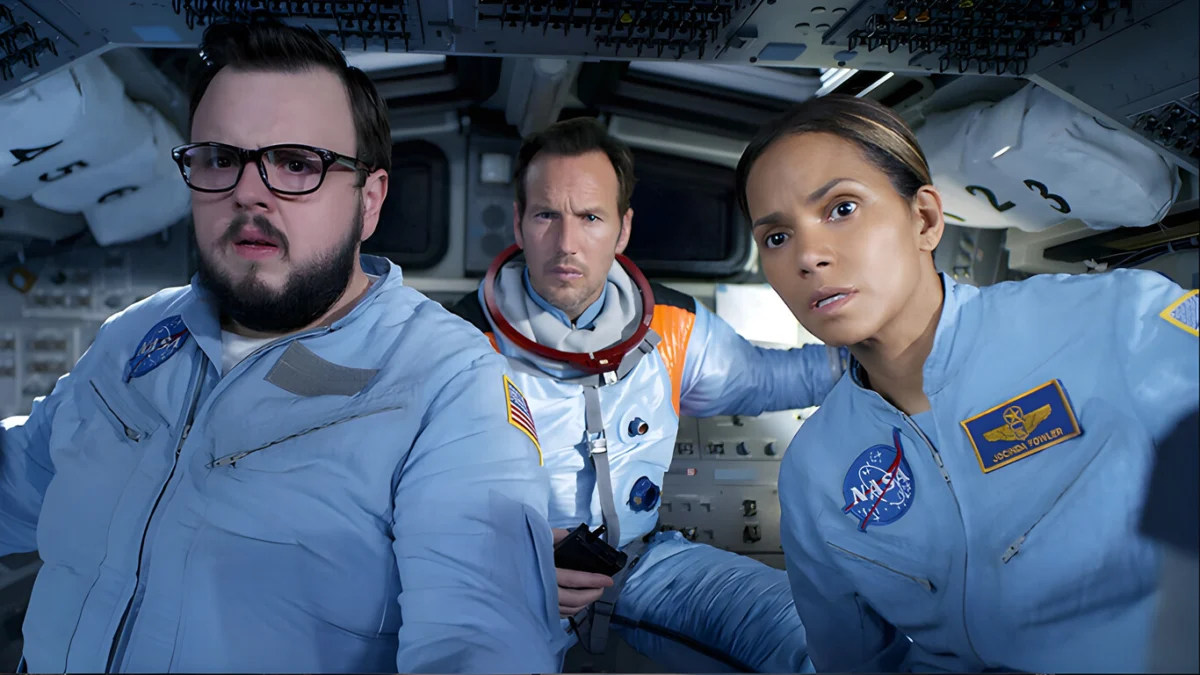
The 2022 science fiction epic Moonfall directed by Roland Emmerich represents a significant case study in modern cinema regarding the intersection of high-budget independent financing, the disaster genre’s evolution, and the shifting dynamics between theatrical performance and streaming longevity. Released during a volatile period for global box offices, the film attempted to revive the large-scale spectacle popularized in the 1990s while navigating a production landscape altered by the COVID-19 pandemic. Despite a challenging theatrical run, the film has found a secondary life on digital platforms such as Prime Video and Max, prompting a re-examination of its technical achievements and its place within the filmography of one of Hollywood’s most prolific architects of destruction.
The Production Framework and Financial Architecture
Moonfall is notable not only for its narrative scale but for its status as one of the most expensive independent films ever produced. With a production budget estimated at approximately $140 million, the project was primarily funded through independent means rather than the traditional "Big Five" studio system. Roland Emmerich’s production company, Centropolis Entertainment, utilized a "pre-sale" model, securing funding by selling distribution rights to various international territories before filming began.

This financial strategy allowed Emmerich a degree of creative freedom often curtailed in major studio environments, yet it also placed immense pressure on the film’s global performance. Lionsgate handled the North American distribution, while various other entities managed the release in China, Europe, and Latin America. The logistical complexity of filming during the COVID-19 pandemic in Montreal further inflated costs, as strict health protocols and schedule shifts became mandatory. Industry analysts note that the success of such a model relies heavily on a synchronized global reception, a feat that proved difficult to achieve in the early months of 2022.
Narrative Premise and the Emmerich Disaster Formula
The screenplay, co-written by Emmerich, Harald Kloser, and Spenser Cohen, adheres to the established tropes of the disaster genre while introducing elements of "ancient astronaut" theory and hard science fiction. The plot centers on a mysterious force that strikes the Moon, displacing it from its orbit and sending it on a collision course with Earth. As the lunar body nears the planet, it triggers catastrophic gravity-based events, including tsunamis, atmospheric dissipation, and "gravity waves" that lift structures off the ground.
The film follows three primary protagonists: Jo Fowler (Halle Berry), a former astronaut and high-ranking NASA official; Brian Harper (Patrick Wilson), a disgraced former astronaut; and K.C. Houseman (John Bradley), a self-proclaimed "megastructuralist" who first discovers the Moon’s orbital decay. This trio represents the classic Emmerich ensemble: the institutional leader, the misunderstood hero, and the eccentric outsider who holds the key to the truth. The narrative shifts between the terrestrial survival of the protagonists’ families and the high-stakes mission into space to confront the anomaly within the Moon’s interior.

Chronology of Development and Release
The journey of Moonfall from conception to screen was marked by several critical milestones:
- May 2019: The project is officially announced at the Cannes Film Festival, where it becomes the highest-priced project for sale at the market.
- October 2020: Principal photography begins in Montreal, Canada. Production is delayed several times due to shifting pandemic regulations.
- February 2022: The film premieres in theaters worldwide. It faces stiff competition from holdover hits like Spider-Man: No Way Home and the impending release of The Batman.
- May 2022: Following its theatrical window, the film transitions to premium video-on-demand (PVOD) and eventually lands on major streaming services.
During its initial release, the film encountered a fractured theatrical market. In China, a traditionally strong territory for Emmerich’s films (such as 2012 and Independence Day: Resurgence), the box office was hampered by a resurgence of COVID-19 lockdowns, which closed thousands of theaters.
Box Office Analysis and Critical Reception
The financial outcome of Moonfall serves as a cautionary tale for high-budget independent ventures. According to data from Box Office Mojo, the film grossed approximately $19 million in the United States and Canada, with an additional $48 million from international markets, totaling roughly $67.3 million worldwide. Given the $140 million production budget and an additional tens of millions spent on global marketing, the film was categorized by industry publications like Variety and The Hollywood Reporter as a significant box office disappointment.

Critical reception was similarly polarized. On the review aggregator Rotten Tomatoes, the film maintains a "Rotten" rating, with critics frequently citing the "absurdity" of the plot and the leaps in logic required to sustain the narrative. However, the film received praise for its visual effects and "pure spectacle." The Hollywood Reporter noted that while the story was "chaotic," the direction of art and the rendering of lunar destruction were of "first-class caliber."
The audience reaction, measured by CinemaScore, resulted in a "B-" grade. This indicated that while general audiences appreciated the visual scale, the narrative’s shift from a traditional disaster movie to a high-concept sci-fi involving alien artificial intelligence was divisive.
Technical Execution and Visual Effects
Despite its narrative criticisms, Moonfall is widely recognized as a technical achievement in visual effects (VFX). The film required the coordination of several leading VFX houses, including Scanline VFX, Framestore, and Pixomondo. The production team was tasked with creating realistic depictions of "gravity holes"—sequences where the Moon’s proximity pulls the Earth’s atmosphere and debris into space.

A significant portion of the budget was dedicated to the "Megastructure" interior of the Moon. Emmerich, known for his preference for practical sets where possible, utilized a decommissioned Space Shuttle orbiter for certain cockpit scenes, blending physical props with expansive "blue screen" environments. The film’s sound design also played a crucial role in conveying the sheer scale of the celestial collision, utilizing low-frequency effects to simulate the groan of the Earth’s crust under lunar gravitational pull.
Scientific Consultation vs. Narrative Liberty
In an effort to ground the film’s more outlandish elements, the production engaged with scientific consultants, including those from NASA. While the central premise—the Moon being a hollow, artificial megastructure—is a staple of fringe conspiracy theories rather than mainstream science, the film attempts to use authentic terminology regarding orbital mechanics and lunar geology.
Statements from NASA representatives during the film’s promotional cycle emphasized that while the events depicted are purely fictional, the "what if" scenario provides a gateway for public interest in space exploration and the real-world monitoring of Near-Earth Objects (NEOs). The film’s deviation from physics, such as the survival of the Earth’s atmosphere during such a close encounter, was a conscious choice by Emmerich to prioritize "cinematic awe" over scientific accuracy.

Broader Impact on the Disaster Genre and Streaming Trends
The legacy of Moonfall is increasingly defined by its performance in the post-theatrical market. Since its debut on streaming platforms like Prime Video and Max, the film has frequently appeared in "Top 10" lists, suggesting that the "disaster spectacle" remains a highly consumable genre for home audiences. This trend highlights a growing divide in the industry: "popcorn movies" that may struggle to justify a $20 theater ticket often find massive success as "free" inclusions within a subscription service.
Furthermore, Moonfall represents the potential end of an era for the traditional, mid-to-high-budget disaster epic. As studios pivot toward established intellectual property (IP) and superhero franchises, original (or non-franchise) disaster films face higher barriers to entry. Emmerich himself has commented on the difficulty of making such films in the current climate, noting that the "theatrical experience" is increasingly reserved for a narrow band of "event" cinema.
Conclusion and Future Implications
Moonfall remains a polarizing but essential chapter in the history of 21st-century science fiction. It stands as a testament to Roland Emmerich’s unwavering commitment to grand-scale destruction and his ability to secure massive independent funding. While its box office performance was hindered by a combination of timing, competition, and a narrative that defied conventional logic, its visual ambition continues to draw viewers on digital platforms.

The film’s ultimate impact may be its role in the conversation regarding the viability of independent blockbusters. As the industry continues to consolidate, the story of Moonfall—from its record-breaking independent budget to its status as a streaming staple—provides valuable insights into the risks and rewards of betting on original spectacle in an age of franchises. For fans of the genre, it remains a definitive example of "maximalist" filmmaking, where the laws of physics are secondary to the power of the visual image.




 Eva Lovia
 Julia Chirkova
 Julia Prastini
 Jia Lissa
 admin
admin