
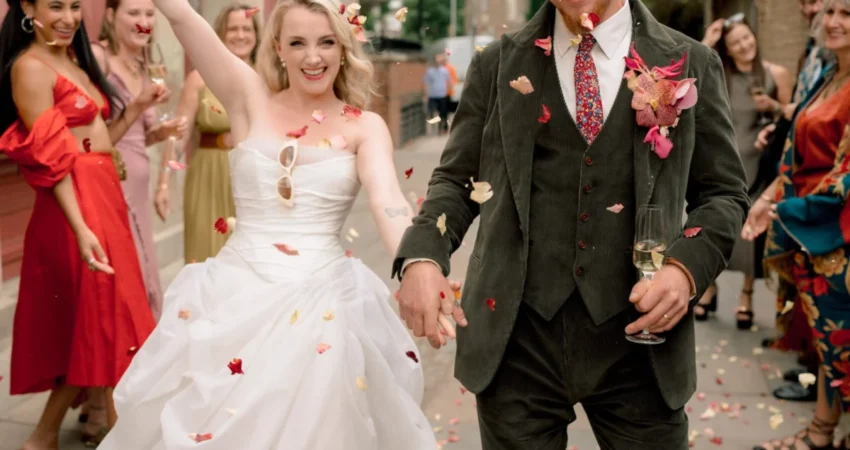
The marriage of actress and activist Evanna Lynch to her long-term partner Denis Skinner has emerged as a landmark event in the intersection of celebrity culture, sustainable fashion, and highly personalized event design. Known globally for her portrayal of Luna Lovegood in the Harry Potter film franchise and her subsequent work in animal rights advocacy, Lynch’s wedding serves as a case study in how modern public figures are eschewing traditional nuptial templates in favor of ceremonies that reflect specific ethical commitments and aesthetic idiosyncrasies. The event, which hosted approximately 110 guests, was characterized by a blend of high-concept visual artistry and a grounded, home-centric philosophy, managed by renowned wedding planner Tara Faye.
Aesthetic Evolution and the Bridal Transformation
The visual identity of the wedding was anchored by Lynch’s dramatic aesthetic shift over the preceding two years. Historically recognized for her jet-black hair, Lynch transitioned to a signature "ice blonde" tone, a color choice that dictated the palette for her bridal styling. Achieving the desired look required a meticulous collaborative effort between Lynch and her creative team, which included hair stylist Ruby Byrne and makeup artist Jo Hamilton.
Lynch, who describes her natural hair as fine, sought a high-volume silhouette for the ceremony. This was achieved through the strategic application of hair extensions, a process that followed a rigorous "full trial" phase to ensure the weight and movement of the hair aligned with the bridal attire. The emphasis on volume was a central pillar of the "chameleonic" persona Lynch has cultivated in her professional life, bridging the gap between her ethereal public image and her personal preferences.

In tandem with the hair styling, makeup artist Jo Hamilton was tasked with creating a "fresh and luminous" bridal look. The brief specifically emphasized the eyes—a feature Lynch frequently highlights in her public appearances. The inclusion of false eyelashes was a key technical component of this look, designed to provide definition without compromising the overall freshness of the skin. Interestingly, the lead-up to the event involved a failed experiment with facial cupping therapy. While intended to promote lymphatic drainage and skin brightness, Lynch ultimately abandoned the treatment after it resulted in visible bruising, which she likened to "hiccups," highlighting the risks associated with intensive pre-wedding beauty regimens.
Sustainable Fashion and the Groom’s Attire
The sartorial choices of the groom, Denis Skinner, reflected a deliberate move away from standard formalwear toward sustainable and tactile materials. Skinner ultimately selected a green corduroy suit from Suit Supply, a choice that prioritized texture and color over the traditional black or navy tuxedo. This selection was the result of a process that saw him discard several other options, including a purple suit, in favor of a shade that complemented the wedding’s botanical themes.
Further emphasizing the couple’s commitment to environmentalism, Skinner’s footwear consisted of shoes by Rothy’s. These shoes are notable for being manufactured from recycled plastic water bottles, a fact that aligns with Lynch’s long-standing advocacy for veganism and sustainable living. The use of rPET (recycled polyethylene terephthalate) in high-end wedding footwear is part of a growing trend in the luxury market toward "circular fashion," where the lifecycle of a product is considered as much as its aesthetic appeal.
Collaborative Creative Direction and Floral Design
One of the most distinct elements of the wedding was the involvement of actress Dakota Blue Richards, a close friend of the bride, who stepped into the role of floral designer. The creative direction for the floral arrangements was inspired by a specific historical and pop-culture reference: an image of burlesque icon Dita Von Teese appearing as a showgirl on a swing, surrounded by an abundance of pink roses.

Richards utilized this "Venus or Aphrodite" archetype to create a lush, romantic backdrop for the ceremony. The choice of pink roses served as a visual counterpoint to the bride’s ice-blonde hair and the groom’s green corduroy, creating a color story that was both vibrant and classical. This collaboration underscores a trend in celebrity weddings where personal friends with artistic backgrounds are recruited to provide bespoke creative services, moving away from standardized corporate floral vendors.
Musical Divergence and the Choreography of the First Dance
The planning of the wedding’s entertainment revealed a significant divergence in the couple’s personal tastes, requiring a negotiated compromise. Skinner, a proponent of techno music, and Lynch, who favors poetry and folk music, found themselves at odds regarding the evening’s soundtrack. The resolution was the hiring of a swing band, a choice intended to bridge the gap between their styles while ensuring a high level of guest engagement on the dance floor.
For the first dance, the couple selected "Our House" by Graham Nash. The song, written during Nash’s relationship with Joni Mitchell, is celebrated for its domestic intimacy and focus on the sanctuary of the home. Lynch noted that while she and Skinner possess different professional outlooks and worldviews, their strength lies in their shared domestic life.
To prepare for the dance, the couple engaged choreographer Stefanos Dimoulas. However, the technical complexity of the planned routine proved to be a point of tension. Following a single rehearsal session, Skinner expressed discomfort with performing a highly choreographed piece in front of 110 guests. This led to a simplification of the dance, shifting the focus from performance to a more natural, albeit "shuffling," interaction between the couple.

Logistics and Planning by Tara Faye
The scale and complexity of the event were managed by Tara Faye, one of Ireland’s most prominent wedding planners. Lynch admitted to initial skepticism regarding the "lavish and exaggerated" nature of wedding planning. However, as the date approached, she recognized the unique value of the ceremony as a singular life event.
The guest list of 110 people suggests an intimate yet substantial gathering, typical of high-profile boutique weddings. The logistics involved the creation of a custom bar menu featuring two signature cocktails:
- The Lychee Martini: A nostalgic choice for Lynch, referencing a specific tropical bar she frequented in the past.
- The Chambord Bramble: A selection tailored to the preferences of the bar staff, adding an element of professional expertise to the drink offerings.
Symbolism and Unconventional Gift Exchanges
In a departure from the traditional exchange of rings, the couple’s union was marked by highly personal and unconventional symbols. While Skinner began wearing a ring following their engagement, Lynch chose to gift him a necklace featuring a unique pendant: a tooth from their dog that had recently fallen out.
This choice reflects a broader movement toward "sentimental materialism," where objects of deep personal significance replace traditional luxury goods. For Lynch, a vocal advocate for animal welfare, the inclusion of a biological memento from a pet serves as a profound statement of family and connection. This unconventional gift-giving highlights the couple’s desire to define their relationship on their own terms, free from the constraints of societal expectations.

Broader Implications for the Wedding Industry
The Lynch-Skinner wedding provides several insights into the evolving landscape of the multi-billion-dollar global wedding industry. Several key trends are evident:
- The Rise of Sustainable Luxury: The inclusion of Rothy’s and the emphasis on recycled materials suggest that high-net-worth individuals are increasingly prioritizing ethical sourcing. According to recent market data, the sustainable wedding market is expected to grow significantly as Gen Z and Millennials seek to align their personal celebrations with their environmental values.
- The Professionalization of "Friend-Sourcing": Utilizing a fellow actress (Dakota Blue Richards) for floral design and a professional choreographer for a single dance lesson shows a move toward "curated" rather than "packaged" weddings.
- Domesticity as a Theme: The choice of Graham Nash’s "Our House" reflects a shift away from "epic" or "cinematic" romance toward a celebration of the "mundane" and the "stable," a sentiment that resonates in a post-pandemic world where the home has taken on renewed importance.
In conclusion, the wedding of Evanna Lynch and Denis Skinner was less a traditional celebrity spectacle and more a highly curated artistic project. From the ice-blonde hair and green corduroy to the dog-tooth necklace and the swing band, every element was a reflection of the couple’s specific identities. While Lynch initially questioned the opulence of the event, the final result was a ceremony that remained authentically "Evanna Lynch and Denis Skinner," balancing the grandiosity of a 110-guest wedding with the intimacy of a shared life.

0 Comments