
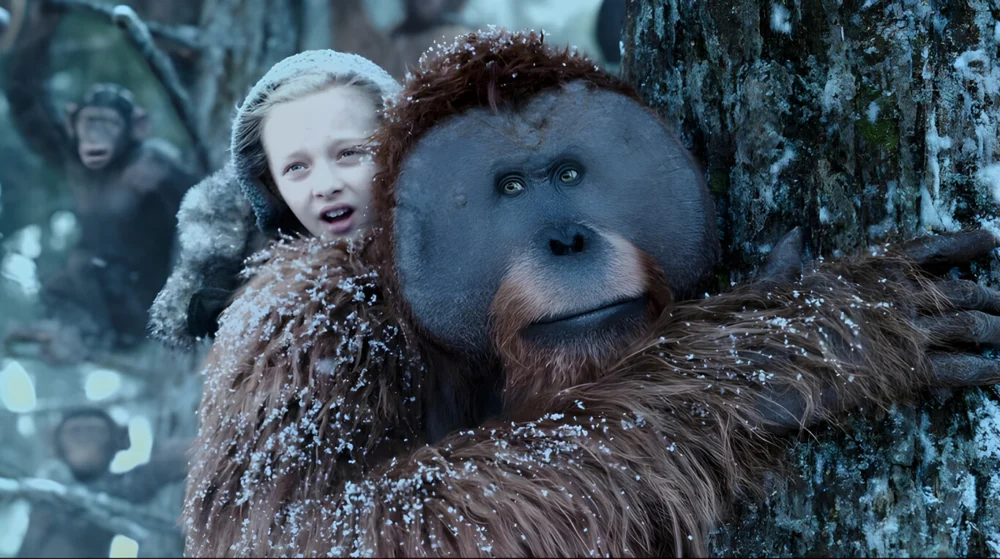
The cinematic landscape of science fiction has undergone a significant shift as three pivotal entries in the "Planet of the Apes" franchise—Dawn of the Planet of the Apes, War for the Planet of the Apes, and the recent Kingdom of the Planet of the Apes—have transitioned to the HBO Max streaming platform. This move follows a period of over 1,800 days during which these titles were largely exclusive to Disney+, a result of the 2019 acquisition of 21st Century Fox by The Walt Disney Company. The inclusion of these films on a competing service highlights a growing trend in the industry where legacy media companies are increasingly open to licensing high-value intellectual property to maximize revenue and reach broader audiences.
The "Planet of the Apes" franchise, which spans nearly six decades, has long been regarded as a cornerstone of the dystopian genre. The three films now available on HBO Max represent the modern pinnacle of this saga, showcasing a blend of sophisticated narrative depth and groundbreaking visual effects. While the earlier entries in the series, including the 1968 original and the 2011 reboot Rise of the Planet of the Apes, remain primarily on Disney+, the arrival of these three specific installments on Max provides subscribers with access to the most critically acclaimed and technologically advanced chapters of the simian-led revolution.
A Chronological History of the Simian Dynasty
The narrative journey of the modern "Planet of the Apes" series began in 2011 with Rise of the Planet of the Apes, which introduced Caesar, a chimpanzee whose intelligence was enhanced by an experimental viral drug. However, it was the subsequent films—those now arriving on Max—that truly expanded the scope of the story into a global epic.

In Dawn of the Planet of the Apes (2014), directed by Matt Reeves, the story picks up a decade after the "Simian Flu" has decimated the human population. The film explores the fragile peace between a growing colony of genetically evolved apes and a group of human survivors in San Francisco. This installment is frequently cited by critics as a masterclass in tension and character development, focusing on the internal politics of both species and the tragic inevitability of conflict.
The trilogy concluded with War for the Planet of the Apes (2017), a film that shifted the tone toward a dark, biblical epic. In this chapter, Caesar and his followers are forced into a deadly conflict with an army of humans led by a ruthless Colonel. The film served as a poignant conclusion to Caesar’s arc, dealing with themes of sacrifice, leadership, and the moral weight of survival.
The most recent addition, Kingdom of the Planet of the Apes (2024), directed by Wes Ball, moves the timeline forward several centuries. In this era, apes have become the dominant species, living in a lush, post-human world where the teachings of Caesar have been distorted or forgotten. Humans have regressed into a primitive state, and the film follows a young ape named Noa as he navigates a world governed by a tyrannical simian leader who seeks to harness ancient human technology.
Technical Innovation and the Legacy of Performance Capture
One of the primary reasons these films have maintained such a high standing in the film industry is their revolutionary use of performance capture technology. The work of Weta Digital, combined with the performances of actors such as Andy Serkis, redefined the possibilities of digital characters. Serkis, who portrayed Caesar throughout the reboot trilogy, received widespread acclaim for his ability to imbue a digital avatar with profound emotional complexity.

Unlike traditional CGI, which often struggles to bridge the "uncanny valley," the performance capture used in these films translated every nuance of the actors’ facial expressions and body movements onto the digital models. This allowed the apes to function as the emotional core of the story, rather than mere spectacles of action.
In Kingdom of the Planet of the Apes, the production further pushed technical boundaries by moving away from traditional soundstages. The film utilized extensive on-location shooting in natural environments, reducing the reliance on "green screens." This approach resulted in a more organic visual style, where the digital characters interacted seamlessly with real-world lighting and textures. This commitment to realism has been a hallmark of the franchise, setting a standard for modern blockbusters.
Critical and Commercial Impact
The financial and critical success of the "Planet of the Apes" franchise is well-documented by industry analysts. According to data from Box Office Mojo, the rebooted franchise has collectively grossed over $1.6 billion worldwide. Dawn of the Planet of the Apes remains the highest-grossing entry in the series, with a global haul of approximately $710 million. War for the Planet of the Apes followed with $490 million, while Kingdom of the Planet of the Apes has continued the trend of commercial viability, securing its place as a major success in the 2024 theatrical window.
Critical reception has been equally robust. On the review aggregator Rotten Tomatoes, the films consistently maintain high ratings:

- Dawn of the Planet of the Apes: 91% approval rating.
- War for the Planet of the Apes: 94% approval rating.
- Kingdom of the Planet of the Apes: 80% approval rating.
Industry publications like Variety have lauded the series as the "gold standard" for intelligent blockbusters. Critics have noted that while most franchise films prioritize spectacle over substance, the "Apes" films utilize their high-concept premise to explore complex sociopolitical themes, including the nature of tribalism, the ethics of scientific advancement, and the cycle of violence.
Strategic Implications of Licensing Agreements
The migration of these titles to HBO Max is a reflection of the evolving strategies within the "streaming wars." Initially, major studios like Disney and Warner Bros. Discovery sought to keep their most valuable assets exclusively on their own platforms to drive subscriptions. However, the high costs of content production and the saturation of the streaming market have led to a pivot toward non-exclusive licensing.
By making these films available on Max, Disney (which owns the rights via the Fox acquisition) can generate significant licensing revenue while the films continue to be available on Disney+. For Max, the acquisition of these high-quality titles bolsters its library of science fiction and action cinema, appealing to a demographic that values prestige genre content. This "co-habitation" of content suggests that the era of total platform exclusivity may be waning in favor of more pragmatic, revenue-focused distribution models.
Societal Themes and Narrative Depth
Beyond the technical and financial aspects, the "Planet of the Apes" saga remains relevant due to its thematic resonance. The series has always functioned as a mirror to human society. The original 1968 film was a commentary on the Cold War, racial tensions, and nuclear proliferation. The modern films have updated these concerns for a 21st-century audience, focusing on ecological collapse, the dangers of biological engineering, and the fragility of civilization.

The character of Caesar serves as a unique lens through which to view these themes. As a character caught between two worlds—raised by humans but belonging to a different species—he embodies the struggle for identity and the difficulty of maintaining empathy in the face of systemic conflict. The transition to the world of Kingdom of the Planet of the Apes explores how history is recorded and manipulated, as the new generation of apes interprets Caesar’s legacy in vastly different ways.
Future Outlook for the Franchise
The arrival of these films on HBO Max coincides with ongoing discussions regarding the future of the franchise. Following the success of Kingdom of the Planet of the Apes, director Wes Ball and the creative team have indicated that the film is intended to be the start of a new trilogy. This next phase will likely continue to explore the burgeoning simian civilizations and the eventual total decline of humanity, potentially leading the narrative closer to the status quo seen in the original 1968 film.
For audiences, the availability of these films on Max provides an opportunity to engage with one of the most consistent and thoughtful franchises in modern cinema. Whether viewed as a technical achievement in digital filmmaking or a philosophical inquiry into the nature of power and survival, the "Planet of the Apes" films continue to command attention. As the boundaries between streaming platforms become more porous, the reach of such "intelligent blockbusters" is likely to expand, ensuring that the legacy of Caesar and his descendants remains a central fixture of the cultural conversation for years to come.

0 Comments