
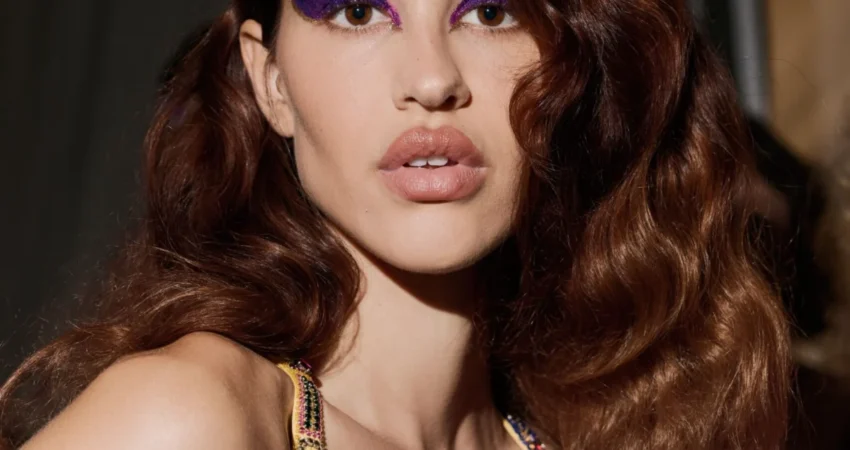
The global fashion community turned its collective gaze toward Milan for the 2026 edition of Vogue World, an event that solidified the city’s status as the epicenter of sartorial heritage and forward-thinking beauty. Hosted within the architectural grandeur of the Galleria Vittorio Emanuele II, the event was more than a runway show; it was a multi-act performance titled "Where the Future is Built by Hand." This theme served as a tribute to the meticulous craftsmanship of Italian artisans while redefining the "Italian girl" aesthetic for a new generation. Central to this transformation were the hair and beauty looks, which did not merely complement the couture but acted as the primary vehicle for storytelling. These looks synthesized centuries of cultural history, from the Renaissance concept of sprezzatura to the high-glamour sirens of the 1960s and the androgynous minimalism of the modern era.

The Philosophical Foundation: Sprezzatura and the Italian Aesthetic
At the heart of the Vogue World 2026 beauty direction was the concept of sprezzatura. Originally coined in 1528 by Baldassare Castiglione in his seminal work The Book of the Courtier, the term describes a certain nonchalance, so as to conceal all art and make whatever one does or says appear to be without effort and almost without any thought about it. In the context of 2026 beauty trends, this translated into "effortless chic" revisited. The goal for the lead stylists was to create looks that appeared impeccably sophisticated yet suggested the wearer had achieved the result in a matter of minutes.
Industry analysts noted that this approach marks a significant shift away from the "ultra-filtered" perfection of the early 2020s. Instead, the focus has returned to tactile textures—hair that moves, skin that breathes, and a deliberate embrace of "perfect imperfections." This philosophical grounding provided the framework for the five distinct acts of the show, each representing a different facet of the Italian identity.

Act I: The Craft Revolution and the Return of the Messy Braid
The proceedings commenced with Act I, titled "The Craft Revolution," headlined by supermodel Gigi Hadid. The visual narrative focused on the intersection of high-fashion textiles—specifically heavy brocades and intricate prints—and a grounded, approachable beauty look. The hair styling for this segment drew direct inspiration from 1960s cinema icon Claudia Cardinale.
Models paraded in low, "undone" braids and subtly teased hair that maintained a natural volume. The technical execution involved using texturizing mists and light-hold pomades to create "imperfect" waves and ponytails secured with simple elastic bands. This aesthetic serves a dual purpose: it balances the visual weight of maximalist clothing and appeals to a consumer base increasingly interested in "wearable" runway trends. Data from digital fashion platforms suggests that "low-effort braids" and "natural volume" have seen a 40% increase in search volume following the Milan showcase, indicating a strong commercial future for these styles in the Fall/Winter 2026 season.

Act II: Androgyny, Power Suiting, and the 90s Wet Look
The second act shifted the tone toward sharp tailoring and gender-neutral silhouettes. Models appeared in precision-cut suits ranging from charcoal Oxford grays to deep navy blues. To complement this structured approach, the beauty team looked to the 1990s, specifically the high-sensuality campaigns of Monica Bellucci for Dolce & Gabbana.
The defining hairstyle of this act was the "extra-polished" Italian updo. Characterized by deep side parts and a high-shine "wet look" finish, these styles left no room for stray hairs. The technical challenge was to maintain a sleek silhouette that appeared modern rather than dated. This was achieved by pairing the hair with contemporary makeup: smokey eyes and deep burgundy lips. This act underscored the evolution of the Italian woman from a traditional muse to a figure of corporate and creative power, blending classic femininity with masculine sartorial codes.

Act III: Made in Italy and the Maximalist 1960s
The third act, "Made in Italy," was perhaps the most celebratory, utilizing the Galleria’s vast space to showcase a mix of colorful maximalism and casual elegance. The hair and makeup for this segment were a direct homage to the "Golden Age" of Italian cinema. The styling moved between two extremes: the classic "banana bun" (a vertical French twist) with minimal backcombing, and high-volume afros and manes.
Influences from Sophia Loren and Virna Lisi were evident in the "bouffant" structures seen on models like Imaan Hammam and celebrity guests such as Cardi B. Stylists utilized modern volumizing powders to achieve the height of the 1960s without the damaging heavy-duty hairsprays of the past. This act served as a reminder that Italian style is inherently linked to theatricality and the "joy of dressing up," a sentiment echoed by several designers backstage who noted that the "minimalist era" of fashion is being replaced by a desire for expressive, high-volume beauty.

Act IV: Experimentalism and the "Toy Hair" Phenomenon
Act IV represented the most avant-garde portion of the evening. Featuring oversized outerwear from heritage brands like Moncler and Bottega Veneta, the beauty looks moved into the realm of hyper-color and experimental textures. This segment introduced what critics are calling "toy hair"—extra-short bobs and blunt bangs finished with a wet-look sheen in vibrant shades of cobalt blue, platinum, and canary yellow.
Alex Consani’s look was a standout, featuring a razor-straight fringe paired with "makeup-no-makeup" skin. This contrast highlighted the technical precision required for modern Italian styling. While Act III focused on historical volume, Act IV focused on geometric precision. Analysis of social media engagement during the livestream showed that these experimental looks garnered the highest "share" rate among Gen Z viewers, suggesting that the future of Italian beauty lies in the fusion of traditional craftsmanship and digital-age bold color palettes.

Act V: Fairy-Tale Femininity and the Natural Wave
The final act coincided with a live performance by Alicia Keys, creating a serene, ethereal atmosphere. The fashion transitioned into delicate white lace and flowing silhouettes, requiring a softer approach to beauty. The hair returned to a romantic, "fairy-style" aesthetic: half-up, half-down styles with loose tendrils and natural-looking waves.
This look drew from the 1970s and 80s styles of Stefania Sandrelli and Ornella Muti. The emphasis was on "nacreous" (mother-of-pearl) nails, shimmering eyeshadows, and silver highlights on the nose and cheekbones. This final act brought the show full circle, returning to the core principle of sprezzatura. It reinforced the idea that the ultimate luxury in beauty is the appearance of ease.

Chronology of the Event and Global Context
Vogue World 2026 in Milan follows the successful iterations in New York (2022), London (2023), and Paris (2024). The decision to host the event in Milan was strategically timed to coincide with a resurgence in the Italian fashion manufacturing sector. According to data from the Camera Nazionale della Moda Italiana, the Italian fashion industry saw a 6.5% growth in the first half of 2025, driven largely by a renewed global interest in "Made in Italy" luxury goods.
The event timeline was meticulously planned:

- 6:00 PM: Arrival of international celebrities and local artisans at the Galleria.
- 7:30 PM: Opening of Act I, signaling the shift from traditional runway to immersive performance.
- 8:15 PM: Transition to the experimental Act IV, showcasing the technical capabilities of Italian laboratories in hair color and cosmetics.
- 9:00 PM: Finale with Alicia Keys, integrating the worlds of music, history, and beauty.
Broader Impact and Industry Implications
The implications of Vogue World 2026 extend far beyond a single evening of glamour. By centering the conversation on "The Future Built by Hand," Vogue and its partners have signaled a shift in the global beauty industry toward sustainable, artisan-led practices.
1. Market Influence: The hairstyles showcased—particularly the "undone" braids and the "90s wet look"—are expected to dominate professional salon requests for the next 12 to 18 months. Professional hair care brands are already pivoting marketing strategies to highlight products that achieve "effortless" texture.

2. Cultural Re-evaluation: The event successfully recontextualized the Italian "sex symbol" trope. By referencing muses like Bellucci and Loren alongside androgynous suiting and experimental bobs, the show presented a more diverse and inclusive definition of Italian beauty.
3. Economic Integration: By hosting the event in the Galleria Vittorio Emanuele II, Milan reasserted its dominance as a luxury retail destination. The event served as a high-profile advertisement for the city’s ability to merge historical tourism with modern commerce.

In conclusion, Vogue World 2026 was a masterclass in cultural synthesis. It proved that the essence of Italian beauty lies not in a single look, but in a centuries-old philosophy of grace. Whether through a messy braid or a precision-cut bob, the message was clear: true elegance is found in the balance between the polished and the relaxed. As the fashion world moves forward, the "Milan model" of beauty—one that respects the past while fearlessly experimenting with the future—will undoubtedly remain the standard for global excellence.

0 Comments