
The orchid, a botanical marvel that has captivated human imagination for millennia, represents one of the most diverse and evolutionarily successful families in the plant kingdom. Far from being a mere decorative element in contemporary floral arrangements, the Orchidaceae family boasts a history that stretches back to the Cretaceous period, approximately 85 million years ago. According to research conducted by the Royal Botanic Gardens, Kew, these resilient flora coexisted with dinosaurs, surviving mass extinction events to diversify into the nearly 30,000 species recognized by botanists today. Distributed across every continent except Antarctica, orchids have adapted to environments ranging from tropical rainforests to alpine meadows, often thriving as epiphytes that derive sustenance from the humidity of the air rather than the soil.
This ancient lineage provides the foundation for the orchid’s prominent role in the global fragrance industry, a sector currently valued at over $50 billion. However, the journey from a prehistoric wildflower to a cornerstone of luxury perfumery is marked by centuries of cultural obsession, scientific hurdles, and the eventual triumph of chemical engineering. As modern consumers increasingly gravitate toward "clean" and "skin-like" scents, the orchid has emerged as a primary inspiration for perfumers seeking to balance exoticism with a sense of airy, sophisticated purity.
A Chronology of Obsession: From Confucius to Orchidelirium
The human fascination with the orchid is documented across various civilizations, beginning as early as the 5th century BCE. In ancient China, Confucius referred to the orchid as the "King of Fragrant Flowers," associating its subtle scent with the character of a refined gentleman. The very name of the flower finds its roots in Ancient Greece, where the philosopher Theophrastus used the term orkhis to describe the plant, referencing the shape of the root tubers in certain European species.

However, the most intense period of orchid fascination occurred during the 19th century in Victorian England, a phenomenon known as "Orchidelirium." During this era, the orchid became a symbol of extreme wealth and status. Aristocratic collectors financed perilous expeditions to the tropics of South America and Southeast Asia to discover rare specimens. These "orchid hunters" faced significant risks, including tropical diseases and hostile terrain, to bring back flowers that could fetch thousands of pounds at London auctions. This period established the orchid’s reputation as an emblem of rarity and luxury—a reputation that the fragrance industry continues to leverage today.
The Olfactory Paradox: Science and the Headspace Challenge
In the world of perfumery, the orchid presents a unique technical challenge: most ornamental orchids do not yield essential oils through traditional steam distillation or solvent extraction. Furthermore, the olfactory profile of the Orchidaceae family is incredibly diverse. While some species emit no scent at all, others produce aromas ranging from sweet honey and citrus to spicy cinnamon, lily of the valley, and even dark chocolate. Some species have evolved to release their fragrance only at night to attract specific nocturnal pollinators, such as moths.
Because the delicate petals of the orchid cannot withstand the heat or chemical processing required for traditional extraction, perfumers rely on "Headspace Technology." Developed in the 1970s, this method involves placing a living flower inside a glass dome or "bell" and using sensors to analyze the chemical composition of the air surrounding the bloom. This molecular "fingerprint" is then reconstructed in a laboratory using a combination of natural raw materials and synthetic aromatic molecules. Consequently, when a fragrance is described as having "orchid notes," it is typically a creative "accord"—a laboratory-born interpretation designed to evoke the creamy, powdery, or exotic qualities associated with the flower.
Case Study in Luxury: Sensai and the Olfactory Interpretation of Silk
The integration of the orchid into modern perfumery is perhaps best exemplified by the Japanese luxury brand Sensai. To understand Sensai’s approach to fragrance, one must look back to 1887, the founding year of its parent company, Kanebo. Originally a cotton and silk trader, the company discovered that the women working in its silk mills possessed remarkably smooth hands. This led to the 1936 launch of a facial soap enriched with silk extracts, marking the beginning of a legacy centered on Koishimaru silk, a fiber once reserved exclusively for the Japanese Imperial family.

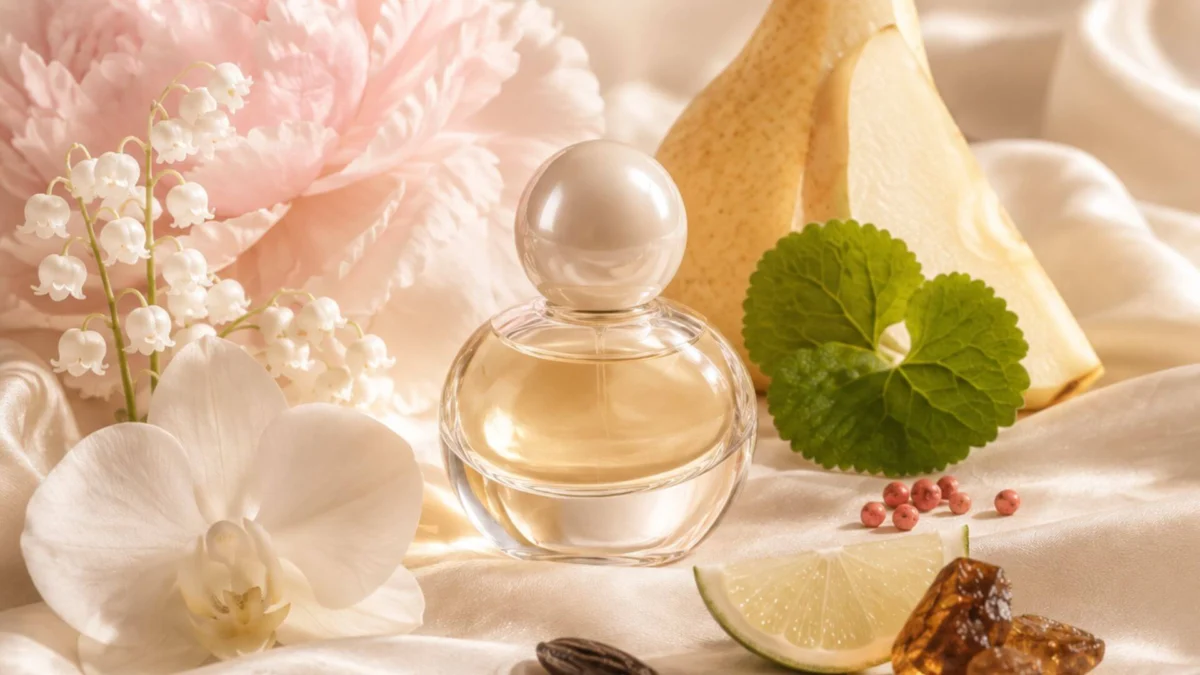
When Sensai ventured into the fragrance market in 2015 with "The Silk," the goal was not to replicate the smell of a textile, but to translate the tactile sensation of silk against the skin into an olfactory experience. Developed by renowned perfumer Marie Salamagne, the composition utilizes the orchid to provide a bridge between fresh top notes and a warm, sensual base.
The fragrance opens with a vibrant burst of pear and bergamot, accented by pink pepper and violet leaves. As the scent develops, the "heart" reveals a sophisticated floral bouquet of peony, lily of the valley, and orchid. In this context, the orchid accord provides a velvety texture that mimics the shimmer of silk. The base notes of amber, musk, and tonka bean ensure that the fragrance remains grounded, offering a "clean" finish that avoids the cloying sweetness often associated with traditional florals. This strategic use of the orchid aligns with the modern "skin scent" trend, where the fragrance is intended to enhance, rather than mask, the wearer’s natural aroma.
The Market for "Clean" Florals: Versace and the Bright Crystal Phenomenon
While Sensai represents the niche, texture-driven side of orchid perfumery, Versace’s "Bright Crystal" illustrates the orchid’s massive commercial appeal in the "fresh and clean" category. Launched in 2006 and composed by master perfumer Alberto Morillas, Bright Crystal remains one of the most successful floral fragrances of the 21st century.
Unlike the dense, heady orientals of the 1980s, Bright Crystal utilizes aquatic and citrus notes—specifically yuzu and pomegranate—to create an immediate sense of luminosity. The heart of the fragrance features a combination of peony, magnolia, and lotus flower, often supported by orchid-like accords that provide a subtle, powdery depth. The success of such fragrances indicates a broader shift in consumer preference toward "transparent" florals. Market data suggests that younger demographics, particularly Millennials and Gen Z, favor scents that evoke a sense of hygiene, water, and fresh air, moving away from the heavy musks and resins of previous decades.

Economic and Environmental Implications
The continued use of the orchid as an inspiration in perfumery has significant implications for both the economy and the environment. The fragrance industry’s reliance on synthetic reconstructions (via headspace technology) is, in many ways, a victory for sustainability. By replicating the scent of rare orchids in a lab, the industry avoids the need to harvest thousands of wild or endangered plants, which would be ecologically devastating.
Furthermore, the "orchid accord" allows for a degree of creative freedom that natural extracts cannot provide. Perfumers can manipulate the molecular structure to emphasize specific facets—making a scent "greener," "creamier," or "spicier" depending on the brand’s identity. This flexibility is essential in a market where "newness" is a primary driver of sales. According to industry analysts, the "floral-fresh" subcategory, where orchid-based scents often reside, is expected to grow at a compound annual growth rate (CAGR) of 4.5% over the next five years.
Future Trends: The Convergence of Botany and Biotechnology
As the fragrance industry moves toward 2030, the role of the orchid is expected to evolve alongside advancements in biotechnology. Companies are now exploring "white biotechnology"—using fermented yeast and bacteria to produce aromatic molecules that were previously only available through chemical synthesis or expensive natural harvesting. This could lead to the creation of entirely new orchid accords that capture the scent of species that have never been successfully integrated into perfumery before.
Moreover, the rise of "functional fragrance"—scents designed to trigger specific emotional responses—may see the orchid used in new ways. Given the cultural history of the orchid as a symbol of calm, luxury, and refinement, it is likely to remain a staple in aromatherapy-inspired luxury perfumes.

In conclusion, the orchid is far more than a floral note; it is a botanical bridge between the prehistoric past and the technological future. From its origins in the era of the dinosaurs to its current status as a symbol of "clean luxury" in the portfolios of brands like Sensai and Versace, the orchid continues to demonstrate an unparalleled ability to adapt. As perfumery becomes increasingly focused on sustainability and molecular precision, the orchid’s "intimate side"—revealed through science and artistry—will continue to define the olfactory landscape of the modern era.

0 Comments