
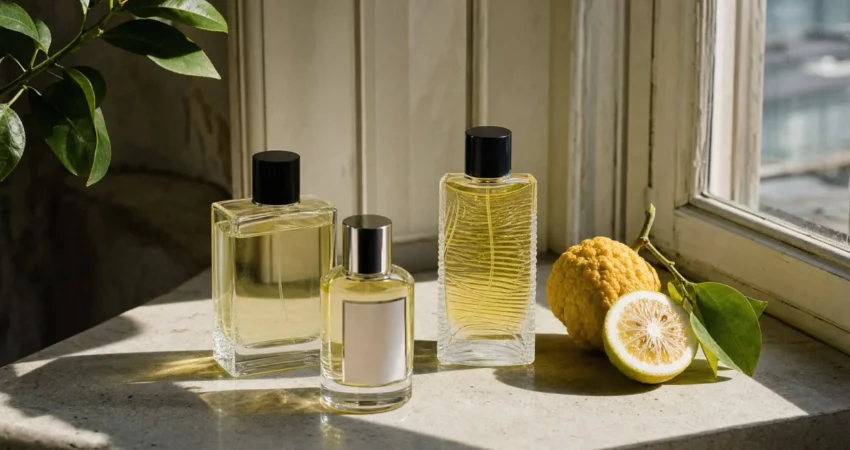
The landscape of luxury perfumery is currently undergoing a significant olfactory shift as the industry moves beyond traditional citrus staples toward more complex, exotic botanical profiles. While lemon, bergamot, and sweet orange have long dominated the "fresh" category of the fragrance market, the yuzu—a rare, knobby citrus fruit primarily cultivated in East Asia—has emerged as the definitive note of the current season. This trend, highlighted by the recent releases from major fashion houses such as Guerlain and Louis Vuitton, signals a broader consumer desire for fragrances that offer both immediate freshness and sophisticated, long-lasting depth.
Known scientifically as Citrus junos, the yuzu is a hybrid of the mandarin orange and the Ichang papeda. Unlike common lemons, which offer a straightforward acidic sharpness, the yuzu presents a multi-faceted aroma described by chemists and perfumers as a cross between a grapefruit and a mandarin, accented with distinct floral, herbal, and even slightly bitter nuances. This complexity makes it an ideal candidate for high-end perfumery, where the goal is to create a "sparkling" top note that does not dissipate instantly but instead evolves into a more nuanced heart.
The Botanical and Cultural Heritage of Yuzu
To understand the current surge in yuzu-based fragrances, one must look at its historical and cultural significance. Originating in the Yangtze River basin in China over 1,000 years ago, the yuzu was introduced to Japan and Korea during the Tang Dynasty. In Japan, it is more than just a culinary ingredient; it is a cultural icon. The "Toji" tradition, or the winter solstice bath, involves floating whole yuzu fruits in hot water to release their essential oils, which are believed to protect the skin, warm the body, and ward off illness.

In the realm of extraction, the yuzu presents a unique challenge that contributes to its exclusivity in the luxury market. The essential oil is typically obtained through cold-pressing the rind, similar to other citrus fruits. However, the yield is significantly lower than that of a standard lemon or orange. It takes approximately 100 kilograms of yuzu fruit to produce a small fraction of essential oil, making it a "precious" raw material. This scarcity, combined with its unique chemical composition—rich in limonene and yuzunone—provides a "dry" freshness that is less sugary than orange and more sophisticated than lime.
Market Dynamics: The Shift Toward Niche Citrus
The fragrance industry, valued at approximately $58.27 billion in 2023 and projected to reach over $79 billion by 2030, is seeing a pivot toward "niche-style" compositions even within mainstream luxury brands. Consumers are increasingly seeking "clean" and "energizing" scents that avoid the synthetic "cleaning product" associations sometimes linked to low-quality lemon notes.
Industry data suggests that the "Citrus" olfactory family remains the most popular for daytime wear, accounting for nearly 30% of global sales. However, the sub-category of "Exotic Citrus" (including yuzu, kumquat, and finger lime) is growing at a faster rate than traditional accords. This shift is driven by a more educated consumer base that values ingredient provenance and the storytelling aspect of perfumery.
Analysis of the Four Pillars of the Yuzu Trend
The current season has been defined by four specific fragrances that showcase the versatility of the yuzu note, each targeting a different facet of the modern consumer’s lifestyle.

1. Guerlain: Aqua Allegoria Forte Oud Yuzu
Guerlain, a house with a heritage dating back to 1828, has utilized the yuzu to bridge the gap between two seemingly polar opposite olfactory families: the citrus and the oriental. In the Oud Yuzu Forte composition, perfumer Delphine Jelk employs the yuzu to provide a "luminous" counterpoint to the dark, resinous, and animalic qualities of oud wood.
This fragrance is a significant case study in modern sustainability efforts. As part of the Aqua Allegoria line, it is formulated with over 90% natural-origin ingredients and utilizes organic beetroot alcohol. The juxtaposition of the "acidulated" yuzu with the "ambery" oud creates a scent that is suitable for both high-heat summer days and the cooling transition into autumn, proving that yuzu is not merely a "cooling" agent but a structural component that can support heavy base notes.
2. Acqua di Parma: Signatures of the Sun Yuzu
Acqua di Parma has built its brand identity on the "Colonia" heritage of Italian citrus. However, through its Signatures of the Sun collection, the brand seeks to interpret non-Italian ingredients through an Italian lens. Their Yuzu fragrance is perhaps the most "pure" representation of the fruit on the market.
By pairing yuzu with Sichuan pepper and bergamot in the top notes, the brand emphasizes the fruit’s spicy, piquant nature. The inclusion of lotus and mimosa in the heart notes provides a "watery floral" texture that mimics the sensation of a traditional Japanese yuzu bath. Market analysts view this release as a strategic move to appeal to the Asian luxury market while maintaining the brand’s European craftsmanship.

3. Heeley x Maison Kitsuné: Note de Yuzu
This collaboration represents the intersection of niche perfumery and contemporary fashion. James Heeley, a British designer and perfumer based in Paris, worked with the Franco-Japanese brand Maison Kitsuné to create a scent that captures "modern Tokyo."
Note de Yuzu is distinct for its use of "sea salt" accords. While most citrus scents rely on floral or woody backbones, this fragrance uses a saline, aquatic heart to enhance the bitterness of the yuzu. This creates a "skin-scent" effect—smelling like salt water and fresh citrus—which aligns with the "Clean Girl" and "Quiet Luxury" aesthetics currently dominating social media trends. It serves as an example of how yuzu can be used to create an "olfactory atmosphere" rather than just a traditional perfume.
4. Louis Vuitton: On the Beach
Master perfumer Jacques Cavallier-Belletrud, working from his creative atelier in Grasse, designed On the Beach to evoke the sensory experience of the California coastline. Here, yuzu is used as a "blindingly bright" top note that simulates the intensity of the midday sun.
The complexity of this fragrance lies in its transition from the sharp yuzu top note to a heart of neroli and a base of cypress. The cypress provides a "green," aromatic finish that grounds the citrus, preventing it from becoming too ethereal. At a price point of approximately $300 per 100ml, this fragrance positions yuzu as a pinnacle of luxury, moving it away from the "sporty" associations of 1990s citrus colognes and into the realm of "high art."

Olfactory Implications and the "Bridge" Effect
Perfumers increasingly view yuzu as a "bridge" note. In fragrance chemistry, top notes are usually the most volatile, disappearing within 15 to 30 minutes. Yuzu, however, possesses a slightly higher molecular weight than lemon oil, allowing its presence to be felt longer into the heart of the fragrance.
Furthermore, the "bitter-sweet" duality of yuzu allows it to pair effectively with a wide range of ingredients:
- With Florals: It tames the sweetness of rose or jasmine, adding a modern, "crisp" edge.
- With Woods: It illuminates heavy notes like sandalwood or cedar, making them wearable in humid climates.
- With Synthetics: It blends seamlessly with modern musks (like Ambroxan), creating "luminous" trails that are highly sought after in the "beast mode" fragrance community (scents with high projection and longevity).
Economic and Environmental Considerations
The rise of yuzu also brings to light the challenges of the global fragrance supply chain. Because the majority of high-quality yuzu is grown in specific regions of Japan (such as Kochi Prefecture), the supply is vulnerable to climate fluctuations. Perfume houses are increasingly investing in "vertical integration" or long-term contracts with Japanese farmers to ensure a steady supply of cold-pressed oil.
Additionally, the trend toward "naturality"—as seen in Guerlain’s 90% natural-origin claim—puts pressure on the industry to find sustainable ways to harvest and process the fruit. The use of "upcycled" yuzu (using rinds that are a byproduct of the juice industry) is becoming a standard practice for eco-conscious luxury brands.

Conclusion: A Permanent Fixture in the Fragrance Wardrobe
As the summer season concludes and the industry looks toward the autumn/winter launches, the influence of the yuzu remains apparent. It has successfully shed its reputation as a "niche interest" or a "culinary novelty" to become a cornerstone of modern olfactory design.
The success of fragrances like Oud Yuzu Forte and On the Beach demonstrates that the modern consumer is no longer satisfied with "simple" freshness. They demand a narrative, a specific geographical connection, and a scent that offers a complex evolution on the skin. By providing a sparkling, floral, and slightly bitter profile that traditional citruses cannot match, the yuzu has secured its place as the "new gold" of the perfumer’s palette. Whether as a solo star or a supporting player to deep woods and resins, yuzu is no longer a passing trend; it is the new standard for sophisticated freshness in the 21st century.

0 Comments