
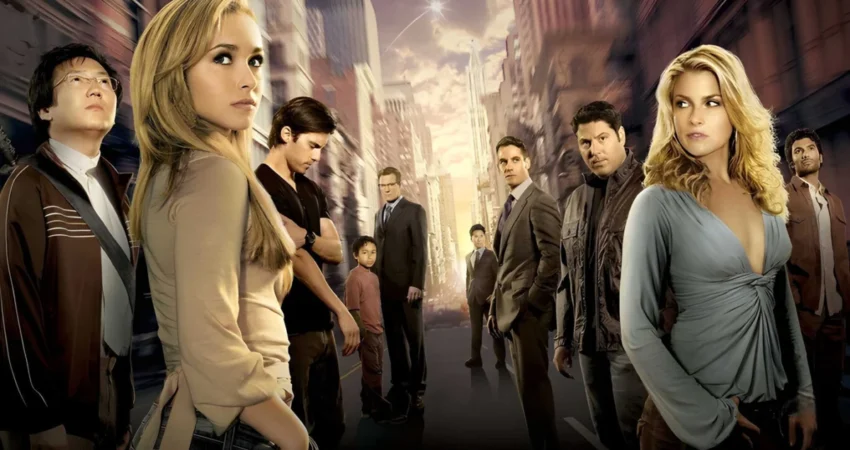
The landscape of modern television is currently saturated with caped crusaders and multiversal epics, but twenty years ago, the concept of a serious, serialized superhero drama was a revolutionary gamble. When NBC premiered Heroes in the autumn of 2006, it did not just introduce a new show; it launched a global cultural phenomenon. At the heart of this frenzy was a singular, haunting directive that echoed through playgrounds, offices, and early internet forums: "Save the cheerleader, save the world." This phrase became the DNA of a production that, for a brief but brilliant moment, stood as the pinnacle of science fiction storytelling. Today, as fans revisit the series on streaming platforms like Netflix and Prime Video, the legacy of Heroes serves as both a nostalgic reminder of the 2000s and a masterclass in the volatility of television production.
Created by Tim Kring, Heroes arrived at a time when the "mystery box" format, popularized by Lost, was the dominant currency of prestige TV. However, Heroes distinguished itself by grounding the extraordinary in the mundane. The series followed an ensemble cast of diverse individuals across the globe who discovered they possessed superhuman abilities. These were not costumed vigilantes but ordinary people: a Japanese office worker who could bend time, a struggling artist in New York who painted the future, a politician with the power of flight, and a high school cheerleader with cellular regeneration. The brilliance of the first season lay in its restraint and its "comic book come to life" aesthetic, utilizing the artwork of the late Tim Sale to bridge the gap between traditional television and the sequential art that inspired it.

The initial reception was nothing short of a juggernaut. During its first season, Heroes averaged approximately 14.3 million viewers per episode in the United States, a figure that modern network dramas rarely touch. It was a critical darling as well, securing eight Emmy Award nominations, including Outstanding Drama Series, and a Golden Globe nomination for Best Television Series – Drama. The show’s cultural footprint was so large that it even attracted the "Father of Marvel," Stan Lee, for one of his iconic cameos. Beyond the numbers, Heroes pioneered a transmedia approach to storytelling, releasing weekly webcomics and interactive "hidden" websites for the fictional Primatech Paper company, which enriched the lore for a burgeoning online fandom.
The narrative engine of the first season was the looming threat of a nuclear explosion in New York City, a prophecy that slowly drew the disparate characters together. Central to this tension was the character of Claire Bennet, portrayed by Hayden Panettiere. As the titular cheerleader whose survival was paramount to the fate of humanity, Panettiere became the face of the series. Her character’s struggle with immortality and her complicated relationship with her adoptive father, Noah Bennet (the "Man in the Horned Glasses"), provided the emotional core of the show. The series also introduced one of television’s most terrifying villains in Sylar, played by Zachary Quinto. Sylar’s methodology—opening the skulls of other "evolved humans" to understand and steal their powers—injected a sense of psychological horror and visceral stakes that set Heroes apart from the family-friendly superhero tropes of the era.
However, the meteoric rise of Heroes was followed by a precipitous and well-documented decline. The primary catalyst for this shift was the 2007-2008 Writers Guild of America (WGA) strike. This labor dispute, which lasted 100 days, struck just as Heroes was beginning its second season. Originally planned to consist of 24 episodes divided into three distinct "volumes" (Generations, Exodus, and Villains), the strike forced producers to truncate the season to only 11 episodes. This disruption had a catastrophic effect on the narrative momentum. The "Exodus" volume was scrapped entirely, and the "Generations" storyline was rushed to a premature conclusion. Subplots that were meant to span months, such as Peter Petrelli’s time in Ireland or the introduction of the Shanti Virus, were either abandoned or resolved with jarring haste.

The strike-induced hiatus also gave way to deeper creative struggles. As the series progressed into its third and fourth seasons, it fell victim to "power creep," a common pitfall in superhero fiction where characters become so powerful that writers struggle to create meaningful stakes. The show began to rely heavily on time travel and alternate futures, leading to a convoluted timeline that alienated casual viewers. Characters who were killed off were frequently brought back through various plot devices, diluting the emotional impact of their original departures. Despite these hurdles, the show’s fourth season attempted a return to form with the "Redemption" arc, introducing Robert Knepper as the leader of a mysterious carnival of outcasts, but the ratings had dwindled significantly from their Season 1 peaks. NBC officially canceled the series in May 2010.
The cast of Heroes went on to become staples of the entertainment industry, proving the show’s eye for talent. Zachary Quinto parlayed his success as Sylar into the role of Spock in the J.J. Abrams Star Trek reboot. Milo Ventimiglia, who played the empathetic Peter Petrelli, later found massive success as the lead in the hit drama This Is Us. Masi Oka, whose portrayal of the optimistic Hiro Nakamura earned him a Golden Globe nomination, became a prominent figure in both acting and digital effects. Hayden Panettiere continued her career with a long-running role in Nashville, though her journey has been marked by personal challenges and the recent, tragic loss of her brother, Jansen Panettiere, which has brought her back into the public eye as a vocal advocate for mental health and industry reform.
In the years following its cancellation, the industry’s perspective on Heroes has shifted. While it is often cited as a "what if" story regarding the impact of the writers’ strike, it is also recognized as the precursor to the modern superhero boom. Before the Marvel Cinematic Universe redefined the global box office, Heroes proved that audiences were hungry for serialized, character-driven stories about the extraordinary. The show’s influence can be seen in modern hits like The Boys, The Umbrella Academy, and Invincible, which similarly explore the darker, more grounded consequences of having superhuman abilities.
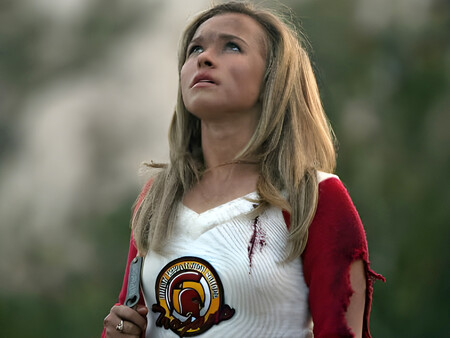
The 2015 limited series revival, Heroes Reborn, attempted to recapture the magic of the original run by bringing back legacy characters like Noah Bennet and Hiro Nakamura. While it provided a sense of closure for some long-standing mysteries, it failed to ignite the same cultural firestorm as its predecessor, ultimately serving as a coda to the franchise rather than a new beginning.
Today, the 20th anniversary of the show’s development offers a moment for reflection. For those who experienced the first season in real-time, Heroes represents a specific era of television—a time when "event TV" meant gathering around a screen on Monday nights to see if the world would indeed be saved. The show’s availability on streaming platforms has allowed a new generation to discover the brutal efficiency of Sylar, the charm of Hiro’s "Yatta!" exclamations, and the high-stakes drama of the Bennet family.
In Mexico and across Latin America, the series remains a staple of the Netflix and Prime Video libraries, consistently drawing in viewers who are looking for a binge-worthy alternative to the modern, often formulaic superhero offerings. With over 70 episodes spanning four seasons, the journey from "Genesis" to "Brave New World" remains a compelling watch. The production’s high-quality cinematography, combined with its ambitious global scope—filming locations and storylines spanning from Tokyo and New York to Odessa and India—ensures that the show does not feel dated, even two decades later.

The legacy of Heroes is ultimately one of ambition. It was a show that dared to treat comic book tropes with the gravity of a Shakespearean tragedy. It navigated the complexities of fate, evolution, and the human condition, asking the question: "If you had the power to change the world, would you be a hero or a monster?" While its narrative path was undeniably scarred by industry strikes and creative missteps, the "Save the cheerleader, save the world" era remains a landmark in television history. It stands as a testament to the power of a great premise and a reminder that, even in a world of gods and monsters, it is the human stories that truly resonate. As the series continues to live on through streaming, its place in the pantheon of science fiction remains secure, reminding us that sometimes, to save the world, you just have to save one person.

0 Comments