
Christopher Nolan has established himself as a singular architect of modern cinema, a director whose name is synonymous with intellectual rigor, practical scale, and narrative complexity. Within his storied filmography, which spans from the grounded noir of Memento to the historical weight of Oppenheimer, few projects have captured the collective imagination quite like Inception. Released in 2010, the film did more than just dominate the summer box office; it introduced a lexicon of subconscious architecture that fueled over a decade of intense fan theories, academic debate, and cinematic analysis. As Nolan’s more recent works continue to push the boundaries of time and space, revisiting Inception provides a crucial understanding of how he perfected the "intellectual blockbuster"—a film that demands as much from its audience’s cognitive faculties as it does from their senses.
A Paradigm Shift in Modern Science Fiction
Inception arrived at a time when the science fiction genre was increasingly leaning toward digital spectacle. Nolan, however, chose a different path, blending the tropes of a high-stakes heist movie with a deeply philosophical exploration of the human mind. The film follows Dom Cobb (played by Leonardo DiCaprio), a professional "extractor" who steals corporate secrets by entering the dreams of his targets. The narrative stakes are heightened when Cobb is offered a chance at redemption: instead of stealing an idea, he must perform "inception"—the act of planting an idea so deeply in a subject’s subconscious that they believe it is their own.
The brilliance of Inception lies in its structural integrity. While the concept of "dreams within dreams" could easily descend into incoherence, Nolan anchored the film with a set of rigid internal rules. Concepts such as the "totem" (an object used to distinguish reality from a dream), the "kick" (a physical sensation used to wake a dreamer), and "limbo" (unconstructed dream space) provided the audience with the tools necessary to navigate the film’s four-layered climax. This structural clarity allowed Nolan to experiment with time dilation, where minutes in the real world translate to hours, days, or even years within the nested dream states.
Technical Mastery and the Rejection of Digital Over-Reliance
A hallmark of Christopher Nolan’s career is his steadfast commitment to practical effects, a philosophy that reached an early pinnacle during the production of Inception. Despite the film’s surreal imagery—ranging from folding cityscapes in Paris to a freight train barreling through downtown Los Angeles—Nolan and his cinematographer, Wally Pfister, relied heavily on physical sets and in-camera illusions.
One of the film’s most iconic sequences, the zero-gravity hallway fight involving Joseph Gordon-Levitt’s character, Arthur, was achieved using a massive rotating centrifuge. The actors and stunt teams spent weeks rehearsing in the spinning corridor to master the physics of the scene, resulting in a level of tactile realism that CGI often fails to replicate. This dedication to the physical medium extends to Nolan’s personal life and professional habits; the director is famously known for eschewing smartphones and email, a choice he has described as increasingly difficult but necessary for maintaining the focus required to construct his intricate scripts. This "analog" approach to a digital age is reflected in the textures of Inception, making the film feel timeless despite its futuristic premise.
The Assembly of an Ensemble Powerhouse
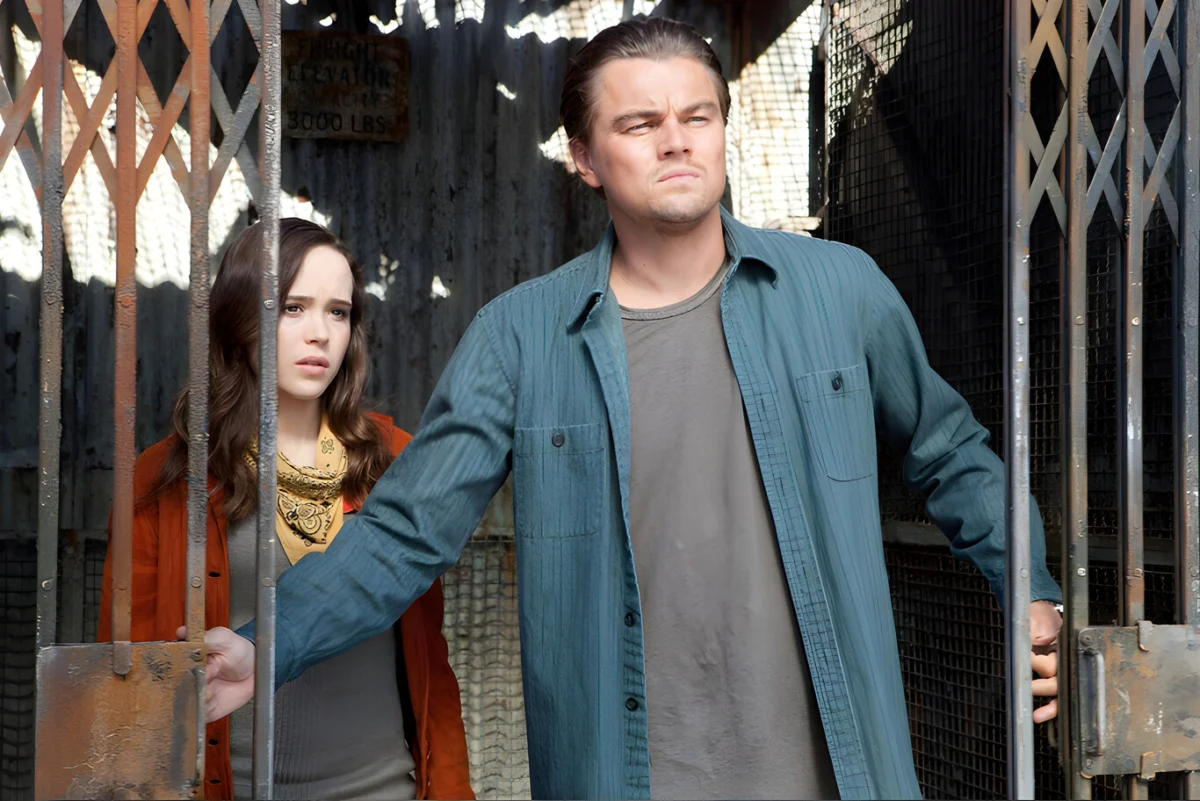
The enduring success of Inception is also a testament to its cast, which Nolan meticulously assembled to ground the film’s high-concept ideas in human emotion. Leonardo DiCaprio’s portrayal of Dom Cobb provided the film’s emotional core, transforming a heist movie into a tragic story of grief and the inability to let go of the past. Supporting DiCaprio was a cast that would largely become the "Nolan troupe," including Cillian Murphy as the vulnerable heir Robert Fischer, and Tom Hardy as the charismatic "forger" Eames.
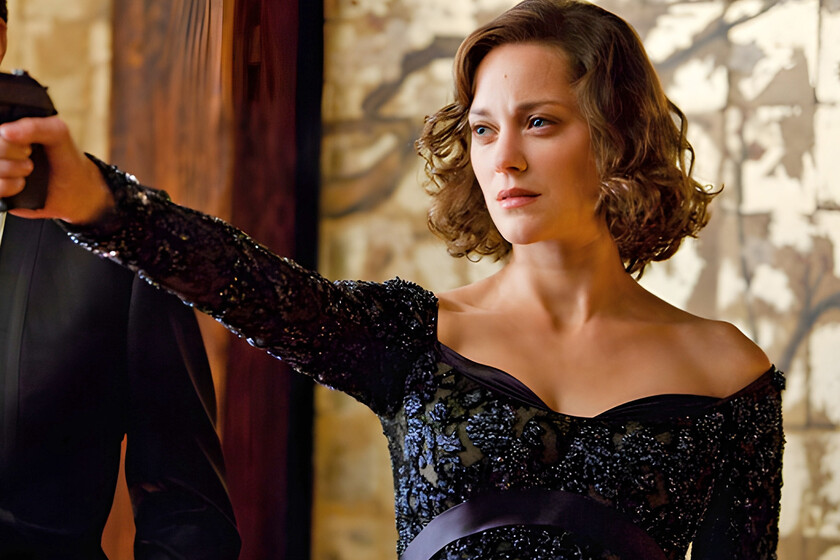
The film also introduced global audiences to Elliot Page as Ariadne, the "architect" who serves as the audience’s surrogate, and featured veteran actors like Michael Caine and Ken Watanabe. Each performance was calibrated to balance the technical demands of the script with genuine character development. Marion Cotillard’s performance as Mal, Cobb’s deceased wife who haunts his subconscious, added a layer of psychological horror to the film, illustrating the danger of becoming lost in one’s own mental projections.

Deciphering the Labyrinth: The Rules of the Oniric World
To understand the 13-year debate surrounding the film’s ending, one must first understand the mechanics Nolan established. The film posits that the subconscious is a fortress, and the deeper one goes into a dream, the more unstable the environment becomes. This is mitigated by the "Architect," who designs the layout of the dream to keep the "projections" (the subject’s subconscious defenses) at bay.
The concept of the "totem" is perhaps the most vital piece of data in the film’s lore. Cobb’s totem is a small silver spinning top that originally belonged to Mal. In a dream, the top will spin indefinitely; in reality, it eventually wobbles and falls. This single object became the focal point of the film’s final shot, where the camera cuts to black just as the top begins to lose its momentum, leaving Cobb’s fate—and his reality—unconfirmed.
The Thirteen-Year Resolution of the Spinning Top
For over a decade, the "spinning top" debate was a staple of internet culture. Fans analyzed everything from the children’s clothing in the final scene to whether or not Cobb was wearing a wedding ring (another popular theory suggests the ring is his true totem). However, the ambiguity was partially resolved through two major developments: a 2023 interview with Christopher Nolan and a much earlier clarification from Michael Caine.
In a 2023 conversation with Deadline, Nolan addressed the ending by shifting the focus from the physical state of the top to the emotional state of the character. He argued that whether Cobb is dreaming is irrelevant to the character’s arc because, by the end of the film, Cobb no longer cares to look at the top. He has chosen his reality, effectively completing his emotional journey. While some fans found this philosophical explanation "unsatisfying," it aligns with Nolan’s broader themes of subjective truth.
However, for those seeking a more literal answer, Michael Caine provided the definitive "data" during a 2018 appearance at the Film 4 Summer Screen. Caine revealed that when he first read the script, he was confused about which scenes were real. He stated, "I said to [Nolan], ‘I don’t understand where the dream is.’ I said, ‘When is it the dream and when is it reality?’ He said, ‘Well, when you’re in the scene, it’s reality.’ So, get that—if I’m in it, it’s reality. If I’m not in it, it’s a dream." Since Caine’s character appears in the final scene to welcome Cobb home, the "Caine Rule" confirms that the ending takes place in the physical world.
Critical Reception and Long-Term Cultural Footprint
Upon its release, Inception was both a critical darling and a commercial juggernaut. It earned over $836 million worldwide, a staggering figure for an original, non-franchise property. The film was nominated for eight Academy Awards, including Best Picture and Best Original Screenplay, and won four in technical categories: Best Cinematography, Best Sound Editing, Best Sound Mixing, and Best Visual Effects.
The film’s impact on popular culture is measurable through the "Inception-ization" of media. The "BRAAAM" sound effect from Hans Zimmer’s score—actually a slowed-down version of Edith Piaf’s "Non, Je Ne Regrette Rien"—became the standard for action movie trailers for the next decade. Furthermore, the term "Inception" entered the common vernacular as a suffix or shorthand for anything nested within itself or for the act of subtly influencing someone’s thoughts.
Chronology of Nolan’s "Mind-Bending" Era
To place Inception in its proper historical context, one must look at the timeline of Nolan’s career during this period:

- 2005: Batman Begins – Nolan revitalizes the superhero genre with realism.
- 2006: The Prestige – A precursor to Inception’s themes of obsession and layered deception.
- 2008: The Dark Knight – A massive success that gave Nolan the "creative blank check" to make Inception.
- 2010: Inception – The definitive original sci-fi of the decade.
- 2014: Interstellar – An expansion of Inception’s time-dilation concepts into astrophysics.
- 2020: Tenet – Often viewed as a spiritual, albeit more complex, successor to Inception.
Availability and the Digital Preservation of Nolan’s Work
Despite Nolan’s preference for the theatrical experience and physical film, Inception has found a permanent home in the digital landscape. As of 2024, the film remains a flagship title on HBO Max (now Max), where it continues to attract new generations of viewers. Its presence on streaming platforms ensures that the debate over its ending—and the appreciation for its craftsmanship—remains active.
In conclusion, Inception stands as a landmark of 21st-century cinema because it refused to underestimate its audience. It combined the visceral thrills of an action epic with a narrative structure that rewarded repeat viewings and deep analysis. While the mystery of the spinning top may have been solved by the director and his cast, the film’s true power lies in its ability to make the viewer question the nature of their own perceptions. Sixteen years after its debut, it remains the gold standard for how to balance the intellectual with the spectacular, proving that a story about dreams can have a very real, lasting impact on the world of film.

0 Comments