
The fashion landscape of the summer 2026 season has been characterized by a decisive shift toward functional elegance, as consumers increasingly prioritize versatility and textile quality over transient trends. As the final weeks of the high-summer season approach, the retail giants of the Iberian Peninsula—Zara, Mango, and Massimo Dutti—have solidified their dominance in the "resort-wear" category. This sector, once reserved for luxury boutiques, has been democratized through the use of premium natural fibers such as linen, ramie, and organic cotton. The current market demand focuses on the "all-day" garment: a single piece capable of transitioning from a maritime environment to a formal evening setting with minimal adjustments. This report analyzes six specific designs that have emerged as the definitive "coastal uniform" for the 2026 season, examining their construction, market positioning, and the broader industry trends they represent.
The Strategic Shift Toward Premium Textiles in Mass Market Fashion
The 2026 summer collections from Inditex (the parent company of Zara and Massimo Dutti) and Mango reflect a broader industry move toward "quiet luxury" and sustainable material sourcing. Market data from the first half of the fiscal year indicates a 12% increase in the consumption of linen-blend garments compared to the previous year. This trend is driven by a consumer base that is increasingly literate in textile durability and thermal regulation.

Linen, a carbon-neutral fiber when grown traditionally, has become the centerpiece of these collections. Massimo Dutti, positioning itself as the "premium-bridge" brand, has leaned heavily into 100% linen compositions, while Zara and Mango have utilized linen-viscose and linen-cotton blends to offer a balance between the fiber’s natural breathability and a more manageable, wrinkle-resistant drape. The economic implication is clear: by elevating material quality, these brands are successfully capturing a demographic that formerly shopped exclusively in the high-end contemporary market.
Analysis of the Seasonal Staples: The Six Pillars of the Coastal Wardrobe
1. The Architectural White Linen Maxi (Zara)
Zara’s contribution to the seasonal essential list is a long, fluid maxi dress that serves as a masterclass in minimalist construction. Composed of a high-percentage linen blend, the garment features a V-neckline both at the front and back, accented by strategic gathering or frunces.
From a design perspective, the white maxi dress is a perennial staple, but the 2026 iteration focuses on volume and movement. Retail analysts note that "optical white" remains the highest-selling colorway for coastal destinations, as it psychologically mirrors the Mediterranean aesthetic. At a price point of 35.95 euros, this piece represents Zara’s "high-volume, high-style" strategy, designed to be styled with artisanal accessories like raffia baskets and oversized sunglasses to elevate its perceived value.

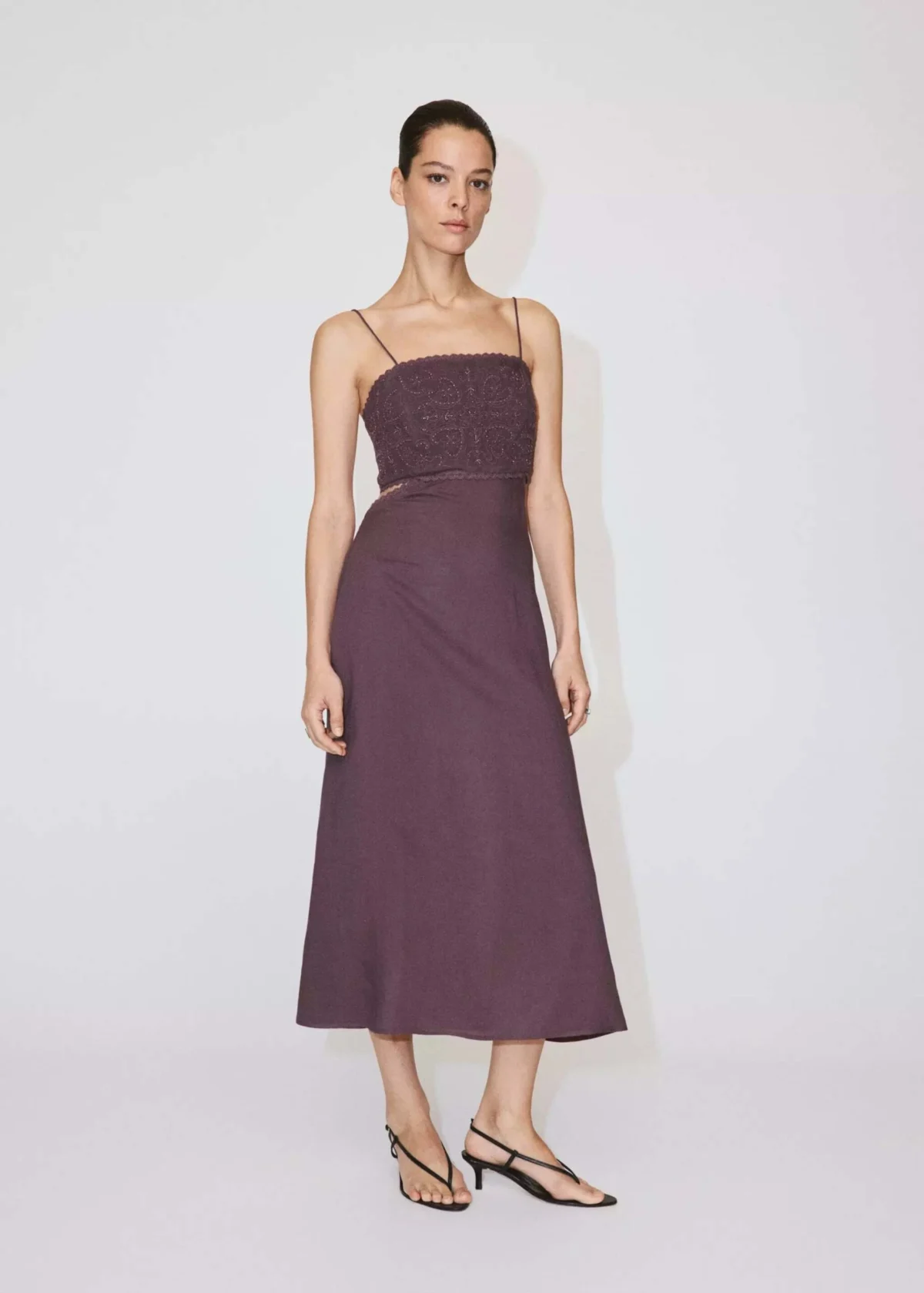
2. The Chocolate Brown Linen-Blend Midi (Mango)
Mango has challenged the traditional summer palette by introducing "Chocolate Brown" as a core neutral for the warmer months. This midi-length dress, featuring thin straps and a straight neckline, utilizes a linen-mix fabric that provides a structured yet breathable silhouette.
The inclusion of side slits or aberturas is a calculated design choice that enhances mobility while maintaining a sophisticated profile. Industry insiders suggest that the move toward darker neutrals in summer—specifically browns and olives—is a response to the "trans-seasonal" shopping habit, where consumers purchase items in August that can reasonably be layered with knitwear in September.
3. The Scarf-Detail Cotton Column Dress (Massimo Dutti)
Massimo Dutti continues to differentiate itself through structural innovation. The 100% cotton midi dress featuring an integrated scarf detail at the neckline is a prime example of "elevated basics." This design serves a dual purpose: the scarf provides a built-in accessory that adds a layer of formality, making the transition from a daytime beach walk to a high-end dinner seamless.

The use of 100% cotton in a heavy-weight weave ensures the dress maintains its shape, a common complaint with lighter summer fabrics. Priced at 129 euros, it sits at the top of the price hierarchy for these six pieces, targeting a consumer who views fashion through the lens of investment and architectural form.
4. The Cerulean Blue Halter Linen (Zara)
Color psychology plays a significant role in the success of Zara’s halter-neck midi. The specific shade of blue utilized in this 2026 collection is designed to complement a wide range of skin tones, particularly when enhanced by summer sun exposure.
The halter neckline, paired with an open-back design, maximizes airflow, addressing the functional needs of travelers in high-temperature regions. The cross-over neckline adds a level of sophistication that distinguishes it from standard sundresses. This piece exemplifies Zara’s ability to take a classic silhouette and modernize it through color choice and minor structural tweaks.

5. The Asymmetric Gingham Midi (Mango)
Pattern play in the 2026 season has moved away from loud florals toward heritage prints like gingham. Mango’s asymmetric hem dress in sky-blue gingham offers a "playful yet polished" option for the coastal wardrobe.
The evasé silhouette (A-line) is globally recognized for its flattering fit across different body types, contributing to the garment’s commercial success. The fluid fabric choice allows the asymmetric hem to move dynamically, a feature that has made the dress a favorite among social media fashion influencers. By combining a traditional print with a contemporary cut, Mango bridges the gap between nostalgic "cottage-core" and modern minimalism.
6. The Crimson Open-Back Linen (Massimo Dutti)
The final piece in this curated selection is the 100% linen red dress from Massimo Dutti. Red has been identified by trend forecasting agencies as a "power neutral" for 2026. This design features a clean, straight neckline and a dramatic open back.

The choice of red is a strategic departure from the whites and beiges that typically dominate summer collections. It offers a high-impact visual that requires little to no jewelry, catering to the "effortless" ethos of Mediterranean style. When paired with beige or tan accessories, the garment achieves a balance of vibrancy and restraint.
Chronology of a Trend: From Runway to the Chiringuito
The evolution of these six dresses can be traced back to the Spring/Summer 2026 runway shows in Paris and Milan, where designers like Jacquemus and Jil Sander emphasized "raw luxury" and natural textures.
- January – March 2026: Design teams at Inditex and Mango began adapting these high-fashion concepts for mass production, focusing on sourcing sustainable linen from European growers.
- April – May 2026: The "Early Summer" capsules were released, testing the market’s appetite for darker neutrals and structural details like the scarf-neck.
- June – July 2026: High-summer drops introduced the more vibrant colorways (Cerulean Blue and Crimson) and the lightweight white maxis as temperatures rose globally.
- August 2026: The current phase sees these items becoming "viral" staples, as vacation photography on digital platforms solidifies their status as the season’s essential uniform.
Market Implications and Consumer Behavior Analysis
The success of these specific designs highlights a significant change in consumer behavior. The "fast fashion" label is being shed in favor of "accessible premium." Consumers are no longer satisfied with synthetic "look-alikes"; they demand the tactile experience of real linen and cotton.

Furthermore, the "Day-to-Night" versatility of these dresses reflects a socio-economic trend toward efficiency. As travel costs increase, consumers are packing lighter, necessitating garments that can fulfill multiple roles. A dress that works for a "chiringuito" (beach bar) lunch and a port-side dinner represents a higher "cost-per-wear" value, a metric that is becoming increasingly important to the modern shopper.
Broader Impact on the Fashion Industry
The dominance of Zara, Mango, and Massimo Dutti in the Mediterranean aesthetic space has forced higher-end luxury brands to reconsider their entry-level pricing and material transparency. When a consumer can purchase a 100% European-sourced linen dress for under 100 euros that rivals the design of a 1,000-euro luxury equivalent, the value proposition of the luxury sector is challenged.
Additionally, the environmental impact of this shift toward natural fibers is noteworthy. While mass production remains a challenge for sustainability, the move away from polyester and petroleum-based fabrics in these high-volume summer collections represents a marginal but necessary step toward a more circular fashion economy.

In conclusion, the six dresses identified from the 2026 collections of Zara, Mango, and Massimo Dutti are more than mere seasonal items; they are the result of a sophisticated intersection between textile engineering, color psychology, and strategic market positioning. They provide a blueprint for the modern summer wardrobe—one that values the quiet confidence of a well-cut linen hem over the fleeting noise of fast-moving trends. As the summer sun begins to set on the 2026 season, these designs remain as the definitive artifacts of a Mediterranean style that is both timeless and accessible.

0 Comments