
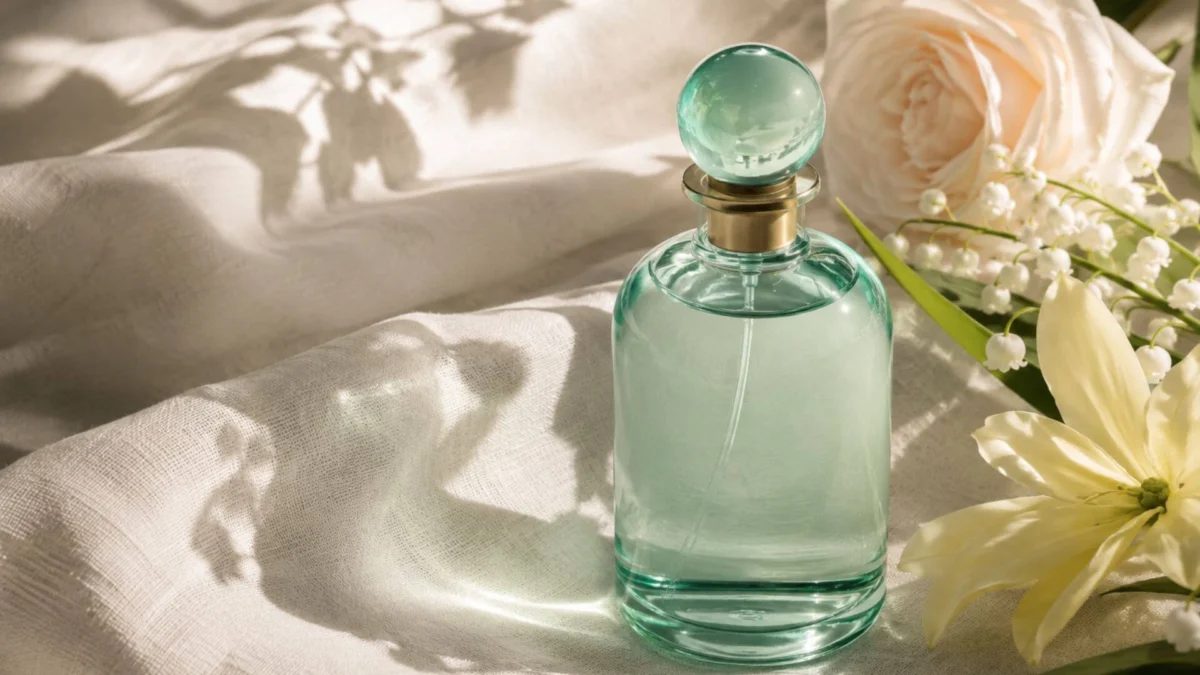
The contemporary fragrance market has witnessed a significant shift toward the "clean" olfactory profile, a trend that transcends simple associations with soap or traditional detergents to evoke more abstract sensations of light, air, and order. Unlike the sharp, citrus-heavy scents of the late 20th century, the modern pursuit of cleanliness in perfumery relies heavily on the sophisticated use of aldehydes. These synthetic organic compounds have the unique capacity to translate visual and tactile experiences—such as the clarity of sunlight through white curtains or the crispness of cold air in a tidy room—into complex aromatic structures. A primary example of this evolution is the 2024 release of Muschio Eau de Toilette by Perlier, a fragrance that utilizes a minimalist palette of white flowers, musk, and vanilla to create an atmospheric sense of serenity. By examining the chemical foundations of these scents and their historical trajectory, it becomes clear that the "scent of clean" is one of the most technically demanding and culturally significant sectors of the global fragrance industry.
The Chemical Foundation: Understanding Aldehydes
To understand the modern clean fragrance, one must first address the chemistry of aldehydes. In technical terms, an aldehyde is an organic compound containing a functional group with the structure −CHO, consisting of a carbonyl center bonded to hydrogen and an R group. While they occur naturally in substances such as rose oil, cinnamon, and citrus rinds, their most transformative application in perfumery comes from laboratory synthesis.
The term was coined in 1835 by the German chemist Justus von Liebig, derived from the Latin alcohol dehydrogenatus (dehydrogenated alcohol). For decades, these compounds remained a curiosity of organic chemistry until the late 19th and early 20th centuries, when perfumers began to experiment with their potent, often polarizing scents. In their concentrated form, aldehydes can be overwhelming, smelling of burnt fat or sharp metallic notes. However, when diluted, they reveal an extraordinary range of facets: some mimic the scent of candle wax or snuffed matches, while others evoke the zest of an orange peel or the ozonic scent of a coming storm.

The true value of aldehydes in a formula is not necessarily their independent scent, but their "lifting" effect. They act as olfactory amplifiers, providing volume and a "sparkle" to traditional floral and woody notes. This creates a sense of three-dimensionality, allowing a fragrance to feel airy and expansive rather than dense and heavy.
A Chronology of the Aldehydic Revolution
The integration of aldehydes into fine fragrance followed a specific timeline of scientific discovery and creative risk-taking:
- 1835: Justus von Liebig identifies and names the aldehyde group, laying the groundwork for synthetic organic chemistry.
- 1903-1904: French chemist Georges Darzens successfully synthesizes the aldehyde C-12 MNA (2-methylundecanal). This molecule would become a cornerstone of the industry, offering a scent profile that was simultaneously herbaceous, metallic, and fresh.
- 1912: Robert Bienaimé creates Quelques Fleurs for the house of Houbigant. This was the first major fragrance to utilize aldehydes to enhance a multi-floral bouquet, though the use was subtle compared to what would follow.
- 1921: The watershed moment for the industry occurs with the launch of Chanel No. 5. Perfumer Ernest Beaux presented Gabrielle Chanel with several samples. Chanel chose "Sample Number Five," which contained an unprecedentedly high concentration of aldehydes. While legend suggests a laboratory assistant may have added a 10% dilution instead of a 1% dilution by mistake, the result was a fragrance that smelled "abstract"—it did not resemble any single flower found in nature, but rather represented the "scent of a woman" and the dawn of the modern era.
- 2024: The launch of Perlier’s Muschio Eau de Toilette represents the democratization and modernization of this lineage, stripping away the heavy animalic and balsamic notes of the past to focus on a "pure" aldehydic light.
Analyzing the Composition of Muschio by Perlier
Perlier’s Muschio Eau de Toilette serves as a case study for the 21st-century interpretation of the aldehydic floral. Launched in 2024, the fragrance eschews the complex, hundred-ingredient formulas of the early 20th century in favor of a precise, architectural approach.
The top notes are dominated by a crisp aldehydic accord, paired with rose and ylang-ylang. In this context, the aldehydes serve to "freeze" the flowers, removing their natural nectar-like sweetness and replacing it with a polished, almost crystalline texture. As the fragrance develops, it introduces lily of the valley (muguet). This note is essential for the "clean" profile; it is a green, watery floral that suggests humidity and fresh air.

The base of the fragrance relies on a combination of white musk and vanilla. Unlike the heavy, gourmand vanillas found in dessert-inspired scents, the vanilla here is used for its creamy, skin-like warmth. When combined with musk, it creates a "second skin" effect—a scent that does not broadcast itself loudly but remains close to the body, mimicking the smell of sun-dried linens. Currently priced at approximately 15.44 euros for a 100ml bottle, the product represents a significant trend in the market: high-concept, "niche-style" olfactory profiles made accessible to a broader consumer base.
Market Trends and the Psychology of "Clean"
The demand for clean-smelling fragrances like Muschio and its contemporaries—such as Vanderbilt by Gloria Vanderbilt—is driven by several socio-economic and psychological factors. Market analysts have noted a sharp increase in the "skin scent" category following the global pandemic. As consumers spent more time in confined spaces, there was a move away from "beast mode" fragrances with massive projection toward scents that promote personal comfort and a sense of hygiene.
Data from the fragrance industry indicates that the "Floral Aldehydic" and "Soft Floral" categories have seen a resurgence among Gen Z and Millennial consumers. This demographic often seeks "quiet luxury"—products that feel expensive and refined but are not overtly flashy. Aldehydes provide this by making a fragrance smell "expensive" through their complexity and their ability to blend disparate notes into a seamless whole.
Furthermore, the association between aldehydes and cleanliness is deeply rooted in the history of functional perfumery. Throughout the mid-20th century, synthetic aldehydes were used extensively in the scenting of high-end soaps and laundry detergents. Consequently, the human brain has been conditioned to associate these specific molecular structures with the concept of being freshly washed. Modern perfumery hijacks this association, elevating it from the laundry room to the vanity.

Comparative Analysis: The Enduring Legacy of Vanderbilt
To understand the versatility of aldehydes, one must compare the "cold" cleanliness of Perlier’s Muschio with the "warm" cleanliness of a classic like Vanderbilt Eau de Toilette. Created by Sophia Grojsman in 1982, Vanderbilt uses aldehydes to a different end.
While Muschio remains airy and linear, Vanderbilt integrates aldehydes with bergamot, orange blossom, and a heavy dose of iris and carnation. The result is a "powdery" clean rather than a "soapy" clean. The aldehydes here provide the lift necessary to prevent the heavy floral and sandalwood base from becoming cloying. Priced competitively at under 10 euros in many European markets, Vanderbilt remains a staple because it demonstrates the "golden age" of aldehydic perfumery—a time when scents were designed to be both clean and opulent.
Industry Implications and the Future of Synthetic Scent
The continued reliance on aldehydes and musks raises important questions about the future of fragrance manufacturing. As the International Fragrance Association (IFRA) continues to tighten regulations on natural extracts—due to allergen concerns or sustainability issues—synthetic molecules like aldehydes become even more vital. They are stable, reproducible, and can be engineered to be biodegradable.
Industry experts suggest that the next frontier in this olfactory category will be "biotech aldehydes"—molecules derived from fermented plant sugars rather than petroleum bases. This would align the "clean" scent profile with "clean" manufacturing labels, a major selling point for the environmentally conscious consumer.

In conclusion, the success of fragrances like Perlier’s Muschio is not merely a matter of fashion but a reflection of a long-standing chemical and cultural evolution. By utilizing the unique properties of aldehydes, perfumers are able to capture the intangible—the smell of light, the feeling of a breeze, and the psychological comfort of a fresh start. As the industry moves forward, these "invisible" molecules will continue to define the boundaries of how we perceive cleanliness and modern elegance in a bottle.

0 Comments