
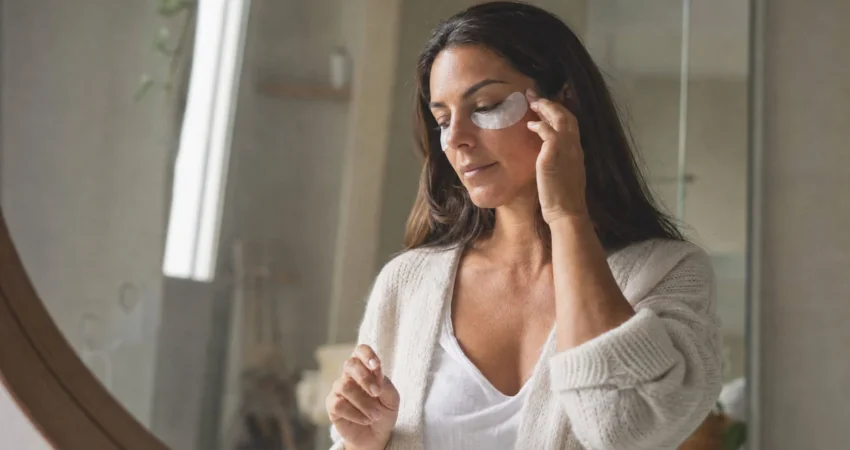
Strategic preparation of the periocular area has emerged as a cornerstone of modern cosmetic routines, particularly during the high-demand holiday season when skin is subjected to environmental stressors, lack of sleep, and the requirements of long-wear makeup. The effectiveness of under-eye patches—once considered a luxury spa treatment—has been codified into three essential gestures: applying them thirty minutes prior to makeup application, optimizing the residual serum, and selecting a fluid concealer. These steps ensure that the delicate skin around the eyes remains luminous and hydrated from the initial toast of a festive dinner through to the conclusion of the evening.
The biological rationale for this targeted treatment lies in the unique anatomy of the under-eye area. The skin in this region is approximately 0.5mm thick, significantly thinner than the 2mm thickness found on the rest of the face. Furthermore, the area possesses fewer sebaceous glands and less collagen, making it the first to exhibit signs of dehydration, fatigue, and fine lines. By utilizing hydrogel or biocellulose delivery systems, users can force-feed active ingredients into the dermis, creating a smooth, turgid surface that facilitates superior makeup adhesion.
The Chronology of Pre-Event Eye Care
The integration of eye patches into a festive preparation routine requires precise timing to maximize the efficacy of the active ingredients and ensure the skin is in an optimal state for color cosmetics.

T-Minus 60 Minutes: Thermal Preparation
For maximum decongestant effect, professional aestheticians recommend storing eye patches in a refrigerated environment (approximately 4°C to 7°C). The application of cold triggers vasoconstriction, which reduces swelling and helps to diminish the appearance of dark circles caused by vascular congestion. This "cryotherapy" effect is particularly beneficial after a long workday or a night of restricted sleep.
T-Minus 45 Minutes: The Application Window
The patches should be applied to clean, dry skin approximately 45 minutes before the intended makeup start time. This allows for a 15-to-20-minute wear time—as typically dictated by product formulations—plus an additional 20 minutes for the skin to fully metabolize the remaining serum. During this interval, the occlusive nature of the patch prevents the evaporation of moisture, driving hyaluronic acid, peptides, or caffeine deeper into the skin layers.
T-Minus 20 Minutes: Serum Integration and Stabilization
Upon removal of the patches, the remaining serum should not be wiped away. Instead, it should be gently tapped into the skin using the ring finger, which exerts the least amount of pressure. A stabilization period of several minutes is crucial; applying concealer immediately onto wet serum can cause the product to "slide" or break down. If the skin remains excessively tacky, a gentle press with a single-ply tissue can remove surface lipids without stripping the hydration.
Scientific Analysis of Ingredient Efficacy
The global eye mask market, valued at approximately $800 million in 2023 and projected to grow at a CAGR of 5.2% through 2030, has seen a shift toward high-performance ingredients. The choice of patch should be dictated by the specific needs of the wearer’s skin.

- Hyaluronic Acid and Glycerin: These humectants are standard in almost all festive-prep patches. They draw moisture into the skin, temporarily "filling" fine lines and creating the "plumped" look necessary for a youthful appearance under harsh event lighting.
- Caffeine and Green Tea Extract: These act as stimulants and antioxidants. Caffeine, in particular, is prized for its ability to reduce edema (puffiness) by stimulating lymphatic drainage in the infraorbital region.
- Niacinamide (Vitamin B3): Included for its brightening properties, niacinamide helps to even out skin tone, reducing the amount of heavy color-correcting concealer required.
- Hydrolyzed Collagen and Peptides: These ingredients aim to improve skin elasticity and provide a temporary tightening effect, often referred to as a "flash" lift.
Supporting Data: The Impact of Hydration on Makeup Longevity
Clinical observations in the field of cosmetic science indicate that hydrated skin requires up to 30% less pigment-based product to achieve full coverage. In the context of the under-eye area, this is significant because the primary cause of makeup "creasing" or "caking" is the accumulation of excess product in the natural folds of the skin.
When the skin is pre-treated with a hydrogel patch, the surface becomes more flexible. This flexibility allows the concealer to move in tandem with facial expressions—such as smiling or squinting—rather than cracking. Data suggests that makeup applied over a patch-treated area maintains its structural integrity for an average of four to six hours longer than makeup applied over dry or minimally moisturized skin.
Professional Techniques for Seamless Integration
The transition from skincare to color cosmetics is where the benefits of the eye patch are either realized or lost. Industry experts emphasize the importance of texture compatibility.
Selecting the Corrective Formula
Over a freshly hydrated eye contour, fluid or creamy concealers with a satin finish are the preferred choice. These formulas contain a higher ratio of emollients to pigments, allowing them to melt into the skin. Conversely, ultra-matte or "full-cover" stick concealers can be too heavy, potentially reacting with the serum residue to create a textured, uneven appearance.

Application and Neutralization
The application should be localized to the inner corner (the tear duct) and the darkest part of the orbital bone. By avoiding the outer corners where "crow’s feet" typically form, the wearer prevents product migration into fine lines. For those with significant discoloration, a peach or salmon-toned color corrector should be applied in a micro-layer before the skin-tone concealer.
The Role of Setting Powder
A common error in holiday makeup is the over-application of setting powder, a technique known as "baking." While this may work for studio photography, it often results in a dry, aged appearance in person. To maintain the luminosity provided by the eye patches, professionals suggest using a minimal amount of finely milled translucent powder, applied only to the inner corner to prevent mascara smudging, while leaving the rest of the contour with its natural, hydrated glow.
Broader Implications and Industry Trends
The rise of "skin-first" makeup reflects a broader shift in the beauty industry toward health-oriented aesthetics. The holiday season of 2024 and 2025 has seen a marked increase in the "Glow Culture" trend, where the objective is to achieve a look of vitality rather than heavy camouflage.
Sustainability Concerns
As the use of single-use eye patches increases, the industry faces scrutiny regarding environmental impact. Most traditional hydrogel patches are biodegradable, but the individual foil sachets and plastic trays contribute to cosmetic waste. In response, there has been a 15% increase in the market share of reusable silicone eye patches, which allow users to apply their own high-quality serums and achieve the same occlusive benefits without the waste associated with disposable options.

The "Self-Care" Psychological Factor
Beyond the physiological benefits, the act of wearing eye patches has become a psychological ritual of preparation. Market research indicates that consumers perceive the 20-minute "patch time" as a period of relaxation that lowers cortisol levels before high-stakes social events. This reduction in stress can, in turn, reduce inflammation and redness in the skin, further enhancing the overall aesthetic outcome.
Expert Consensus and Summary
Dermatologists and celebrity makeup artists agree that the "prep phase" is now as important as the "application phase." The consensus is that the eye patch serves as a bridge between skincare and artistry. By adhering to the 30-minute rule, utilizing the serum as a primer, and opting for lightweight textures, individuals can achieve a professional-grade finish that withstands the rigors of holiday celebrations.
In summary, the transition from a fatigued under-eye to a luminous, party-ready gaze is not the result of a single product, but a synchronized process of hydration, temperature control, and strategic layering. As the beauty industry continues to evolve, the eye patch remains a vital tool for those seeking to maintain a refreshed appearance during the most demanding time of the year. For the best results, users should integrate these steps into a holistic routine that includes adequate hydration and gentle removal of makeup at the end of the night to preserve the delicate health of the ocular contour.

0 Comments