
 Nila Kartika Wati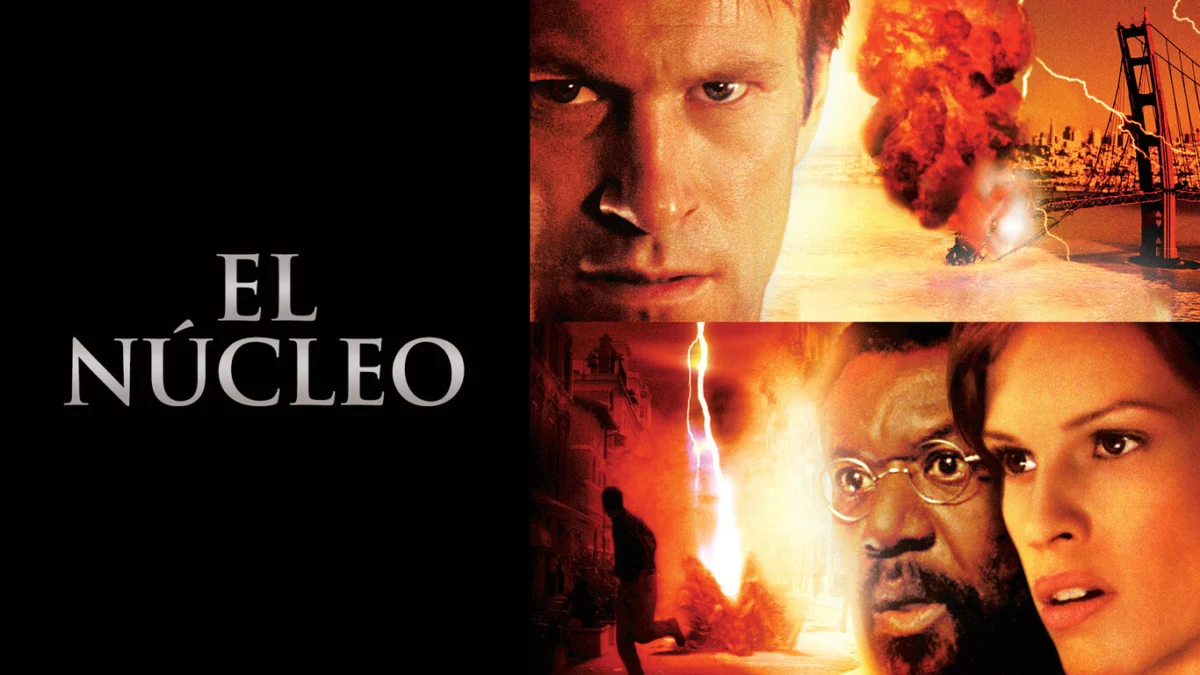
The 2003 science fiction disaster film The Core has long occupied a unique position in the annals of Hollywood history, serving simultaneously as a cautionary tale of scientific inaccuracy and a resilient example of the "guilty pleasure" subgenre. Directed by Jon Amiel and featuring an ensemble cast including Academy Award winner Hilary Swank and Aaron Eckhart, the film was originally conceived as a high-stakes blockbuster intended to capitalize on the disaster movie trend popularized in the late 1990s. However, upon its release, it faced significant hurdles, ranging from a lukewarm critical reception to a dismal performance at the global box office. Despite these initial setbacks, the film has experienced an unexpected revival in the digital age, finding a robust second life on streaming platforms like Netflix, where modern audiences have embraced its campy tone and high-concept premise.
A Narrative Built on Geological Impossibility
The plot of The Core centers on a global crisis of unprecedented proportions: the Earth’s inner core has stopped rotating. According to the film’s internal logic, this cessation leads to the rapid deterioration of the planet’s electromagnetic field, which protects life from lethal solar radiation. The narrative wastes little time establishing the stakes, showcasing a series of escalating catastrophes. These include hundreds of people with pacemakers dropping dead simultaneously, flocks of birds losing their navigational abilities and crashing into buildings in London’s Trafalgar Square, and massive "super-storms" of static electricity leveling world landmarks.
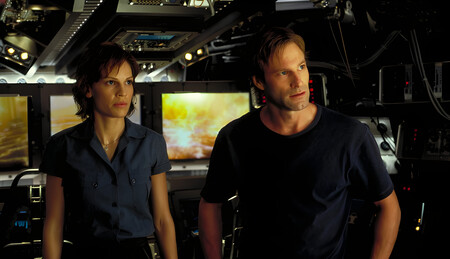
To combat this extinction-level event, the United States government assembles a team of "terranauts" tasked with a mission that mirrors the lunar landings of the 1960s. Led by geophysicist Dr. Josh Keyes (Eckhart) and Major Rebecca "Beck" Childs (Swank), the team must pilot a subterranean vessel named the Virgil through the Earth’s crust and mantle. Their objective is to reach the core and detonate a series of nuclear warheads to "jump-start" the planet’s rotation. The vessel is constructed from a fictional material called "Unobtainium," designed to convert heat and pressure into energy, thereby allowing the ship to survive the extreme conditions of the Earth’s interior.

The Scientific Community’s Critique and NASA’s Response
The primary factor contributing to the film’s enduring notoriety is its total disregard for the laws of physics and geology. While many science fiction films take creative liberties, The Core is frequently cited by the National Aeronautics and Space Administration (NASA) and other scientific bodies as one of the most inaccurate films ever produced. During a 2011 conference, NASA scientists reportedly identified the film as the "least scientifically plausible" movie in history, surpassing even the 1998 blockbuster Armageddon.
The scientific objections to the film are manifold. Geologists have pointed out that the Earth’s magnetic field is generated by the movement of liquid iron in the outer core, and while fluctuations occur over millions of years, a sudden cessation of rotation is physically impossible. Furthermore, the film’s depiction of the Earth’s interior—featuring giant geodes and hollow pockets—contradicts the known reality of extreme pressure that would crush any such structures. The "microwave radiation" depicted as melting the Golden Gate Bridge is also a point of contention; while solar radiation is dangerous, the atmosphere and the Earth’s remaining magnetic properties would not allow for the specific, laser-like destruction portrayed in the film’s most famous sequence.
Despite these criticisms, the production team maintained that the film was intended to be a "journey to the center of the Earth" for the modern era, prioritizing spectacle over academic precision. This tension between entertainment and education defined the film’s initial discourse and continues to be the primary lens through which it is analyzed today.
Production History and Financial Performance
The Core was produced by Paramount Pictures with a budget estimated at approximately $60 million, a substantial sum for 2003. The film’s development coincided with a period when audiences were beginning to show signs of "disaster fatigue." Following the massive success of films like Independence Day (1996), Dante’s Peak (1997), and Armageddon (1998), the market was saturated with high-concept apocalyptic scenarios.

Released on March 28, 2003, The Core failed to capture the zeitgeist. In its opening weekend in the United States, it earned just $12 million, finishing third behind the thriller Basic and the animated hit Finding Nemo. By the end of its theatrical run, the film had grossed roughly $31 million domestically and $43 million internationally, for a worldwide total of approximately $74 million. When accounting for marketing costs and the theater owners’ share of ticket sales, the film was a significant financial loss for Paramount.
Industry analysts attributed the failure to several factors. The timing of the release was unfortunate, occurring shortly after the start of the Iraq War, which may have dampened the public’s appetite for stories involving global peril and military-led interventions. Additionally, the visual effects, while ambitious, were criticized for being inconsistent, with some sequences appearing dated even by 2003 standards.
Critical Reception and the Cast’s Contribution
Critical reviews at the time of release were largely negative, with many reviewers focusing on the absurdity of the script. The New York Times described the film as "a noisy, overbearing mess," while other outlets mocked the dialogue and the reliance on scientific jargon that made little sense. On the review aggregator Rotten Tomatoes, the film maintains a "Rotten" rating, with many critics arguing that the film lacked the self-awareness necessary to pull off such an outlandish premise.
However, a minority of critics praised the performances of the lead actors. Hilary Swank, who had already won an Academy Award for Boys Don’t Cry (1999) and would win another for Million Dollar Baby (2004), was noted for bringing a level of gravitas to her role that the script perhaps did not deserve. Aaron Eckhart’s portrayal of the reluctant hero was also seen as a highlight, as was Stanley Tucci’s performance as a pompous, fame-seeking scientist. The chemistry among the ensemble, which also included Delroy Lindo and Bruce Greenwood, is often cited by modern fans as the reason the film remains watchable despite its narrative flaws.
The Streaming Renaissance: A Second Life on Netflix
The transition from a box office failure to a streaming success is a phenomenon that has become increasingly common in the era of digital distribution. The Core’s arrival on Netflix and other VOD platforms has allowed it to reach a new generation of viewers who approach it without the expectations of a summer blockbuster. In the context of "comfort viewing," the film’s predictable structure and high-stakes action make it ideal for casual consumption.
Data from streaming analytics suggests that disaster movies perform exceptionally well on digital platforms, often trending during weekends or periods of social uncertainty. The Core benefits from this trend, as its "end-of-the-world" scenario is presented with a sincerity that borders on camp, allowing viewers to enjoy the spectacle without the emotional weight of more realistic disaster films like Contagion or The Impossible.
Media outlets such as The Hollywood Reporter and Empire have revisited the film in recent years, categorizing it as a "necessary" part of the disaster movie canon. They argue that while the logic is flawed, the film’s pacing and commitment to its own internal mythology provide a level of entertainment that is often missing from more cynical modern productions. The film’s status as a "guilty pleasure" has been solidified by its frequent inclusion in lists of movies that are "so bad they’re good."
Broader Implications for the Science Fiction Genre
The legacy of The Core offers important insights into the relationship between Hollywood and the scientific community. In the years following the film’s release, there has been a noticeable shift toward "hard" science fiction—films that attempt to ground their premises in theoretical physics or realistic technology. Successes like Interstellar (2014), The Martian (2015), and Arrival (2016) demonstrate that audiences are increasingly interested in stories that respect scientific principles while still delivering emotional and visual impact.

Conversely, The Core also paved the way for the "absurdist disaster" genre, which culminated in films like 2012 (2009) and Moonfall (2022). These movies operate on the principle that if the spectacle is large enough, the audience will be willing to suspend their disbelief entirely. The Core proved that there is a dedicated market for movies that prioritize the "what if" over the "how."
In conclusion, while The Core may never be celebrated for its scientific accuracy or its box office prowess, its endurance in the cultural consciousness is undeniable. It stands as a testament to the power of streaming to rehabilitate forgotten films and as a reminder that sometimes, the most entertaining stories are the ones that dare to be completely impossible. As it continues to find new audiences on Netflix, the film serves as a 122-minute escape into a world where the laws of physics are merely suggestions and a few nuclear bombs can save the world from the inside out. For those seeking pure, unadulterated entertainment this weekend, The Core remains a colossally ambitious, if scientifically bankrupt, journey worth taking.




 Eva Lovia
 Julia Chirkova
 Julia Prastini
 Jia Lissa
 admin
admin