

Netflix has increasingly established itself as a significant platform for the distribution of localized Mexican content, moving beyond standard telenovela tropes to embrace high-quality investigative documentaries and dramatized real-life narratives. Among the latest productions to capture the public’s attention and dominate the platform’s top ten charts is Un hijo propio (A Son of Her Own). This documentary film delves into a harrowing and controversial criminal case from 2009, involving a woman who fabricated a pregnancy and ultimately resorted to infant abduction to maintain the facade. By blending traditional documentary techniques with fictionalized reenactments, the film provides a multifaceted look at the intersection of societal expectations, mental health, and the Mexican judicial system.
The central figure of the narrative is Alejandra Marín, a woman whose life became a national headline in Mexico City over a decade ago. At its core, the production explores the psychological and social motivations that drive an individual to commit an unthinkable act. The film has resonated with audiences not only for its "true crime" appeal but for its exploration of the intense pressure placed on women in certain cultural contexts to fulfill the role of motherhood at any cost.
The 2009 Case: A Chronology of Deception
The events depicted in Un hijo propio began long before the actual crime took place. In 2009, Alejandra Marín was 25 years old and had been married for several years. According to her testimony and the investigative findings presented in the film, Marín had experienced three consecutive miscarriages. These traumatic events occurred within a social environment where motherhood was viewed as the ultimate validation of a woman’s worth. Marín reported feeling immense pressure from both her husband, Arturo, and her extended family to produce an heir.

In early 2009, rather than disclosing her inability to carry a child to term, Marín began a sophisticated deception. She informed her family that she was pregnant for a fourth time. For nine months, she meticulously faked the physical symptoms of pregnancy, reportedly using padding and timing her "check-ups" to coincide with her shifts at the General Hospital of Mexico, where she worked as a cleaning staff member.
The deception reached its climax on June 18, 2009. Marín realized that she could no longer hide the fact that there was no baby. While at the hospital, she encountered Mayra, a young mother who had recently given birth. According to the prosecution’s case, Marín took advantage of her access to the hospital facilities to abduct Mayra’s newborn daughter. Security footage from the hospital captured Marín leaving the premises carrying a large, festive gift bag. Hidden inside that bag was the infant.
The discovery of the missing child triggered an immediate "Amber Alert" style response within the hospital. However, by the time the authorities were alerted, Marín had already returned home, presenting the baby to her husband and family as their own. The joy was short-lived. Within 24 hours, police investigators, following leads from hospital staff and surveillance footage, arrived at Marín’s residence. Both Alejandra and her husband, Arturo, were arrested on June 19, 2009.
Legal Proceedings and Judicial Outcomes
The arrest of the couple sparked a media frenzy in Mexico. The public was divided between those who saw Marín as a cold-blooded kidnapper and those who viewed her as a victim of a psychological breakdown fueled by societal demands. The legal process was swift but complex. Arturo, the husband, maintained throughout the investigation that he was entirely unaware of his wife’s deception. He claimed he truly believed she was pregnant and was shocked to learn the child was not theirs. After an intensive investigation into his involvement, the Mexican judicial system found no evidence of his complicity, and he was eventually acquitted and released.

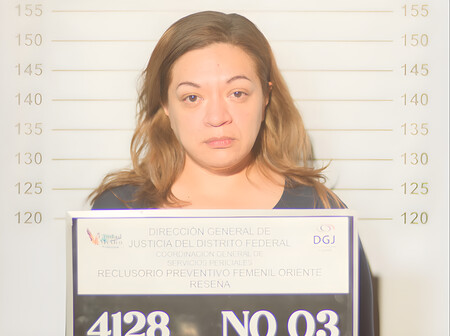
Alejandra Marín, however, faced the full weight of the law. She was charged with "privación ilegal de la libertad" (illegal deprivation of liberty) and "robo de infante" (infant theft). During the trial, a controversial element emerged: Marín claimed that she had an agreement with the biological mother, Mayra. According to Marín’s defense, Mayra had agreed to give up the baby because she could not afford to raise her. However, Mayra vehemently denied these allegations in her testimony, stating she had no such arrangement and that her child had been stolen from her.
In June 2010, Alejandra Marín was sentenced to 13 years in prison. The documentary highlights that while the crime was undeniable, the sentencing brought to light the lack of psychological support and the rigid nature of the penal system when dealing with crimes motivated by reproductive trauma. Marín served her time in the Santa Martha Acatitla women’s prison, a facility often cited in Mexican media for housing high-profile female defendants.
Supporting Data: Motherhood and Social Pressure in Mexico
The success of Un hijo propio on streaming platforms can be attributed to its resonance with broader sociological issues in Mexico. Data from various NGOs and psychological studies in Latin America suggest that the "stigma of infertility" remains a potent force. In many traditional Mexican households, the concept of "marianismo"—an ideal of female gender roles characterized by submissiveness and the central importance of motherhood—continues to exert influence.
According to data from the National Institute of Statistics and Geography (INEGI), while birth rates in Mexico have seen a gradual decline over the last two decades, the cultural value placed on the family unit remains exceptionally high. For women like Alejandra Marín, the inability to conceive is often not viewed as a medical condition, but as a personal and social failure. This environment can lead to severe mental health crises, including pseudocyesis (phantom pregnancy) or, in extreme cases, the type of criminal behavior exhibited in the 2009 abduction.
Furthermore, the case highlighted significant security lapses in public health institutions. In the years following the 2009 General Hospital incident, Mexican hospitals implemented stricter protocols, including the use of electronic bracelets for newborns and more rigorous identification checks for staff and visitors. The documentary serves as a reminder of the vulnerabilities that existed in the system at that time.
Artistic Approach: The Hybrid Documentary Format
Director Mariana Chenillo, known for her ability to handle sensitive social themes, opted for a hybrid format for Un hijo propio. The film uses real-life interviews with journalists who covered the case, legal experts, and individuals acquainted with the parties involved. However, it also utilizes high-production-value dramatizations to fill in the gaps where no footage exists—specifically the private moments of Marín’s faked pregnancy.
This stylistic choice has been a point of discussion among critics. By humanizing Marín through reenactments, the film avoids a purely "villainous" portrayal, instead inviting the viewer to contemplate the "grey areas" of her psyche. The film’s 90-minute runtime is structured to maintain a sense of mounting tension, mirroring the nine months of the fabricated pregnancy and the eventual 24-hour window between the crime and the arrest.
Broader Impact and Implications
The release of Un hijo propio comes at a time when Mexico is re-evaluating its judicial and social systems through the lens of gender. The documentary has reignited debates on how the legal system should handle crimes where mental health and social conditioning are significant factors. While the film does not absolve Marín of her actions—acknowledging the trauma caused to the biological mother and the child—it does ask the audience to consider the "why" behind the crime.

Official responses from the time of the trial emphasized the need for "exemplary punishment" to deter infant theft, which remains a serious concern in Mexico. However, modern viewers, as reflected in social media discourse following the film’s release, have expressed a more nuanced view, questioning whether 13 years in a high-security prison was the most effective way to address a case so clearly rooted in reproductive trauma and social isolation.
In conclusion, Un hijo propio is more than a true-crime documentary; it is a clinical examination of a specific moment in Mexican social history. It underscores the devastating consequences that can arise when the biological reality of infertility clashes with the unyielding expectations of a traditional society. As it continues to trend on Netflix, the film stands as a significant contribution to Mexico’s growing library of investigative cinema, challenging audiences to look beyond the headlines and understand the human complexities behind the "chismecito" (gossip) that initially draws them in.

0 Comments