
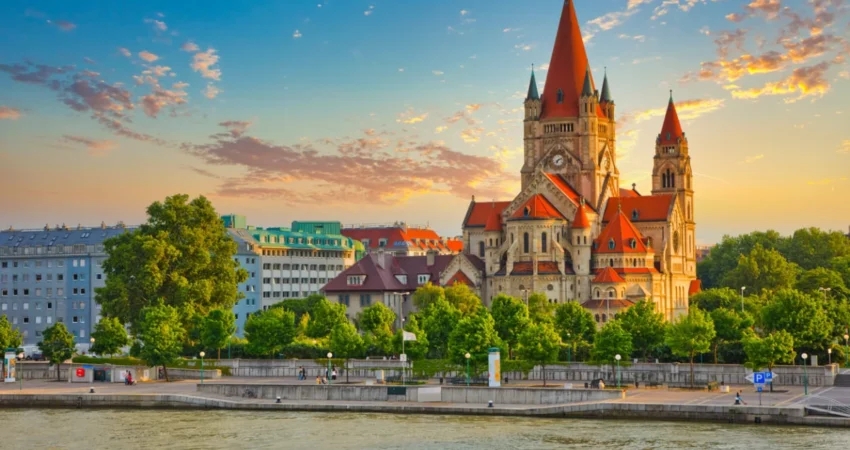
The Austrian capital of Vienna continues to solidify its reputation as a premier global destination, seamlessly weaving a rich tapestry of imperial history with a vibrant, modern lifestyle that attracts millions of visitors annually. Long celebrated for its Baroque architecture and its role as the seat of the Habsburg Empire, the city has evolved into a sophisticated hub for luxury retail, culinary excellence, and sustainable urban living. As international travel patterns stabilize in the post-pandemic era, Vienna’s strategic positioning—facilitated by robust air connectivity such as the Austrian Airlines route from Málaga—highlights the city’s enduring appeal as a year-round cultural powerhouse.
The Architectural and Historical Foundation of the Inner City
At the heart of Vienna’s allure is its First District, the Innere Stadt, which was designated a UNESCO World Heritage site in 2001. This area serves as a living museum, where the architectural legacy of the Austro-Hungarian Empire remains meticulously preserved. The Ringstraße, a circular boulevard commissioned by Emperor Franz Joseph I in the mid-19th century, replaced the city’s medieval walls and now hosts some of the world’s most significant public buildings. These include the Vienna State Opera (Wiener Staatsoper), the Parliament, the City Hall (Rathaus), and the Kunsthistorisches Museum.
The Vienna State Opera, in particular, remains a cornerstone of the city’s cultural identity. Operating on a "repertoire" system, the house presents a different performance nearly every day of the year, employing a massive staff of musicians, stagehands, and performers. This commitment to the arts is not merely a tourist attraction but a fundamental component of the local economy. Data from the Vienna Tourist Board indicates that cultural tourism accounts for a significant percentage of the city’s annual revenue, with the music industry alone contributing hundreds of millions of euros to the regional GDP.
Connectivity and the Strategic Role of Austrian Airlines
The accessibility of Vienna is a critical factor in its status as a top-tier European destination. For travelers from Southern Europe, particularly the Andalusia region of Spain, the direct connection between Málaga-Costa del Sol Airport (AGP) and Vienna International Airport (VIE) via Austrian Airlines represents a vital artery for both leisure and business exchange. As a member of the Lufthansa Group and a key player in the Star Alliance, Austrian Airlines has strategically positioned Vienna as a gateway to Central and Eastern Europe.
The Málaga-Vienna route caters to a diverse demographic, from Spanish travelers seeking the "Old World" charm of the Danube to Austrian expatriates and tourists drawn to the Mediterranean climate. Analysts observe that such direct routes are essential for the "city break" market, where convenience and flight frequency dictate destination choice. Vienna International Airport reported a significant recovery in passenger numbers in 2023 and 2024, nearing pre-2019 levels, with Austrian Airlines leading the expansion of short-haul and medium-haul capacities. This infrastructure ensures that Vienna remains competitive against other European capitals like Prague, Budapest, and Paris.
The Retail Landscape: From Luxury Corridors to Traditional Markets
Vienna’s retail sector offers a unique blend of high-end international commerce and localized artisanal tradition. The "Golden Quarter," comprising the Kohlmarkt, Graben, and Tuchlauben, serves as the city’s luxury epicenter. Here, flagship stores for global fashion houses are housed in historic buildings, creating a shopping experience that emphasizes exclusivity and heritage. The Kohlmarkt, historically the site of the imperial charcoal market, now commands some of the highest commercial rents in Europe, reflecting the city’s strong economic standing.

In contrast to the luxury districts, the Mariahilfer Straße represents the commercial heartbeat of the city. As Vienna’s longest shopping street, it underwent a significant transformation in the last decade, with large sections converted into pedestrian-friendly zones. This urban planning move has been cited by international experts as a model for "soft mobility," increasing foot traffic and boosting local business revenues while reducing the city’s carbon footprint.
For a more sensory experience, the Naschmarkt remains an indispensable landmark. Dating back to the 16th century, when it primarily sold milk, the market has expanded into a 1.5-kilometer stretch of gastronomic diversity. With over 120 stalls and restaurants, it serves as a bridge between Vienna’s traditional roots and its multicultural present. The Saturday flea market at the end of the Naschmarkt is particularly renowned, attracting collectors and tourists alike, and contributing to the "circular economy" through the trade of antiques and vintage goods.
The Viennese Coffee House: An Intangible Cultural Heritage
No analysis of Vienna’s social fabric is complete without addressing its coffee house culture. In 2011, UNESCO added "Viennese Coffee House Culture" to its list of Intangible Cultural Heritage, describing it as a place "where time and space are consumed, but only the coffee is found on the bill." This institution, which reached its zenith in the late 19th and early 20th centuries, served as the meeting ground for intellectuals such as Sigmund Freud, Leon Trotsky, and Stefan Zweig.
Establishments like Café Central and Café Sacher are not merely eateries but symbols of a specific way of life. The Café Sacher, famous for its original Sacher Torte—a dense chocolate cake with apricot jam—maintains a legendary rivalry with the Demel bakery over the "authentic" recipe, a legal and marketing saga that has lasted decades. Beyond the sweets, these cafes represent a "third space" between work and home, fostering social cohesion and intellectual exchange. Economically, the coffee house sector remains robust, adapting to modern tastes by introducing specialty beans and vegan options while maintaining the formal service that defines the experience.
Gastronomy and the "Heuriger" Tradition
While the Sachertorte dominates the dessert menu, the Wiener Schnitzel remains the quintessential Viennese main course. Traditionally made of veal and protected under Austrian law as a geographical indication, the Schnitzel is a staple of both high-end dining rooms and local "Beisls" (traditional taverns). The culinary scene in Vienna has seen a recent surge in innovation, with chefs increasingly focusing on regional sourcing and seasonal ingredients, a movement supported by the city’s proximity to the fertile plains of Lower Austria.
Furthermore, Vienna is one of the few world capitals with a significant viticulture industry within its city limits. The "Heuriger" tradition—seasonal wine taverns located in districts like Grinzing and Döbling—allows vintners to serve their new wine directly to the public. This tradition is governed by strict regulations dating back to an 18th-century decree by Emperor Joseph II. The integration of vineyards into the urban landscape provides a unique ecological and economic benefit, promoting "slow tourism" and preserving green belts that contribute to Vienna’s frequent ranking as the world’s most livable city.
Green Infrastructure and Imperial Gardens
Vienna’s commitment to public green space is a legacy of its imperial past. The gardens of Schönbrunn Palace, the former summer residence of the Habsburgs, offer vast expanses of manicured lawns, fountains, and the world’s oldest zoo. Today, these grounds serve as a vital recreational area for residents and a major draw for the millions of tourists who visit the palace annually.

The Prater, once a royal hunting ground opened to the public in 1766, represents another facet of the city’s green infrastructure. It is home to the Wurstelprater amusement park and the iconic Riesenrad (Giant Ferris Wheel), which has stood as a symbol of the city since 1897. Beyond the amusements, the "Green Prater" consists of forests and meadows that provide a sanctuary for local wildlife and a venue for sports and relaxation. The city’s urban planning department continues to prioritize these spaces, recognizing that environmental quality is directly linked to economic competitiveness and citizen well-being.
Seasonal Dynamics and the Christmas Market Economy
The economic and cultural life of Vienna is heavily influenced by the change of seasons. While spring and summer are dominated by music festivals and outdoor activities, the winter season brings a massive influx of visitors for the Christkindlmärkte (Christmas Markets). The market at Rathausplatz (City Hall Square) is the most famous, transforming the neo-Gothic backdrop into a winter wonderland that attracts over three million visitors annually.
These markets are a significant economic driver, supporting hundreds of small businesses, artisans, and hospitality providers. In recent years, there has been a push toward sustainability in these markets, with a focus on organic food, plastic-free packaging, and energy-efficient lighting. Industry analysts note that the "Christmas season" in Vienna has effectively extended the peak tourist period, ensuring that the city’s hotels and restaurants maintain high occupancy rates even in the colder months.
Strategic Outlook: Vienna as a Bridge to the Future
As Vienna looks toward the latter half of the decade, its strategy involves balancing the preservation of its historical identity with the demands of a modern, digitalized world. The city’s "Smart City Wien" initiative aims to make Vienna a leader in resource preservation and innovation by 2050. This includes investments in renewable energy, the expansion of the already world-class public transport network, and the promotion of sustainable tourism practices.
The implications for international travelers are clear: Vienna is no longer just a destination for history buffs, but a model for how a historic city can thrive in the 21st century. The continued investment in connectivity, such as the Austrian Airlines routes, ensures that the city remains accessible to a global audience. Whether through its luxury boutiques, its historic cafes, or its sprawling imperial gardens, Vienna offers a multifaceted experience that justifies its status as a recurring favorite on the global travel map.
In conclusion, the Austrian capital demonstrates a rare ability to honor its past while actively shaping its future. By maintaining high standards in culture, gastronomy, and urban living, Vienna ensures that it remains a relevant and alluring destination for travelers from Andalusia and beyond. The city’s holistic approach to tourism—integrating economic growth with cultural preservation and environmental stewardship—sets a benchmark for urban centers worldwide.

0 Comments