
 Lina Irawan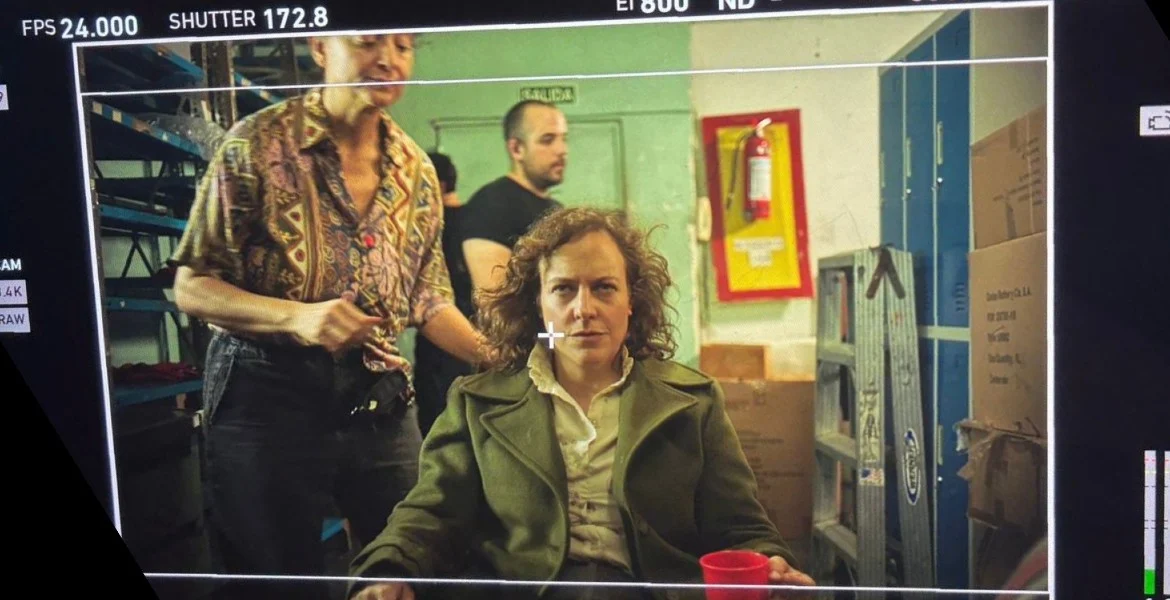
The cameras began rolling in Montevideo on Monday, March 16, marking the official start of principal photography for "¿Quién engañó a Carmen Vidal?" (Who Deceived Carmen Vidal?), a highly anticipated noir comedy that serves as the sequel to the 2020 cult hit "Carmen Vidal, mujer detective." Directed by and starring Eva Dans, the project represents a significant leap in scale and production value for the franchise, transitioning from a lean, independent "guerrilla-style" debut to a robust international co-production. The film is being spearheaded by the Uruguayan production house Anfibia Cine in collaboration with the Argentine firm Películas V, signaling a deepening of the creative ties between the two cinematic hubs of the Río de la Plata region.
This new installment continues the narrative journey of the eponymous detective, a character who broke traditional tropes of the hard-boiled investigator when she first appeared on screens four years ago. In this chapter, the story finds Carmen Vidal grappling with amnesia and navigating the labyrinthine streets of Buenos Aires. The plot plunges her into a complex web of intrigue involving high-level hackers, corrupt politicians, powerful business magnates, street vendors, and rival private investigators. By blending the dark, cynical atmosphere of classic film noir with the absurdist humor and local color characteristic of the region, Dans seeks to further deconstruct the detective genre while exploring themes of identity and urban corruption.
A Comparative Evolution of Production Scale
The shift from the first film to the second is perhaps most visible in the financial and logistical infrastructure supporting the project. When "Carmen Vidal, mujer detective" was produced in 2020, it was characterized by its creators as a "labor of love" or "a pulmón" (made with sheer heart and lung). That initial production relied almost exclusively on private financing and a skeleton crew of 15 technicians who performed multiple roles to bring the vision to life. Despite these limitations, the film achieved critical acclaim and established a dedicated following, proving that there was a significant appetite for stylized, genre-bending Uruguayan cinema.
In stark contrast, "¿Quién engañó a Carmen Vidal?" arrives with a substantially larger "backbone," as described by executive producer Alina Kaplan. The current production boasts a technical crew of 35 specialists, more than doubling the manpower of its predecessor. This expansion allows for a more specialized division of labor, ensuring that each department—from cinematography to sound design—can operate with a higher degree of precision. Kaplan noted that the increased staffing is a direct result of the film’s success in securing public funding, which has provided the financial stability necessary to increase the production’s scope without compromising the artistic integrity of the original concept.
Strategic Financing and the Uruguayan Audiovisual Ecosystem
The project’s ability to secure a diverse array of public grants highlights the current health and competitiveness of the Uruguayan film industry. The production successfully tapped into four major national funds, which collectively provided the capital needed to elevate the sequel’s technical standards. These include:
- ACAU/PUA Development Fund: Managed by the Agencia del Cine y el Audiovisual del Uruguay (ACAU), this fund supported the initial scriptwriting and planning phases, ensuring a solid narrative foundation.
- FONA (Fomento de la Producción Audiovisual): A long-standing fund in Uruguay that supports the creation of high-quality domestic content.
- ACAU Production Fund: Specifically designated for the principal photography and post-production stages.
- Montevideo Filma: A municipal grant from the city of Montevideo aimed at promoting the capital as a premier filming location and supporting local storytellers.
Furthermore, the production is utilizing the PUA (Programa de Apoyo al Sector Audiovisual) for a "Cash Rebate" for national productions. This incentive program is a cornerstone of Uruguay’s strategy to become a regional production hub, offering partial reimbursements for expenses incurred within the country. Such mechanisms not only benefit individual projects like the Carmen Vidal sequel but also stimulate the local economy by encouraging the hiring of domestic crews and services.
Filming Logistics and Regional Integration
The production schedule is slated for four weeks of filming in Montevideo, followed by key shoots in Colonia del Sacramento and a specialized unit in Buenos Aires. Interestingly, while the narrative of the film is set largely in the Argentine capital, the majority of the filming is taking place in Uruguay. This logistical decision is a common practice in modern cinema, where production-friendly environments like Montevideo are used to double for other cities.
Executive producer Alina Kaplan explained that the decision to film primarily in Uruguay was driven by both financial requirements and the project’s identity as a majority-Uruguayan production. The scenes shot in Buenos Aires will focus on iconic exteriors and specific landmarks to maintain the film’s sense of place and authenticity. Vanesa Pagani serves as the executive producer on the Argentine side, managing the cross-border logistics and ensuring a seamless integration of the two filming locations. This "two shores" approach reflects a broader trend in Latin American cinema, where co-productions allow filmmakers to pool resources, talent, and distribution networks across borders.
The Cast and Creative Vision
The ensemble cast for "¿Quién engañó a Carmen Vidal?" brings together seasoned veterans and rising stars from both Uruguay and Argentina. Leading the cast is Eva Dans, who reprises her role as the titular detective while also maintaining her position behind the camera. Joining her are prominent Uruguayan actors Roberto Suárez, Verónica Perrota, and Luciano Demarco. Their involvement ensures continuity from the first film while adding depth to the expanding cinematic universe.
The Argentine contingent is equally impressive, featuring Iair Said and Luis Machín. Machín, a heavyweight of Argentine theater, television, and film, brings a level of gravitas to the production that underscores its increased ambitions. The collaboration between these actors from different traditions of the Río de la Plata provides a rich tapestry of performances that the director hopes will resonate with audiences on both sides of the river.
On the technical side, the film features a high-caliber creative team. Soledad Rodríguez, a respected Argentine cinematographer, is responsible for the film’s visual language, which is expected to lean heavily into the moody, high-contrast aesthetics of the noir genre. Lucía Malandro returns as the production designer (Directora de Arte), a role she also held in the first film. Her return ensures that the distinctive visual identity established in "Carmen Vidal, mujer detective"—a world of cluttered offices, neon-lit streets, and a retro-modern sensibility—is preserved and expanded. Claudia Gallo serves as the Head of Production, overseeing the daily operations of the 35-person crew.
Chronology of the Carmen Vidal Franchise
The development of this sequel follows a clear timeline that mirrors the professionalization of the Uruguayan audiovisual sector:
- 2018-2019: Development and production of "Carmen Vidal, mujer detective." The project was filmed with minimal resources, relying on the passion of a small group of collaborators.
- 2020: The first film premiered to critical acclaim in Uruguay, gaining a reputation for its unique tone and strong female protagonist. It successfully navigated the challenges of a pandemic-era release.
- 2021-2022: Eva Dans and the Anfibia Cine team began developing the sequel, focusing on a narrative that would take the character out of her comfort zone.
- 2023: The project secured major funding from ACAU, FONA, and Montevideo Filma, enabling a larger budget and the inclusion of Argentine partners.
- March 16, 2024: Principal photography officially began in Montevideo.
- Late 2024/Early 2025: Expected completion of post-production and start of the festival circuit/theatrical release.
Broader Implications for Latin American Genre Cinema
The production of "¿Quién engañó a Carmen Vidal?" is more than just the filming of a sequel; it is a case study in the growth of genre cinema in South America. For decades, Latin American cinema was primarily associated with social realism or historical dramas. However, the last decade has seen a surge in "cinema de género" (genre cinema), including horror, science fiction, and noir.
By successfully launching a franchise based on a female detective, Eva Dans and Anfibia Cine are contributing to a shift in the regional cinematic landscape. The film’s focus on a character-driven, stylized mystery allows it to compete in international markets while remaining deeply rooted in the specific cultural nuances of the Southern Cone. The use of amnesia as a plot device in this sequel further allows the filmmakers to explore the concept of the "unreliable narrator," a staple of noir that provides a fertile ground for both suspense and comedy.
Industry analysts suggest that the success of such co-productions is vital for the sustainability of smaller film industries like Uruguay’s. By partnering with Argentina, Uruguayan filmmakers gain access to a larger pool of talent and a much bigger domestic market, while Argentine producers benefit from the robust incentive programs and high technical standards offered by Uruguay.
As filming continues over the next month, the anticipation for "¿Quién engañó a Carmen Vidal?" grows among film enthusiasts and industry professionals alike. The transition from a "chiquita" (small) production to a well-funded, international collaboration marks a milestone for Eva Dans and her team, signaling that the character of Carmen Vidal has become a significant fixture in contemporary Latin American cinema. The film’s journey from the streets of Montevideo to the heart of Buenos Aires reflects the expanding horizons of a creative community that is increasingly comfortable operating on a larger stage.

 Eva Lovia
 Julia Chirkova
 Julia Prastini
 Nila Kartika Wati
 Jia Lissa