
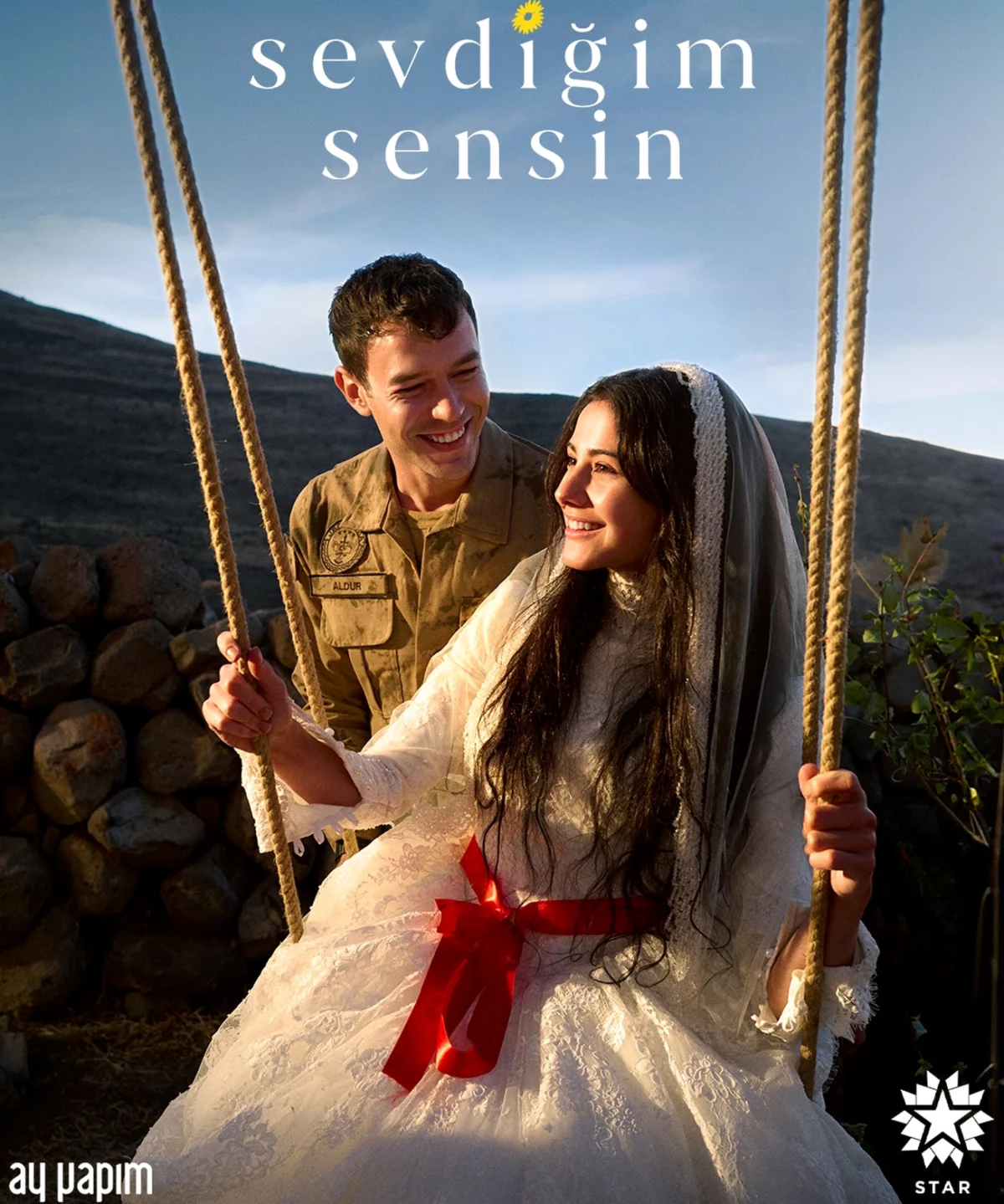
The Genesis of an Unconventional Union: A Fateful Encounter
The narrative of Sevdigim Sensin begins in a remote Eastern Turkish village, a setting often depicted in Turkish dramas for its deep-rooted traditions and challenging socio-economic conditions. Here, Erkan (Aytaç Şaşmaz), a young man from an influential and affluent Istanbul family, is serving his mandatory military duty. His background starkly contrasts with his current surroundings, placing him in an environment far removed from the modern comforts and progressive values he is accustomed to.
A catastrophic earthquake strikes the region, plunging the already vulnerable community into chaos and devastation. In the aftermath, all available military personnel, including Erkan, are deployed to assist in rescue and relief efforts. It is amidst this widespread turmoil and human suffering that Erkan’s path fatefully intersects with Dicle (Helin Kandemir), a 20-year-old local village girl.
Dicle’s life has been one defined by poverty and the rigid confines of patriarchal traditions. Having never attended school or ventured beyond her village since the tender age of six, her world is narrow, governed by fear and oppression. She lives with a sick mother and two elder brothers, whose absence for work leaves her even more exposed to the dangers exacerbated by the earthquake.
In a horrifying turn of events, Dicle becomes a target for local gangsters who seek to exploit the chaos. As the village grapples with the earthquake’s immediate aftermath, her brothers are away, leaving her unprotected. Erkan witnesses Dicle being kidnapped and, without hesitation, intervenes. In his valiant attempt to rescue her, he sustains injuries while confronting the assailants.
The implications of Dicle’s kidnapping, even after her rescue, are dire within the strict social codes of her village. Her brothers, upon learning of the incident, are prepared to commit an honor killing to preserve the family’s "namus" (honor) and uphold societal expectations. This grim reality is a stark representation of the deeply ingrained traditional values prevalent in some parts of Turkey, where the perceived stain on a woman’s honor can lead to extreme violence, even sanctioned by family.
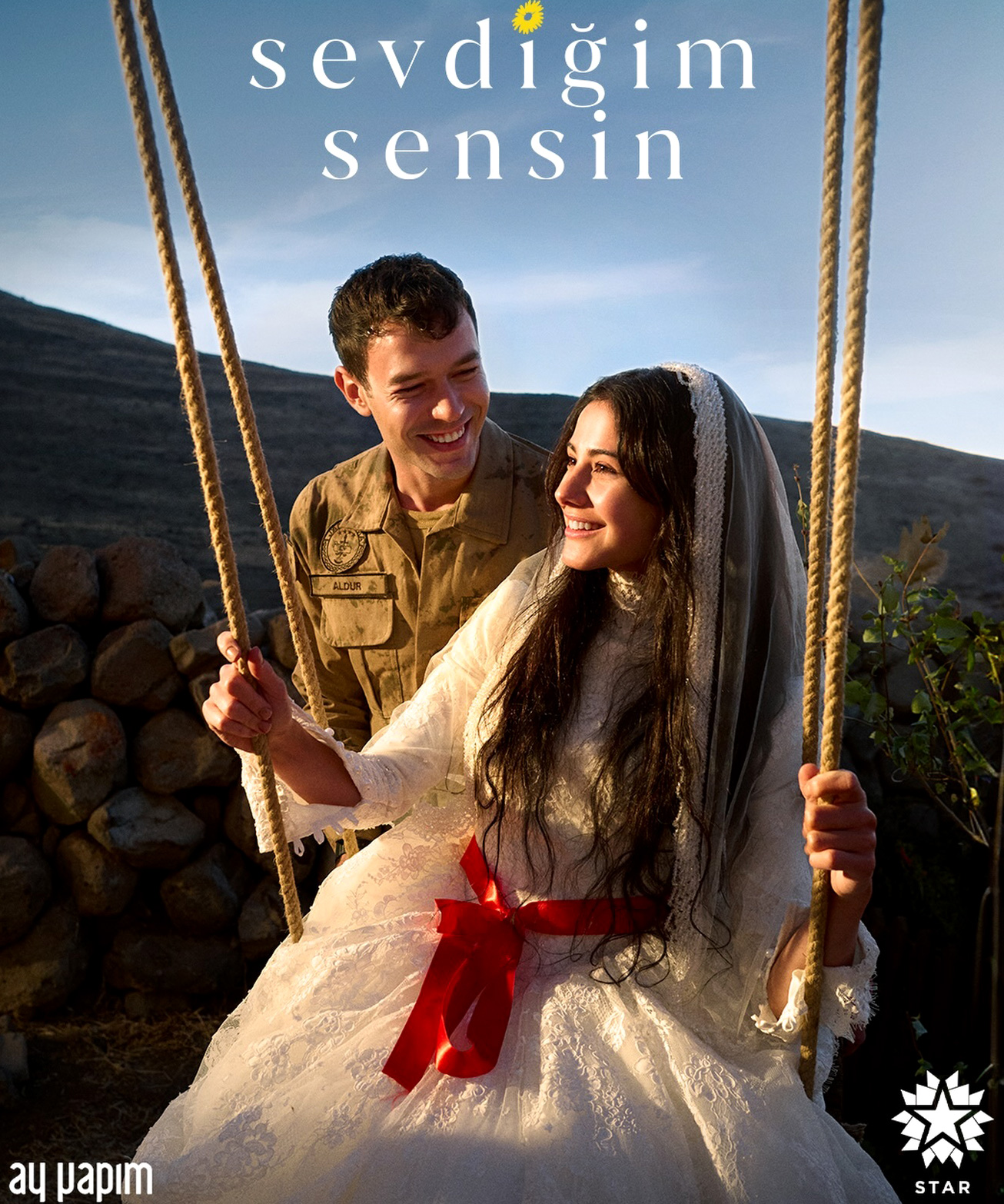
Learning of her brothers’ intentions, Erkan is faced with a profound moral dilemma. To protect Dicle from her own family’s brutal judgment, he makes a momentous, albeit impulsive, decision: he marries her. This act is not born of romantic love, but a desperate and selfless sacrifice to save a life. Erkan explicitly intends for the marriage to be one of convenience, a mere legal formality to shield Dicle from an oppressive fate, with no expectation of a genuine marital relationship. His aim is to liberate her from her restrictive environment and offer her a chance at a new life.
The Unforeseen Journey to Istanbul: A Clash of Cultures
Shortly after the impromptu marriage, Erkan completes his military service. His initial plan is to facilitate Dicle’s protection under government care while he pursues his own aspirations, possibly in the United Kingdom. However, Dicle, having found an unexpected savior in Erkan, vehemently rejects the idea of separation. Her unwavering declaration that she would rather face death than be parted from him reveals the depth of her dependency and the terrifying prospect of returning to her former life.
With no other viable option, Erkan is compelled to bring Dicle with him to Istanbul. He envisions this as a temporary arrangement, a period during which he can devise a strategy to permanently safeguard Dicle from her abusive brothers, after which he anticipates a divorce. Crucially, Erkan is determined to keep this marriage a complete secret from his own family and social circle, aware of the immense repercussions it would have on his modern, affluent life.
Their arrival in Istanbul marks the beginning of a profound transformation for both Erkan and Dicle. For Dicle, the city offers physical safety but thrusts her into a world utterly alien to her. Istanbul, a global hub of culture and commerce, represents a stark contrast to her isolated village. She is confronted with drastically different customs, values, social expectations, and worldviews.
To maintain the secrecy of their marriage, Dicle is forced to adopt a fabricated identity, pretending to be an earthquake victim who lost her family and has come to Istanbul seeking employment. This deception, while necessary, exposes her to further challenges. She faces hostility, prejudice, and humiliation from those who perceive her as an uneducated village girl, out of place in the sophisticated urban environment. Despite these formidable obstacles, Dicle exhibits an innate resilience, striving to adapt, learn, and prove her worth in this unfamiliar world, all while enduring constant criticism and judgment.
Meanwhile, Erkan grapples with the escalating complexities of his impulsive decision. He quickly realizes that dissolving the marriage will not be as straightforward as he had initially imagined. He finds himself caught in a profound conflict between his modern, liberal upbringing and the unexpected responsibilities imposed by traditional values. His life becomes a delicate balancing act, torn between his duties to his influential family and his burgeoning, albeit initially reluctant, commitment to Dicle’s well-being. The series poses critical questions about whether Erkan and Dicle can maintain their secret, if Dicle can truly integrate into Istanbul society, and if Erkan will ultimately choose his established modern life or embrace new values forged through an evolving emotional bond with Dicle.
Characters and Their Complexities: A Rich Tapestry of Personalities
The ensemble cast of Sevdigim Sensin features a diverse range of characters, each contributing to the intricate web of personal and societal conflicts.
Erkan Aldur (Aytaç Şaşmaz): As the central male protagonist, Erkan embodies the modern, educated Turkish elite. He is depicted as thoughtful, responsible, and respectful, qualities that lead him to make the life-altering decision to save Dicle. His journey is one of moral reckoning, as he navigates the chasm between his privileged upbringing and the harsh realities he suddenly finds himself responsible for. His internal conflict between duty, freedom, and the unexpected stirrings of empathy forms the emotional core of the series.
Dicle Demir (Helin Kandemir): Dicle’s character arc promises to be one of the most compelling aspects of the drama. She begins as an illiterate, naive, and obedient village girl, a product of strict patriarchal values, with no agency over her own life. However, her journey to Istanbul forces her to confront her vulnerabilities and discover an inner strength. She views Erkan as her heroic savior, a figure who literally pulled her from the brink. The series will explore her transformation from a submissive village girl to a woman potentially capable of taking control of her destiny, shedding the shackles of her past.
Esat Aldur (Hüseyin Avni Danyal): Erkan’s father, Esat, represents the traditional patriarch of a powerful business family. His primary concern is the family’s legacy and financial standing. He actively seeks to arrange Erkan’s marriage to Burçin, a union he believes will further strengthen their business empire, highlighting the enduring practice of strategic marriages in certain elite circles.
İnci Aldur (Esra Ronabar): Erkan’s mother, İnci, presents a more progressive facade. She is portrayed as a strong woman engaged in volunteer work focused on women’s empowerment, a common theme in modern Turkish society. Her character introduces a layer of irony and potential hypocrisy, as her commitment to women’s rights may be tested when confronted with the realities of Dicle’s presence and the family’s traditional expectations.
Tahir Aldur (Cihat Süvarioğlu): Erkan’s elder brother, Tahir, is driven by a deep-seated jealousy and a constant need to prove himself. As the eldest son, he covets control of the family business but is often overlooked by his father due to his perceived vulnerability and inability to handle stress. His ambition and resentment towards Erkan are likely to create significant internal family conflicts.
Nilüfer Aldur (Deniz Işın): Erkan’s sister, Nilüfer, is a divorced woman living with her parents. Despite her desire for independence and a career, she remains under the pervasive influence of her parents, particularly her mother. Her struggle for autonomy could parallel or contrast with Dicle’s journey, offering different perspectives on women’s roles and freedom within Turkish society.
Burçin Parsoglu (Elçin Zehra İrem): Burçin is Erkan’s long-term girlfriend, deeply in love with him and dreaming of marriage. She comes from a wealthy family closely connected to the Aldurs. However, Burçin also harbors psychological vulnerabilities, a fragility that could lead her to endanger herself when faced with the inevitable discovery of Erkan’s secret marriage. Her character introduces an element of psychological drama and external conflict, threatening to unravel Erkan’s carefully constructed deception.
Behind the Scenes: Production Excellence and Creative Vision
Sevdigim Sensin is produced by Ay Yapım, one of Turkey’s most prominent and successful production companies. Ay Yapım is renowned for its high-quality dramas, often characterized by intricate plots, strong character development, and lavish production values. Their portfolio includes numerous internationally acclaimed series, contributing significantly to the global phenomenon of Turkish dramas. The company’s involvement signals a commitment to a well-crafted and impactful series, likely to resonate with both domestic and international audiences.
The series is directed by Gokcen Usta, with the screenplay penned by Yesim Aslan, based on a story by Coskun Irmak. This creative team is tasked with bringing the complex narrative and nuanced character relationships to life. The choice of filming locations, Gozlukuyu in Aksaray for the village scenes and various sites across Istanbul, visually reinforces the stark contrast between Dicle’s past and present worlds, adding another layer of authenticity and thematic depth to the production.
Each episode is designed to run for 120-150 minutes, a standard length for Turkish dramas, allowing for extensive character development, intricate plotlines, and a deep exploration of the series’ themes. This format enables the storytelling to unfold at a deliberate pace, drawing viewers into the characters’ emotional journeys and the societal dilemmas they face.
Thematic Resonance and Societal Commentary: A Mirror to Turkish Society
Sevdigim Sensin is poised to be more than just a romance-drama; it serves as a powerful commentary on several pressing social issues prevalent in Turkey.
The Urban-Rural Divide: The series prominently highlights the vast chasm between traditional rural life and modern urban existence. Dicle’s struggle to adapt to Istanbul symbolizes the broader societal challenges faced by individuals migrating from conservative backgrounds to more liberal, cosmopolitan environments. It explores the cultural clashes, prejudices, and identity crises that arise from such transitions.
Women’s Empowerment and Patriarchy: At its core, the series is a narrative of Dicle’s potential liberation from patriarchal oppression. Her journey from an uneducated, subjugated village girl to a woman seeking agency and independence is a central theme. The character of İnci Aldur, with her focus on women’s empowerment, could offer a contrasting perspective or even become an unlikely ally for Dicle, challenging traditional gender roles within the elite family. The depiction of honor killings, while disturbing, serves to underscore the extreme consequences of rigid patriarchal systems.
Sacrifice, Duty, and Love: Erkan’s initial act of sacrifice is a cornerstone of the plot. His evolving sense of responsibility towards Dicle, initially a pragmatic duty, raises questions about how genuine emotional bonds can form under extraordinary circumstances. The series will explore whether love can blossom from an unconventional union born out of necessity, challenging conventional notions of romance.
Family Honor and Societal Expectations: The concept of "namus" and the pressure to uphold family honor dictate many characters’ actions, particularly Dicle’s brothers. The Aldur family also faces its own set of societal expectations, especially regarding strategic marriages and maintaining their public image, creating parallels across different social strata.
Anticipated Reception and Global Reach
Turkish dramas have carved out a significant niche in the global entertainment market, particularly in the Middle East, North Africa (MENA), Latin America, and increasingly, parts of Europe and Asia. Series like Gümüş (Silver) and Yalı Çapkını (The Golden Boy), mentioned as "You Might Also Like," demonstrate the enduring appeal of Turkish storytelling, characterized by strong emotional narratives, compelling characters, and high production values.
Sevdigim Sensin, with its timely themes of social injustice, cultural clashes, and the transformative power of human connection, is well-positioned to captivate a wide audience. Its exploration of universal human experiences against a distinctly Turkish backdrop promises to resonate with viewers worldwide. The series has the potential to spark important discussions on women’s rights, societal integration, and the complexities of duty and desire.
The online presence of Sevdigim Sensin across platforms like Instagram, Facebook, and YouTube indicates a strategic effort to engage audiences and build anticipation. Trailers showcasing the dramatic tension and emotional depth of the series, complete with English subtitles, further highlight its aspirations for international viewership.
In conclusion, You Are the One I Love (Sevdigim Sensin) is poised to be a significant addition to the landscape of Turkish television drama. With its compelling premise, complex characters, and exploration of profound social issues, the series offers a rich tapestry of human experience, promising to be a thought-provoking and emotionally engaging journey for its audience. The central questions — about the secrecy of the marriage, Dicle’s adaptation, Erkan’s choices, and the potential for an unexpected love — will undoubtedly keep viewers riveted as the story unfolds on Star TV.

0 Comments