
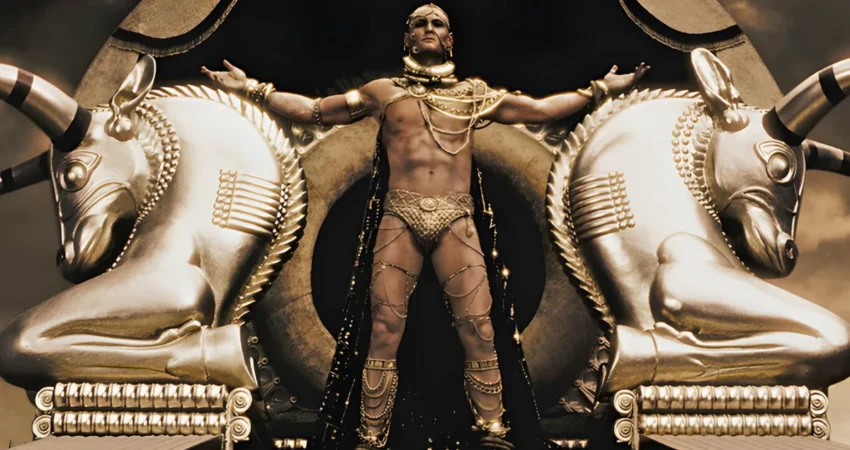
The cinematic landscape of 2007 was irrevocably altered by the release of 300, a stylized retelling of the Battle of Thermopylae that catapulted director Zack Snyder into the global spotlight. Today, the film stands as a polarizing yet undeniable landmark in action cinema, known for its distinct visual language and the birth of a cultural phenomenon centered on the phrase, "This is Sparta!" However, subscribers to Netflix have a narrowing window to revisit this piece of film history. The streaming giant has confirmed that 300 will be removed from its catalog on September 5, marking the end of its current tenure on the platform. Following its departure, the film is expected to remain available on Max, the primary streaming home for Warner Bros. Discovery content.
The Genesis of a Visual Revolution
The production of 300 was an ambitious undertaking that sought to bridge the gap between traditional filmmaking and the aesthetic of graphic novels. Based on the 1998 comic book series by Frank Miller and Lynn Varley, the film was not intended to be a historically accurate documentary of the Greco-Persian Wars. Instead, Snyder aimed to capture the "hyper-reality" of Miller’s illustrations. This was achieved through a technical process known as the "crushed blacks" technique, which manipulated color balance to increase the visual saturation and contrast, giving the film its signature bronze-and-blood appearance.
Filmed almost entirely on digital backlots in Montreal, the production utilized blue and green screens to create the sweeping landscapes of ancient Greece. This allowed Snyder to exercise total control over the lighting and atmosphere, a precursor to the "Volume" technology used in modern productions like The Mandalorian. The film’s commitment to its source material extended to the choreography, where Snyder pioneered the use of "speed ramping"—the seamless transition between extreme slow-motion and high-speed action—to emphasize the impact of every strike and parry.

Historical Context vs. Narrative Adaptation
While 300 is rooted in the events of 480 B.C., the narrative serves as a mythologized version of the Battle of Thermopylae. In the actual historical event, King Leonidas I of Sparta led a small force of Greeks against the massive Persian Empire under Xerxes I. While the "300" Spartans are the focus of the film, historical records by Herodotus indicate that several thousand other Greeks, including Thespians and Thebans, also participated in the defense of the narrow coastal pass.
Snyder’s adaptation focuses on the ideological clash between the Spartan warrior culture and the perceived decadence of the Persian Empire. This portrayal has been a subject of academic and critical debate for nearly two decades. Critics have frequently pointed to the film’s depiction of the Persians as monstrous or "othered," while defenders argue that the film is presented as a piece of Spartan propaganda narrated by the character Dilios, thereby justifying its exaggerated and biased perspective. Despite these controversies, the film’s narrative efficiency and visceral energy resonated deeply with global audiences.
Commercial Performance and Cultural Footprint
The financial success of 300 was a significant milestone for Warner Bros. Pictures. Produced on a relatively modest budget of $65 million, the film exceeded all industry expectations during its opening weekend in March 2007. It earned $70.9 million in its first three days in the United States, setting a record at the time for a March release. By the end of its theatrical run, 300 had grossed over $456 million worldwide.
Beyond the box office, the film’s cultural impact was immediate. The "300 workout," a grueling fitness regimen used by the cast to achieve their hyper-defined physiques, became a staple in the fitness industry. Furthermore, the film’s dialogue entered the zeitgeist, with Gerard Butler’s delivery of "This is Sparta!" becoming one of the most parodied and referenced lines of the 21st century. This success granted Zack Snyder the "blank check" status required to tackle even more ambitious projects, starting with the 2009 adaptation of Alan Moore’s Watchmen.

A Chronology of the Snyder Era
To understand the current discourse surrounding Zack Snyder, one must look at the trajectory of his career following the success of 300. His filmography represents a specific era of big-budget filmmaking characterized by deconstructive narratives and a dark, operatic tone.
- Watchmen (2009): A faithful yet controversial adaptation of what many considered an "unfilmable" graphic novel. It further established Snyder’s reputation for visual fidelity.
- Sucker Punch (2011): Snyder’s first original concept, which divided critics over its themes of empowerment versus objectification.
- Man of Steel (2013): Produced alongside Christopher Nolan, this film launched the DC Extended Universe (DCEU), introducing a more grounded and conflicted version of Superman played by Henry Cavill.
- Batman v Superman: Dawn of Justice (2016): A massive commercial hit that nonetheless became a lightning rod for criticism regarding its somber tone and narrative complexity.
- Zack Snyder’s Justice League (2021): After a personal tragedy forced him to depart the original 2017 production, a massive fan campaign led to the release of his four-hour "Snyder Cut" on HBO Max, which received significantly better reviews than the theatrical version.
- The Netflix Era (2021–Present): Snyder moved to Netflix to launch new franchises, including the zombie heist film Army of the Dead and the space opera saga Rebel Moon.
The Polarization of the Modern Director
In recent years, the conversation around Zack Snyder has shifted from his technical prowess to his standing as a divisive figure in pop culture. While 300 was met with general acclaim for its innovation, his more recent works, particularly the Rebel Moon series, have faced harsh critical reception. Analysts point to several factors contributing to this polarization.
First, there is the issue of narrative architecture. While Snyder is lauded for his "eye" for composition, critics often argue that his scripts struggle with pacing and character development. Second, the "Snyderverse" fandom has gained a reputation for being exceptionally fervent, often clashing with critics and studio executives on social media. This "toxic" element of the discourse has, at times, overshadowed the films themselves.
Furthermore, the very stylistic choices that made 300 a hit—such as the heavy use of slow-motion—have become points of contention. In 300, these techniques felt fresh and revolutionary; in 2024, some viewers perceive them as overused tropes that hinder the flow of storytelling. Nevertheless, Snyder remains one of the few directors in the modern studio system with a recognizable "signature," a fact that continues to command a loyal following.

Industry Implications and the Future of the Franchise
The departure of 300 from Netflix is a reminder of the shifting nature of streaming licenses. As studios like Warner Bros. Discovery look to consolidate their intellectual property on their own platforms, high-profile "third-party" hits are increasingly being pulled back to their original homes. For Netflix, the loss of 300 is mitigated by their ongoing partnership with Snyder, though the critical failure of Rebel Moon has raised questions about the long-term viability of his exclusive "universe-building" for the platform.
There have also been persistent rumors regarding the expansion of the 300 brand. While a sequel, 300: Rise of an Empire, was released in 2014 to moderate success, reports have surfaced indicating that a television series set in the same universe is in early development. This would likely explore the origins of the Spartan military system or other facets of the Persian Wars, potentially bringing Snyder back as an executive producer.
Conclusion: A Final Opportunity for Reflection
As the September 5 deadline approaches, 300 remains a vital piece of cinema for those interested in the evolution of the action genre. It represents a moment in time when the digital and physical realms of filmmaking merged to create something entirely new. Whether one views it as a masterpiece of visual storytelling or a stylized exercise in excess, its influence on the last 17 years of movies is undeniable.
For viewers who wish to experience the film’s visceral combat and operatic scale within the Netflix ecosystem, the remaining ten days offer a final chance to witness the movie that defined Zack Snyder’s career and changed the way audiences perceive the transition from comic book page to the silver screen. Following its exit, the legacy of King Leonidas and his 300 warriors will continue elsewhere, but the film’s impact on the streaming era’s early growth will remain a significant chapter in digital distribution history.

0 Comments