
 Nila Kartika Wati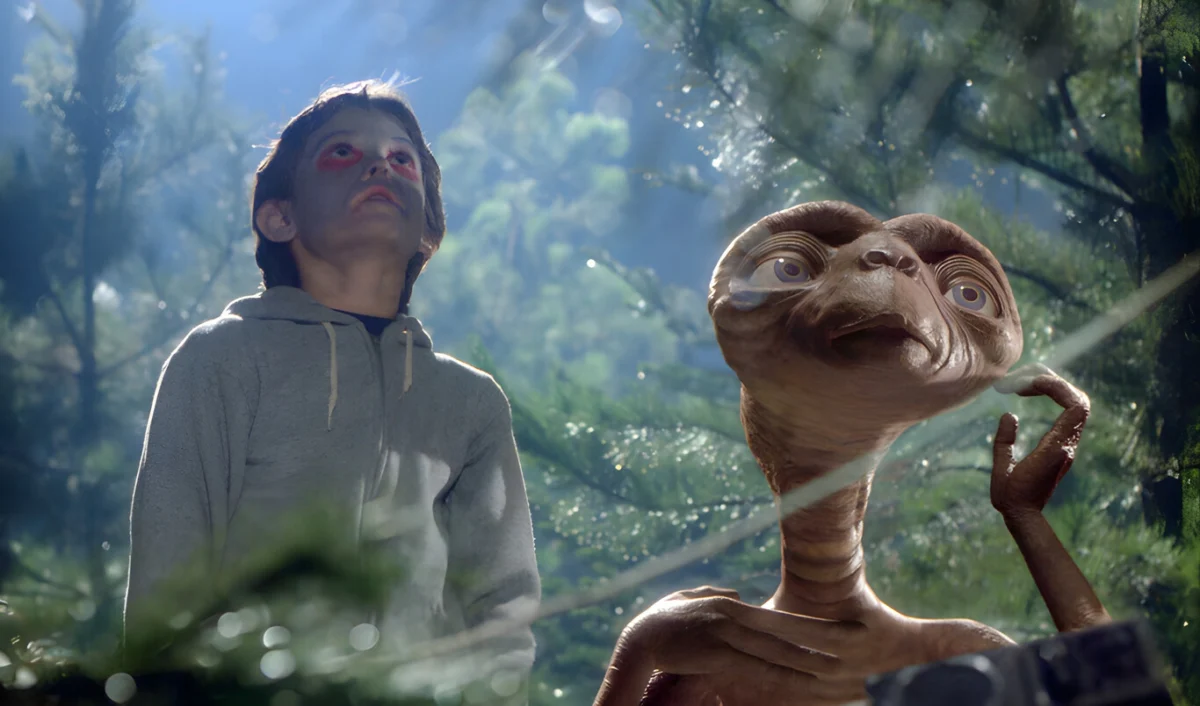
The cinematic landscape of 1982 was forever altered by the arrival of a small, wrinkled visitor from another galaxy, and decades later, that same visitor continues to dominate modern digital platforms. Following its recent inclusion in the Max (formerly HBO Max) library, Steven Spielberg’s science fiction masterpiece, E.T. The Extra-Terrestrial, has rapidly ascended to the Top 10 most-watched films in Mexico. This resurgence highlights a broader industry trend where legacy content from the "New Hollywood" era frequently outperforms contemporary big-budget releases on streaming services. The film’s enduring popularity serves as a case study in the longevity of practical effects, universal storytelling, and the "Amblin aesthetic" that continues to influence modern television and film production.
The Narrative Core and Universal Appeal
At its center, E.T. The Extra-Terrestrial follows Elliott, a ten-year-old boy struggling with the emotional fallout of his parents’ separation in suburban California. When he discovers a botanist alien accidentally left behind by his scouting party, the two form a profound psychic and emotional bond. Alongside his siblings, Michael and Gertie, Elliott must navigate the complexities of keeping the creature hidden while federal agents, led by the enigmatic "Keys," close in on their location.
The film’s screenplay, written by Melissa Mathison, is frequently cited by film historians as a perfect example of the "Hero’s Journey" told through the lens of childhood innocence. Unlike the aggressive alien invasion tropes prevalent in the 1950s, Spielberg’s vision focused on empathy and the fear of the unknown being conquered by the purity of friendship. This thematic depth is credited as the primary reason the film resonates with new generations who are discovering the movie for the first time on streaming platforms.
Historical Context and the Genesis of a Masterpiece
The development of E.T. was born from the remnants of a much darker project titled Night Skies. Following the success of Close Encounters of the Third Kind, Spielberg initially considered a story about malevolent aliens terrorizing a farm family. However, during the filming of Raiders of the Lost Ark, Spielberg realized he wanted to tell a more personal story—one that reflected his own experiences as a child of divorce.
Collaborating with Mathison, the script was developed under the working title A Boy’s Life to maintain secrecy. The production was a hallmark of the early 1980s blockbuster era, produced on a relatively modest budget of $10.5 million. By focusing on practical locations and character-driven moments rather than spectacle alone, Spielberg created a film that felt grounded in reality despite its fantastical premise.
Technical Innovation: The Art of the Practical Alien
In an era dominated by Computer Generated Imagery (CGI), the technical execution of E.T. remains a significant point of discussion for cinephiles and industry professionals. The creature itself was the work of special effects artist Carlo Rambaldi, who had previously collaborated with Spielberg on Close Encounters.
To create an entity that could evoke immediate empathy, Rambaldi famously integrated the features of several distinct subjects: the high forehead and soulful eyes of physicist Albert Einstein, the weathered face of poet Carl Sandburg, and the expressive snout of a pug dog. The result was a puppet that relied on complex animatronics and, in certain scenes, the performances of actors with dwarfism and a 12-year-old boy born without legs to provide movement.

The decision to use practical effects has contributed significantly to the film’s "timeless" quality. While early CGI from the late 1990s often appears dated to modern viewers, the physical presence of the E.T. puppet provides a tangible sense of weight and interaction that digital characters frequently lack. This authenticity is a key factor in why the film has not "aged out" of the market, unlike many of its contemporaries.
Commercial Performance and Critical Data
The statistical impact of E.T. The Extra-Terrestrial is nearly unparalleled in film history. Upon its initial release on June 11, 1982, it opened to $11.8 million and remained at the number one spot at the box office for six weeks. It eventually surpassed Star Wars to become the highest-grossing film of all time, a record it held for eleven years until Spielberg surpassed himself with Jurassic Park in 1993.
According to data from Box Office Mojo, the film has earned over $792 million worldwide across its original run and various re-releases. Its critical standing is equally robust; the film maintains a 99% approval rating on Rotten Tomatoes based on 143 reviews. Critics at the time, such as Roger Ebert, famously awarded it four stars, calling it "not simply a good movie. It is one of those movies that brush away our cautions and win our hearts."
The Impact of the John Williams Score
One cannot analyze the success of E.T. without addressing the contribution of composer John Williams. The film’s score is widely regarded as one of the greatest in cinematic history, winning the Academy Award for Best Original Score, a Grammy Award, and a Golden Globe.
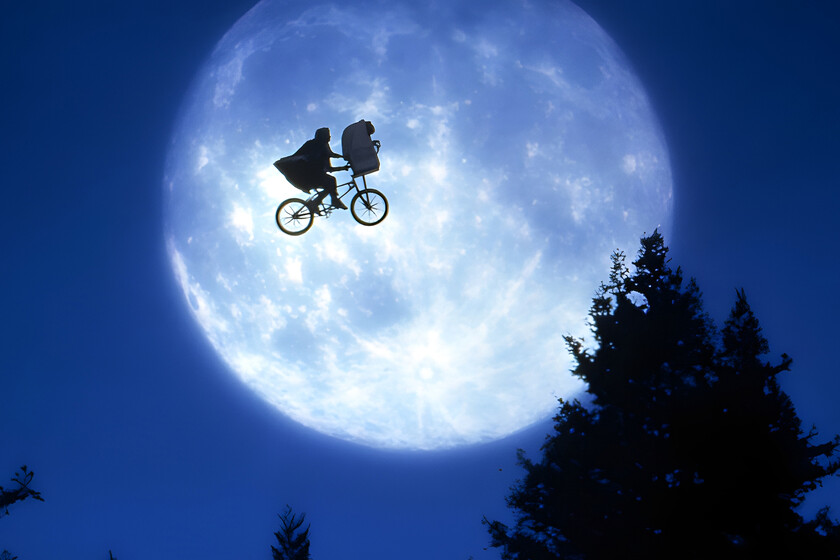
In a rare move during the post-production phase, Spielberg found it difficult to edit the film’s climactic bicycle chase to fit the music. He eventually took the film off the Moviola and told Williams to conduct the orchestra the way he felt the music should flow. Spielberg then re-edited the visual sequences to match the emotional swells of the music. This synergy between sight and sound created the iconic "flying theme" that has become synonymous with the magic of cinema.
Chronology of Cultural Milestones
The timeline of E.T.’s cultural footprint extends far beyond its 1982 theatrical window:
- 1982: The film is screened at the United Nations, where Spielberg is awarded the UN Peace Medal.
- 1983: The infamous E.T. video game for the Atari 2600 is released, contributing to the North American video game crash and leading to the burial of thousands of cartridges in a New Mexico landfill.
- 1994: The film is selected for preservation in the United States National Film Registry by the Library of Congress for being "culturally, historically, or aesthetically significant."
- 2002: A 20th Anniversary Special Edition is released, featuring controversial digital alterations (such as replacing federal agents’ guns with walkie-talkies), which Spielberg later expressed regret over and largely withdrew from subsequent home media releases.
- 2024: The film’s arrival on Max in the Latin American market triggers a new wave of viewership, placing it alongside modern blockbusters in the daily rankings.
Broader Implications for the Streaming Era
The fact that a 42-year-old film can compete with new releases on Max suggests a shift in consumer behavior. Industry analysts note that in times of economic or social uncertainty, audiences often gravitate toward "comfort viewing"—films that provide a sense of nostalgia or a guaranteed emotional payoff.
Furthermore, the "Amblin" style—characterized by suburban settings, children on bicycles, and government conspiracies—has seen a massive revival through shows like Stranger Things. As younger audiences finish modern series, they are increasingly directed by algorithms toward the original source material that inspired those shows. For Max, the inclusion of such "evergreen" titles is essential for reducing churn rates, as these films provide consistent value that justifies a monthly subscription more than a one-time viral hit might.

Legacy and Final Analysis
E.T. The Extra-Terrestrial remains a cornerstone of the science fiction genre because it treats its young protagonists with a level of respect rarely seen in family entertainment. It captures the specific loneliness of childhood while offering a grand, hopeful vision of the universe.
As the film continues to trend on Max in Mexico and other territories, it reinforces the idea that high-quality storytelling and practical craftsmanship possess a shelf life that transcends technological shifts. Whether viewed on a massive cinema screen in 1982 or a smartphone in 2024, the story of a boy and his visitor remains a definitive piece of cultural heritage. Its current success on streaming platforms is not merely a nostalgic trip for older viewers, but a testament to the film’s status as a fundamental chapter in the history of the seventh art.



 Eva Lovia
 Julia Chirkova
 Julia Prastini
 Jia Lissa
 admin
admin