
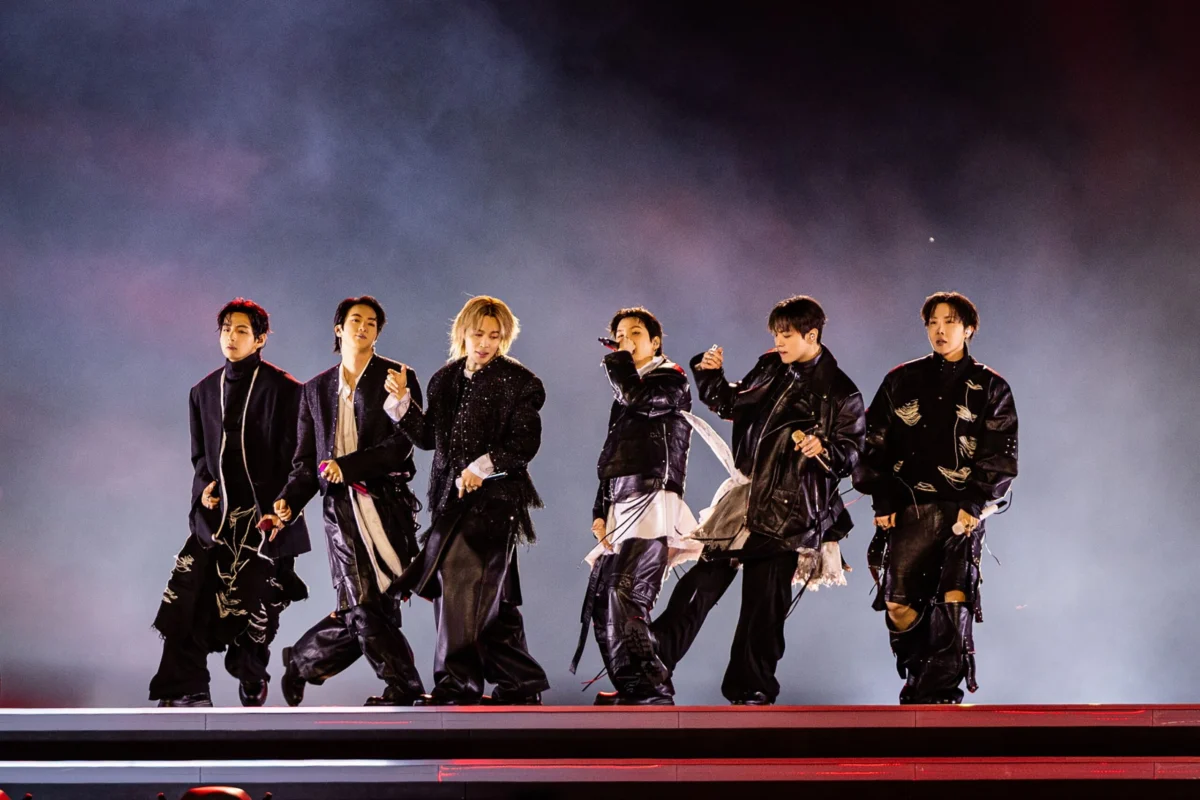
The global music landscape witnessed a historic milestone this week as BTS, the septet that redefined the reach of South Korean culture, officially ended its nearly four-year hiatus with a monumental performance in the heart of Seoul. Marking the commencement of the "BTS World Tour: Arirang," the group took to a custom-built stage at Gwanghwamun Square, a location of immense historical and cultural significance in the South Korean capital. The event, which served as a definitive statement of the group’s return following the completion of their mandatory military service, was broadcast globally via Netflix, ensuring that millions of fans—collectively known as ARMY—could witness the return of Jin, Suga, J-Hope, RM, Jimin, V, and Jungkook in real-time.
The 2026 comeback represents more than just a musical return; it signifies the restoration of a primary pillar of the global "Hallyu" (Korean Wave) economy. Since the group began their staggered enlistment process in late 2022, the K-pop industry has seen a shift toward new generations of talent, yet the vacuum left by BTS remained a focal point of industry analysis. The Gwanghwamun Square concert, attended by over 40,000 spectators in person and millions more via digital platforms, underscored the group’s enduring status as the preeminent force in the genre.
A Strategic Timeline of the BTS Hiatus and Return
The path to the 2026 "Arirang" tour began in June 2022, when the group announced a temporary pause in collective activities to focus on individual projects and fulfill their national defense obligations. Jin, the eldest member, was the first to enlist in December 2022, followed by J-Hope in April 2023 and Suga in September 2023. The remaining members—RM, Jimin, V, and Jungkook—commenced their service in late 2023.
Throughout 2024 and 2025, while the members were absent from the public eye, their management company, HYBE (formerly Big Hit Entertainment), maintained the group’s momentum through pre-recorded content, solo album releases, and documentary features. The synchronized discharge of the members in late 2025 set the stage for a six-month intensive preparation period, culminating in the release of their new studio album, Arirang, just 48 hours before the Seoul kickoff. The album’s title refers to a traditional Korean folk song often considered the unofficial national anthem of Korea, signaling a thematic shift toward heritage, resilience, and national identity.
Aesthetic Evolution: The Intersection of Tradition and Modernity
As BTS transitioned from their earlier "idol" imagery to global icons, their influence on the fashion industry became a central component of their brand. Previously serving as ambassadors for European luxury houses including Louis Vuitton, Dior, and Celine, the group chose a different direction for their 2026 return. For the Gwanghwamun performance, BTS collaborated with the renowned Korean avant-garde label Songzio, emphasizing a "K-fashion" narrative that mirrored the cultural themes of the Arirang album.

The stage costumes were a sophisticated reimagining of the hanbok, Korea’s traditional attire. Utilizing dark palettes, layered silhouettes, and heavy leather accents, the designs bridged the gap between historical armor and futuristic street style. Zio Song, the founder and creative director of Songzio, noted in a statement to the media that the intent was to portray the members as "heroic figures" who carry the weight of tradition into a modern, globalized future.
The footwear choices also drew significant attention from fashion analysts, reflecting the "track boot" and "chunky loafer" trends projected for the 2026 season. Members Taehyung (V), Jin, Suga, and RM performed in high-durability track-sole boots, providing a rugged, utilitarian foundation for their fluid choreography. In contrast, Jungkook, J-Hope, and Jimin opted for patent leather chunky loafers, a choice that blended classic formalwear with the exaggerated proportions of contemporary Korean street style. This stylistic dichotomy highlighted the individual fashion identities within the group while maintaining a cohesive visual narrative.
Technological Integration and the Netflix Partnership
In a departure from previous tour broadcasts that were often hosted on proprietary platforms like Weverse or VLive, the "Arirang" kickoff was streamed exclusively on Netflix. This partnership highlights a strategic move to leverage a broader, non-specialized audience and reflects the growing synergy between the K-pop industry and global streaming giants.
Industry analysts suggest that the Netflix deal provided BTS with an unprecedented reach, bypassing the technical limitations of niche platforms and offering high-definition, multi-camera angles to a subscriber base exceeding 260 million worldwide. The broadcast included behind-the-scenes footage of the group’s rehearsals and a documentary-style look at their transition back to civilian life, adding a layer of narrative depth to the musical performance.
Economic and Cultural Implications of the Comeback
The return of BTS is expected to have a measurable impact on the South Korean economy. According to data from the Korea Culture and Tourism Institute, a single BTS concert can generate an economic effect of hundreds of billions of won when accounting for ticket sales, merchandise, tourism, and increased consumer spending. With the "Arirang" tour scheduled to visit major stadiums across Asia, Europe, and the Americas, the group is once again positioned as a significant driver of South Korea’s "soft power."
Furthermore, the choice of Gwanghwamun Square as a venue was a calculated move by both the group and the Seoul Metropolitan Government. As a site that has hosted major national celebrations and historical protests, the square provided a backdrop of gravity and prestige. The performance effectively transformed a civic space into a global stage, reinforcing the idea that BTS is not merely a musical act but a cultural institution.

The Global Roadmap: Latin America and Beyond
Following the successful launch in Seoul, BTS is set to embark on an extensive international itinerary. A primary focus for the 2026 tour is the Latin American market, where the group’s fanbase has shown exponential growth over the last five years. In May 2026, the group will arrive in Mexico City for a multi-night residency at the Estadio GNP Seguros (formerly known as Foro Sol). With a capacity of over 65,000, the venue is expected to sell out within minutes of the ticket release.
The second half of 2026 will see the group move through South America, with confirmed dates in:
- Colombia: Bogota, Estadio El Campín
- Peru: Lima, Estadio Nacional
- Chile: Santiago, Estadio Nacional
- Argentina: Buenos Aires, Estadio River Plate
- Brazil: São Paulo, Allianz Parque
This leg of the tour is particularly significant as it marks the group’s first visit to several of these territories in nearly seven years. Local promoters expect record-breaking demand, with secondary market analysts predicting that the "Arirang" tour could become the highest-grossing concert series by an Asian act in history.
Official Responses and Future Outlook
The response from the music industry has been overwhelmingly positive. Critics have praised the Arirang album for its mature production and its willingness to experiment with traditional Korean instruments—such as the gayageum and daegeum—blended with modern synth-pop and hip-hop.
A spokesperson for Bighit Music stated, "This tour is a tribute to the patience of our fans and the resilience of the members. The ‘Arirang’ theme was chosen to represent the cycle of departure and return, a sentiment that resonates deeply with the group’s recent journey."
As BTS prepares to leave Seoul for the international leg of their tour, the narrative surrounding the group has shifted from "the end of an era" to "the beginning of a new chapter." The 2026 comeback has effectively silenced speculation regarding the group’s longevity, proving that their brand remains robust despite—or perhaps because of—the time spent away from the spotlight. With a sophisticated new aesthetic, a global streaming partnership, and a tour schedule that spans five continents, BTS has solidified its role as the definitive bridge between East and West in the 21st-century entertainment industry.

0 Comments