
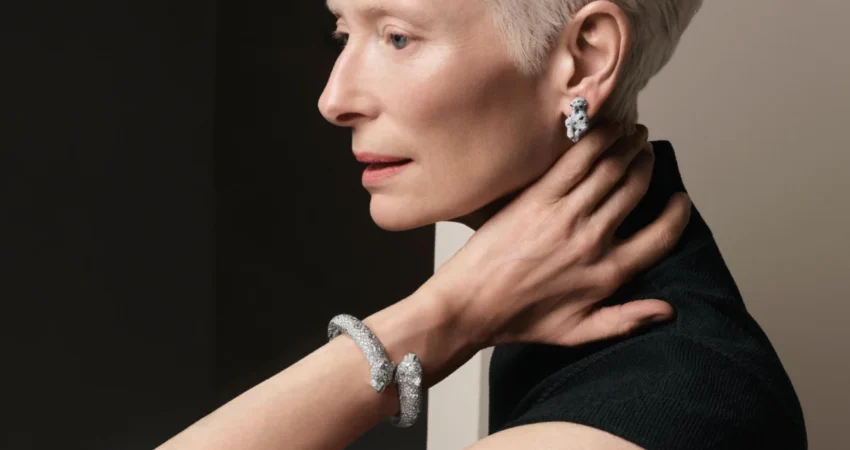
The French luxury house Cartier has officially unveiled its latest high jewelry narrative, "Into the Wild," a collection that serves as both a retrospective of its storied animalier history and a bold projection into the future of contemporary design. At the center of this launch is the appointment of Academy Award-winning actress Tilda Swinton as the new face of the maison, representing a strategic alignment between Cartier’s avant-garde craftsmanship and Swinton’s own reputation for chameleonic artistry and intellectual depth. The "Into the Wild" collection expands the brand’s biological repertoire beyond its iconic panther, introducing a sophisticated menagerie of five key creatures: the tiger, the parrot, the carp, the crocodile, and the rhinoceros. This campaign, titled "The Gallery of Animal Portraits," seeks to redefine the relationship between the wearer and the jewelry, moving away from mere ornamentation toward a shared spirit of independence and primal elegance.
The Architectural Evolution of Cartier’s Animalier Style
The history of fauna at Cartier is not merely a decorative choice but a fundamental pillar of the brand’s identity, rooted in the early 20th century. While the "Into the Wild" collection represents a modern milestone, its foundations were laid in 1914 when the first panther-patterned wristwatch was produced, utilizing onyx and diamonds to simulate the feline’s coat. However, the most significant turning point occurred in 1948, when Jeanne Toussaint, Cartier’s legendary Creative Director—famously nicknamed "La Panthère"—oversaw the creation of the first three-dimensional, sculptural panther brooch for the Duchess of Windsor. This piece marked the transition from two-dimensional representation to anatomical realism, a tradition that "Into the Wild" continues to uphold.
Throughout the mid-20th century, Cartier’s animal kingdom grew in response to the demands of high-society patrons. In the 1950s and 60s, the maison became synonymous with the exotic tastes of icons like Maria Félix, who famously commissioned the iconic crocodile necklace, and Princess Grace of Monaco, who favored Cartier’s avian designs. The current collection builds upon this timeline, utilizing modern technology and centuries-old techniques to bring a new level of vitality to the tiger’s stripes and the rhinoceros’s rugged texture. By integrating the carp and the parrot, Cartier acknowledges its historical fascination with both the fluidity of aquatic life and the vibrant chromaticism of nature, ensuring that the "Into the Wild" collection is a comprehensive synthesis of the maison’s archival successes and its future ambitions.
A Detailed Analysis of the "Into the Wild" Menagerie
The "Into the Wild" collection is structured around five specific animals, each chosen for its unique symbolic weight and the technical challenges it presents to the artisans. The tiger, a long-standing symbol of power in the Cartier universe, is reimagined with a focus on tension and movement. The stripes are rendered through a precise arrangement of diamonds and onyx, or sometimes yellow sapphires, to create a sense of rhythmic depth. The parrot, representing the maison’s mastery of color, utilizes emeralds, sapphires, and rubies to mimic the iridescent quality of feathers, showcasing a transition from the structured geometry of the Art Deco era to a more organic, fluid aesthetic.

The inclusion of the carp (the pez carpa) highlights Cartier’s ability to capture motion in static materials. Through the use of articulated scales and translucent gemstones, the pieces evoke the shimmering surface of water. Conversely, the crocodile and the rhinoceros provide an opportunity to explore texture and volume. The crocodile pieces often feature "serti pelage" (fur setting), a technique adapted to create the illusion of scales, while the rhinoceros—a rarer motif in high jewelry—emphasizes the architectural strength and "authority innata" (innate authority) mentioned by Swinton. The collection is diverse in its offerings, spanning from high-jewelry rings and bracelets to more functional luxury items, including a meticulously crafted watch and a high-fashion clutch, bridging the gap between jewelry and accessory design.
Technical Savoir-Faire and the Art of Life-Like Jewelry
The production of the "Into the Wild" collection involves a rigorous collaborative process between Cartier’s designers, lapidaries, and gem-setters. The primary objective is to achieve what the maison calls "the sense of life"—an anatomical accuracy that suggests the creature could move at any moment. This is achieved through a deep understanding of animal morphology. Designers spend months studying the musculature and skeletal structures of the animals to ensure that the jewelry sits comfortably on the body while maintaining its ferocity.
One of the most complex aspects of the collection is the "fur setting" technique. To mimic the texture of an animal’s coat or scales, artisans must hand-carve the metal to create tiny grain-like structures that hold the stones in place without visible prongs. This allows the light to hit the gemstones from multiple angles, creating a shimmering effect that mimics the play of light on real fur or skin. Furthermore, the lapidaries are tasked with selecting stones that match the emotional tone of the animal; for instance, emeralds are often chosen for the eyes of the feline creatures to convey a piercing, intelligent gaze. This commitment to technical excellence ensures that each piece is not merely a product of luxury but a masterpiece of micro-sculpture.
Tilda Swinton and the Philosophy of the Campaign
The choice of Tilda Swinton as the ambassador for "Into the Wild" is a calculated move to align the brand with a specific type of intellectual luxury. Swinton, known for her roles in films that explore the boundaries of identity and nature, brings a sense of gravity to the campaign. In her official statements regarding the role, Swinton emphasized the connection between the "glamour and mystery of the jungle" and the "authority" of the creatures depicted. She described the jewelry as "treasures that come to life," suggesting that the wearer does not just own the piece but enters into a dialogue with the spirit of the animal.
Swinton’s perspective reflects a broader shift in the luxury industry where consumers are increasingly looking for "meaningful" luxury. The campaign, "The Gallery of Animal Portraits," is shot with a cinematic quality that emphasizes the "solitary and distinctive" nature of the animals. By positioning Swinton alongside these creatures, Cartier suggests that its jewelry is intended for individuals who possess a similar level of independence and self-assurance. This philosophical approach helps to differentiate Cartier from competitors who may focus solely on the carat weight or the rarity of the materials, focusing instead on the "alchemy" of the artistic process.

Market Context and the Growth of High Jewelry
The launch of "Into the Wild" comes at a time when the global high jewelry market is experiencing a period of robust growth. According to industry reports from McKinsey and Bain & Company, the branded high jewelry segment is expected to grow at a compound annual growth rate (CAGR) of 8% to 12% through 2025. This growth is driven by an increasing demand for "investment pieces" and a rising interest among younger, affluent consumers in heritage brands that offer a combination of historical prestige and contemporary relevance.
Cartier, as a flagship brand within the Richemont Group, plays a pivotal role in this market. The "Into the Wild" collection is strategically designed to appeal to both long-time collectors and new clients. By diversifying the animal motifs, Cartier is expanding its reach into different cultural markets where certain animals hold specific symbolic value—for example, the tiger and the carp carry significant cultural weight in Asian markets, which remain a primary engine of growth for the luxury sector. The inclusion of more "accessible" high-jewelry items like pins and rings alongside "museum-grade" necklaces and watches allows the brand to capture a wider range of price points within the high-end segment.
Broader Implications for the Future of Cartier
The "Into the Wild" collection is more than just a seasonal release; it is a statement of intent regarding the future of Cartier’s creative direction. By revisiting its animalier heritage through the lens of modern craftsmanship and a high-profile, intellectual ambassadorship, Cartier is reinforcing its position as a "living legend" in the jewelry world. The collection demonstrates that a brand can remain faithful to its 19th and 20th-century roots while continuously evolving to meet the aesthetic and ethical expectations of the 21st century.
As the luxury industry moves toward a more integrated approach to fashion, jewelry, and art, Cartier’s "Into the Wild" serves as a benchmark for how to execute a multi-faceted campaign that resonates on a global scale. The combination of Tilda Swinton’s unique persona, the technical brilliance of the Parisian workshops, and a deep respect for the natural world ensures that this collection will be remembered as a significant chapter in the maison’s history. Ultimately, "Into the Wild" reminds the world that Cartier does not just make jewelry; it creates a "benign encounter with the wild," a dream of harmony between human artistry and the untamable beauty of nature.

0 Comments