
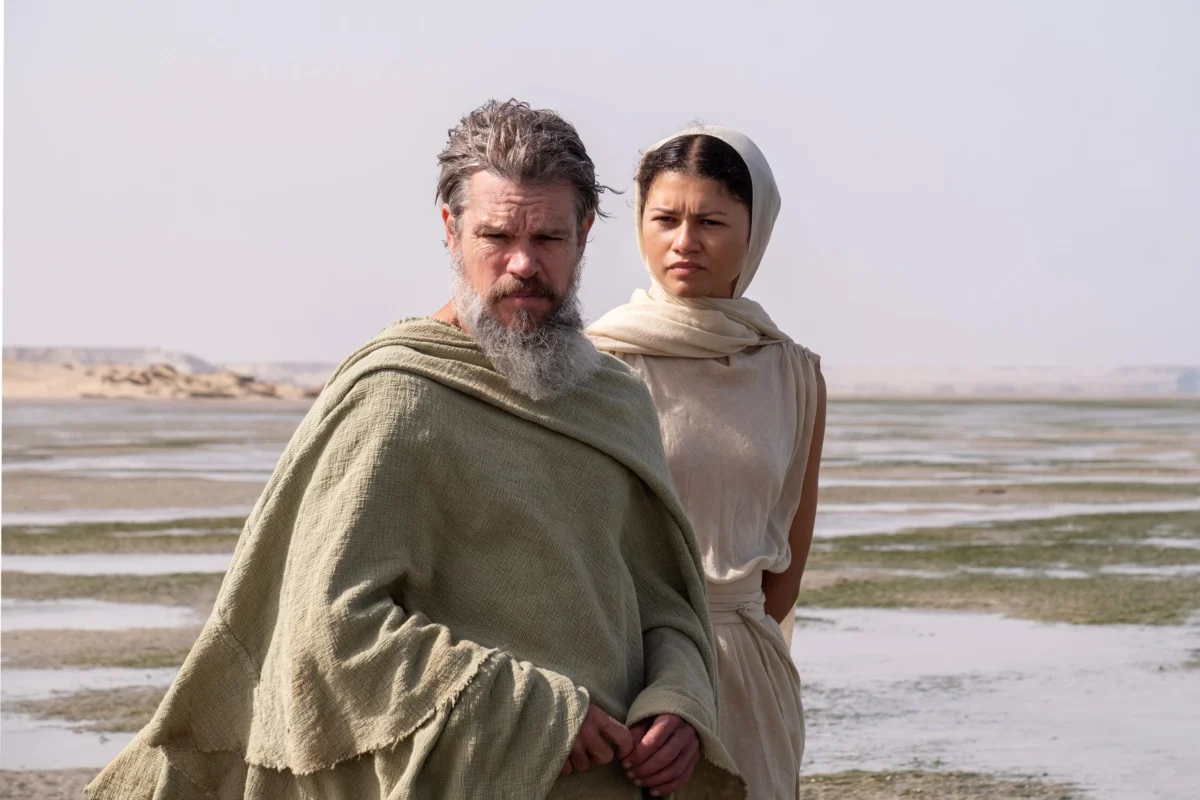
The release of Christopher Nolan’s latest cinematic endeavor, an expansive adaptation of Homer’s The Odyssey, has marked a significant milestone in contemporary filmmaking, signaling the director’s most ambitious project to date. Produced under the Universal Pictures banner and filmed extensively using IMAX 70mm technology, the production represents a convergence of ancient literary tradition and cutting-edge audiovisual engineering. Starring Matt Damon as the Ithacan King Odysseus, the film attempts to bridge a gap of over two millennia, translating the foundational epic of Western literature into a three-hour exploration of war, memory, and the grueling psychological toll of the return journey.
Production Framework and Technical Execution
Christopher Nolan’s The Odyssey arrives as a centerpiece of high-concept studio filmmaking, following the critical and commercial success of his previous historical and theoretical works. The production values inherent in the film align with Nolan’s established reputation for practical effects and large-scale set pieces. The collaboration with editor Jennifer Lame, who previously worked with Nolan on Tenet and Oppenheimer, defines the film’s rhythmic structure, though early critical assessments have noted specific montage decisions that diverge from the traditional linear progression of the epic poem.
The film’s visual language is built upon the vastness of the Mediterranean landscape, utilized to mirror the internal isolation of its protagonist. Technical reports indicate that the production utilized custom-built nautical rigs and remote locations to capture the environmental hazards faced by the character of Odysseus. By eschewing heavy reliance on digital environments in favor of physical locations, Nolan maintains his commitment to tactile realism, a hallmark of his filmography that seeks to ground mythological elements in a recognizable reality.
Narrative Structure and Chronology of the Epic
The screenplay, also penned by Nolan, adheres to the broad strokes of the Homeric tradition while condensing the decade-long journey into a cohesive three-hour runtime. The narrative is divided into three distinct movements: the conclusion of the Trojan War, the perilous maritime journey across the Mediterranean, and the domestic crisis unfolding in Ithaca.
- The Trojan Prelude: The film opens with the fall of Troy, establishing the tactical brilliance of Odysseus and the moral ambiguity of the Greek victory. This segment serves to contextualize the character’s departure from his family and his subsequent struggle to reconcile his identity as a warrior with his role as a father and king.
- The Decadel Odyssey: The central portion of the film tracks the twenty-year absence of the protagonist. Matt Damon portrays Odysseus as a man of action and resolve, navigating encounters with various mythological obstacles that are presented through a lens of psychological realism rather than pure fantasy.
- The Ithacan Crisis: Concurrent with the maritime journey, the film explores the domestic stability of Ithaca. Anne Hathaway portrays Penelope, whose role is expanded to highlight the political and personal pressures of maintaining a kingdom under siege by opportunistic suitors. Tom Holland appears as Telemachus, representing the generational impact of war and the consequences of a father’s prolonged absence.
Supporting Data: The Scale of Global Displacement
While The Odyssey is a work of historical fiction based on mythological foundations, the themes of the "return home" resonate with contemporary global statistics regarding human movement and conflict. The film’s focus on a veteran attempting to reclaim his life after a prolonged period of displacement aligns with data provided by the United Nations High Commissioner for Refugees (UNHCR).
According to recent UNHCR reports, more than 123 million people worldwide are currently forcibly displaced due to war, violence, and persecution. For these individuals, the concept of "home" is often an uncertainty rather than a guaranteed destination. Industry analysts suggest that Nolan’s decision to adapt this specific story in 2026 reflects a broader cinematic trend of examining the "invisible wounds" of survival. This context elevates the film from a mere action-adventure epic to a commentary on the enduring nature of the refugee experience and the difficulty of reintegrating into a society that has moved on in the veteran’s absence.
Comparative Analysis of the Heroic Archetype
A point of significant discussion among film historians and literary critics involves Nolan’s interpretation of the Odyssean character. In the original Homeric text, Odysseus is frequently depicted in states of extreme vulnerability; he is a character who weeps for his lost companions and suffers from intense nostalgia—a term originally coined to describe the medical condition of "homesickness" in soldiers.

Nolan’s version, however, leans toward the archetype of the "resolutive hero." While the film includes moments of vulnerability, they are often framed through the protagonist’s interactions with female characters rather than through internal monologues. This contrasts with recent war cinema, such as Jonathan Glazer’s The Zone of Interest or Edward Berger’s All Quiet on the Western Front, which prioritize the internal psychological erosion of their subjects.
Critics have noted that while Nolan excels at depicting the "extraordinary hero" navigating complex physical and temporal landscapes, the profound "interiority" found in the Greek poem is sometimes secondary to the film’s external momentum. The internal conflict—the struggle of a man who has survived a war only to find he must now survive himself—remains the most challenging aspect of the adaptation to translate to a modern blockbuster audience.
Industry and Official Responses
Universal Pictures has positioned the film as a definitive cultural event, with marketing campaigns emphasizing the "timelessness" of the story. Studio representatives have highlighted the casting of Matt Damon and Anne Hathaway as a strategic move to ground the epic in relatable human performances.
Early reactions from the film industry have praised the technical mastery of the project. Leading cinematographers have pointed to the film’s use of light and shadow to distinguish between the "reality" of Ithaca and the "dream-like" nature of the journey. However, some literary scholars have expressed reservations regarding the streamlining of the narrative, arguing that the removal of certain monologues reduces the character’s complexity.
In a statement regarding the film’s themes, production insiders noted: "The goal was not to create a historical documentary of a myth, but to explore the universal truth of what it means to be lost and the Herculean effort required to find one’s way back. It is a story about the resilience of the human spirit in the face of overwhelming odds."
Broader Impact and Implications for Modern Cinema
The Odyssey’s release is expected to influence the direction of big-budget filmmaking in the latter half of the decade. By taking a 3,000-year-old poem and treating it with the gravity of a contemporary war drama, Nolan reinforces the idea that classical literature remains a viable and necessary source for modern storytelling.
The film’s impact extends into several key areas:
- The Evolution of the Epic: Nolan proves that there is still an appetite for long-form, serious-minded epics in an era often dominated by franchise-driven content.
- Technological Standards: The continued use of 70mm film and IMAX cameras sets a high bar for visual fidelity, encouraging other directors to pursue large-format cinematography.
- Cultural Dialogue: By highlighting the trauma of the returning soldier, the film contributes to a wider conversation about veteran affairs and the psychological aftermath of conflict.
Ultimately, Christopher Nolan’s The Odyssey serves as a bridge between the ancient and the modern. While it may prioritize the spectacle of the journey over the silence of the character’s internal suffering, its existence ensures that the questions posed by Homer—questions about home, identity, and the cost of survival—remain at the forefront of the cultural consciousness. The film confirms that while the methods of storytelling have evolved from oral tradition to the silver screen, the human experience of seeking a place to belong remains unchanged.

0 Comments