
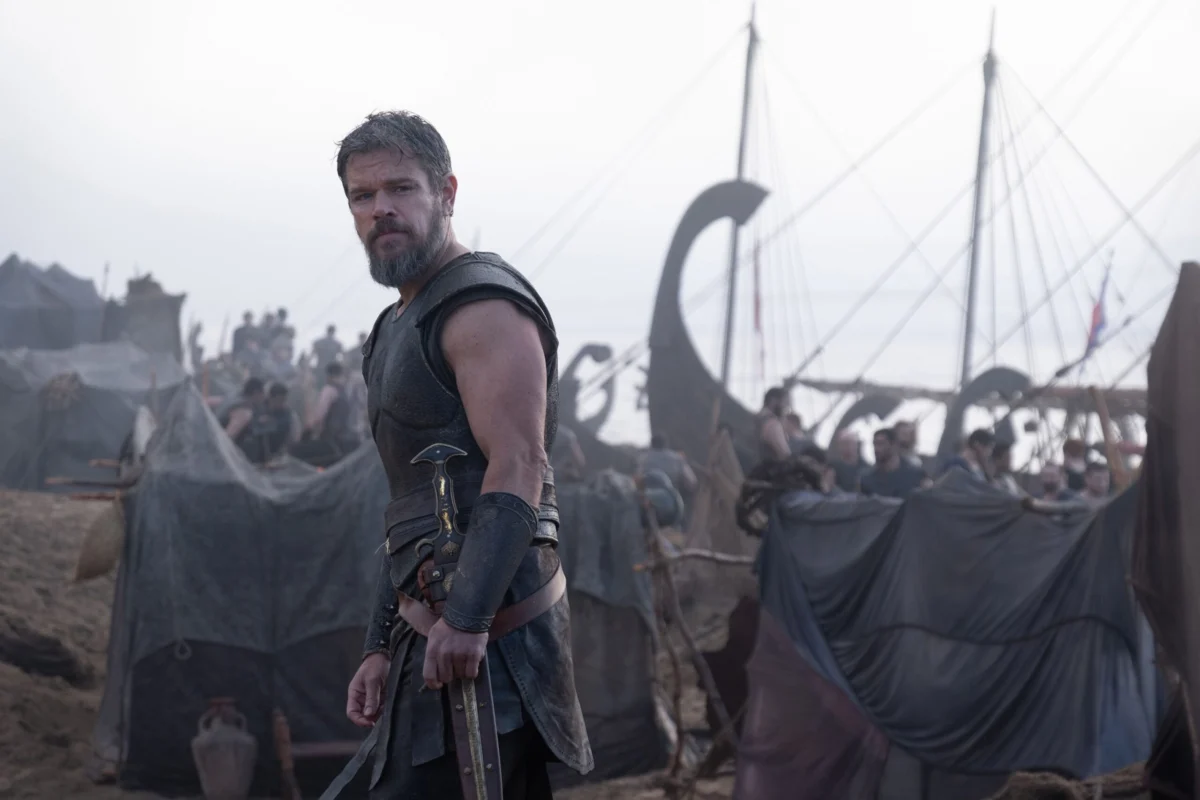
The global cinematic landscape has been fundamentally altered by the release of Christopher Nolan’s latest masterwork, an ambitious adaptation of Homer’s The Odyssey, which arrived in theaters on July 16 to unprecedented critical and commercial fanfare. Described by the director during this year’s CinemaCon as "not just a story, but the story," the film represents a monumental undertaking that seeks to translate a 2,800-year-old epic poem into a contemporary visual experience. Produced with a staggering budget of $250 million and captured on two million feet of IMAX film over a grueling 91-day shooting schedule, the project is arguably the most complex endeavor in Nolan’s storied career. By eschewing the industry’s reliance on digital environments in favor of remote, practical locations across Europe and North Africa, the production has set a new benchmark for the "epic" genre, blending ancient mythology with the visceral, high-fidelity realism that has become Nolan’s signature.
A Stellar Ensemble and Artistic Collaboration
At the heart of this massive production is a cast that reflects the weight of the source material. Matt Damon leads the film as King Odysseus, portraying the weary but resilient hero attempting to navigate a ten-year journey home to Ithaca following the fall of Troy. Joining him is Anne Hathaway as Penelope, whose portrayal of the steadfast queen is expected to be a central emotional pillar of the narrative. Tom Holland takes on the role of Telemachus, the son searching for his father’s legacy, while Robert Pattinson provides a menacing presence as Antinous, the primary antagonist among the suitors vying for Penelope’s hand.

The film’s auditory landscape is equally ambitious. Composer Ludwig Göransson, who previously collaborated with Nolan on Tenet and Oppenheimer, provides a score that integrates ancient Mediterranean motifs with modern orchestral intensity. The soundtrack is further enriched by the haunting background vocals of James Blake, creating a sonic atmosphere that bridges the gap between the archaic world and the modern viewer. This collaboration underscores Nolan’s commitment to a multi-sensory experience, ensuring that the scale of the visuals is matched by the depth of the sound.
Chronology of a "Nightmare" Production
The timeline of The Odyssey’s production reveals the logistical hurdles required to film on such a grand scale. Pre-production began in late 2023, with scouts scouring the globe for landscapes that could replicate the mythical geography of the Mediterranean without the use of extensive CGI. Principal photography commenced in early 2025, with the production moving through several distinct phases.
In March and April of 2025, the crew focused on the Mediterranean sectors, utilizing locations in Greece and Italy. The production then moved to the arid landscapes of Morocco to capture the sequences representing Troy and the North African coast. The final legs of the journey took the crew to the subarctic environments of Iceland and the rugged coastlines of Scotland, concluding the 91-day shoot in late May. This rapid turnaround for a July 16 release necessitated a massive post-production effort, particularly in the processing of the two million feet of IMAX film, which requires specialized handling compared to digital formats. Nolan himself referred to the shoot as a "nightmare in the best way," citing the physical toll of transporting heavy IMAX equipment to mountaintops and remote caves.

The Geography of Myth: Principal Filming Locations
The decision to film almost entirely on location was driven by Nolan’s belief that the "tangibility of the environment" dictates the performance of the actors and the engagement of the audience. The production utilized a diverse array of international sites to stand in for the islands and kingdoms of the Homeric world.
Greece: The Peloponnesian Heart
According to the Hellenic Film Commission, the production spent significant time in the Peloponnese region. This area served as the primary backdrop for Odysseus’s departure and his eventual return. Key sites included:
- Voidokilia Beach: Known for its near-perfect semicircular shape, this location provided the ideal aesthetic for the ancient Greek coastline.
- The Castle of Methoni: A 13th-century Venetian fortress used to represent the architectural grandeur of the Homeric age.
- Acrocorinth: The monolithic rock overlooking the ancient city of Corinth provided a commanding view of the landscape, serving as a site for royal palace exteriors.
- The Cave of Nestor: This site was utilized for the legendary encounters with the Cyclops, where the natural limestone formations provided a claustrophobic and primitive atmosphere that no soundstage could replicate.
Morocco: The Gates of Troy
To represent the fallen city of Troy and the vast, sun-drenched expanses of the early voyage, the production moved to Morocco. Marrakech, Essaouira, and Ouarzazate served as key hubs. Most notably, the UNESCO World Heritage site of Aït Benhaddou was used to portray Troy. This ksar, or fortified village, is a masterpiece of earthen clay architecture and has a long history in cinema, having hosted productions like Lawrence of Arabia and Gladiator. Its high walls and organic textures provided the necessary historical weight for the film’s opening act.

Italy and Malta: The Sun-Drenched Seas
Italy’s Sicily and its surrounding islands were essential for capturing the "nostos"—the theme of the hero’s homecoming. The island of Favignana, often called "the island of goats," became a focal point for the production. Nolan noted in an interview with GQ that filming at the Castello di Santa Caterina, a ruined castle atop a steep hill, required a daily 900-foot trek for the crew and the use of helicopters to ferry IMAX cameras and heavy grip equipment. The Aeolian Islands—Lipari, Vulcano, and Basiluzzo—as well as the island nation of Malta, provided the crystalline waters and volcanic cliffs necessary for the various island-hopping sequences of the middle odyssey.
Iceland: The Descent into Hades
For the pivotal scenes in Book XI, where Odysseus travels to the Underworld to consult the prophet Tiresias, Nolan sought a landscape that felt "otherworldly and desolate." Iceland provided this atmosphere through its black sand beaches and volcanic caves. Filming locations included the Hjörleifshöfði mountain caves, the Snæfellsnes Peninsula, and the Markarfljót River. The stark contrast between the lush Mediterranean scenes and the monochromatic, mist-heavy Icelandic vistas serves to visually distinguish the realm of the dead from the land of the living.
Scotland: The Wild Northern Enclaves
The final touches of the epic were filmed along the Moray Firth in Scotland. This 500-mile stretch of coastline, known for its dramatic sea stacks and unpredictable weather, provided a rugged aesthetic for the more treacherous sea voyages. The Findlater Castle and Culbin Forest were also utilized. In a notable display of practical effects, a full-scale wooden Viking-style ship was docked in the Inverness harbor, serving as a centerpiece for several maritime sequences.

Technical Data and Industry Impact
The scale of The Odyssey is reflected in its technical specifications. The use of two million feet of IMAX film is a record-breaking figure, highlighting Nolan’s dedication to the highest possible resolution and immersion. Unlike digital sensors, 70mm film offers a depth of field and color saturation that many purists believe is essential for a story of this magnitude.
The budget of $250 million places the film among the most expensive R-rated (or high-intensity PG-13) productions ever made. However, industry analysts suggest that the "Nolan Brand" carries enough weight to justify the investment. His previous historical and high-concept films, such as Dunkirk and Interstellar, have consistently demonstrated that audiences are willing to support sophisticated, large-scale cinema that prioritizes practical craft over digital artifice.
Analysis of Implications and Official Reactions
The production has already garnered significant praise from international film commissions. The Hellenic Film Commission noted that the production provided a substantial economic boost to the Peloponnese, creating hundreds of local jobs and highlighting Greece as a premier destination for high-budget international filmmaking. Similarly, Moroccan authorities have praised the film for its respectful and prominent use of historical landmarks.

From a broader cinematic perspective, The Odyssey represents a pivot back to the "Great Epic" style of filmmaking reminiscent of David Lean. In an era dominated by superhero franchises and streaming-first releases, Nolan’s insistence on a theatrical-only, large-format experience is a strategic defense of the traditional cinema model. By choosing a story that is foundational to Western literature, he is also tapping into a universal narrative that transcends modern cultural boundaries.
The film’s focus on "real locations" also serves as a critique of the current industry trend toward "The Volume" (LED screen environments). By forcing his actors to contend with actual wind, salt water, and mountain terrain, Nolan achieves a level of "earned realism." As the director stated, the goal was to make the audience feel the distance Odysseus traveled—not just through the script, but through the tangible shift in light, weather, and geography captured on screen.
Conclusion: A New Standard for Ancient Stories
As The Odyssey continues its theatrical run, its impact is likely to be felt for years to come. It serves as a reminder that the oldest stories can be made new through the lens of modern technology, provided that technology is used to enhance, rather than replace, the physical reality of the world. With its powerhouse performances, unparalleled cinematography, and a commitment to the "nightmare" of practical filmmaking, Christopher Nolan has not only adapted Homer’s poem but has also created a new landmark in the history of epic cinema. The journey of Odysseus, a tale of survival, cunning, and the primal desire for home, has found a definitive visual expression for the 21st century.

0 Comments