
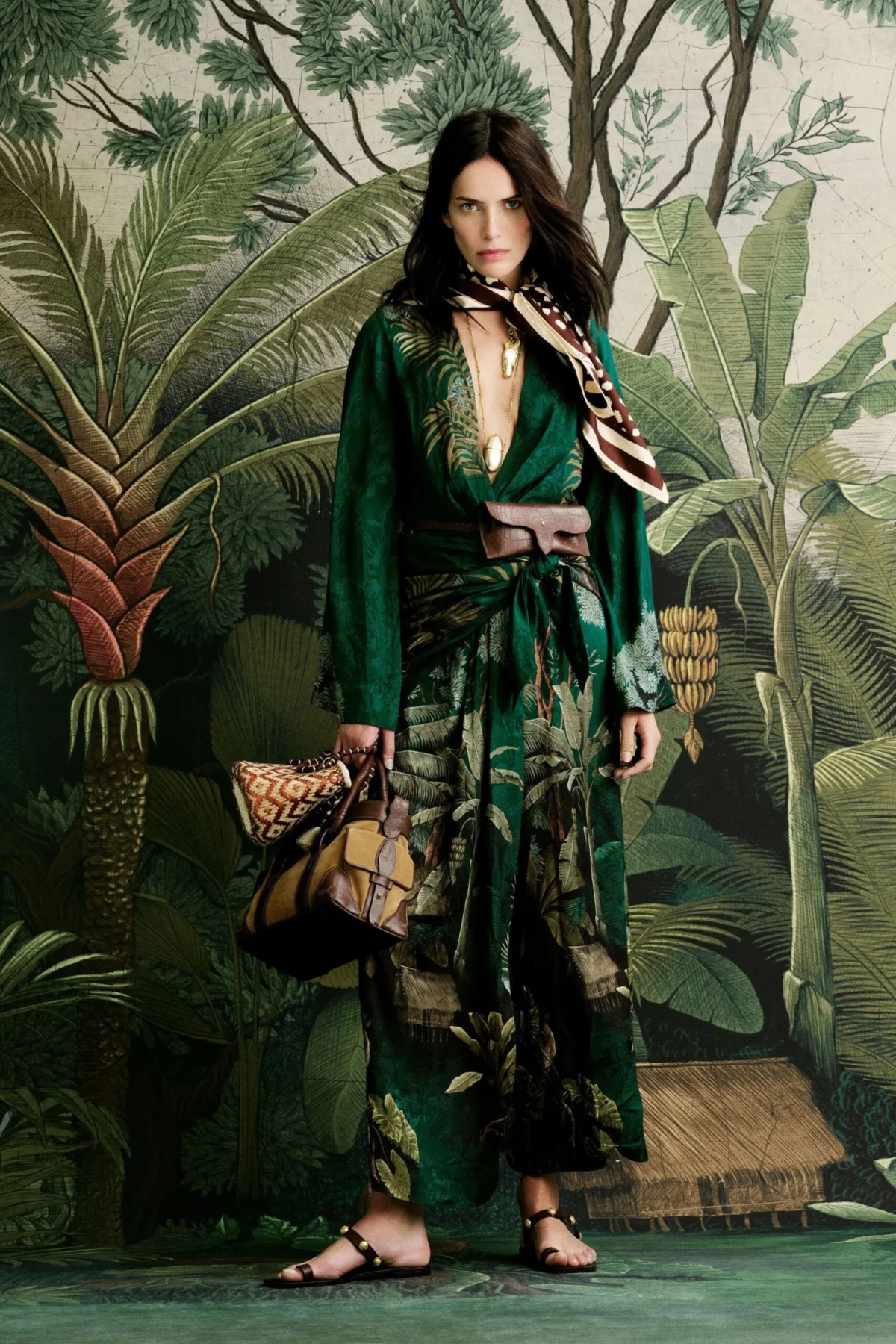
The global fashion landscape for the Summer 2026 season is experiencing a decisive shift toward Latin American craftsmanship, with Colombian blouses emerging as the primary catalyst for a new era of sophisticated dressing. As international markets increasingly prioritize "slow fashion" and artisanal heritage, the Colombian textile industry has positioned itself at the forefront of the Spring-Summer 2026 ready-to-wear cycle. These designs, characterized by elegant silhouettes such as halter necks, intricate draping, and vertical stripes, are engineered to provide both visual elongation and structural stylization. Each garment serves as a narrative vessel, reflecting Colombia’s status as a nation defined by its immense biodiversity, creative resilience, and centuries-old tradition of manual artistry. For the upcoming 2026 heatwave, the industry is gravitating toward lightweight, versatile options that transition seamlessly from high-casual environments to formal evening engagements, supported by a strategic selection of footwear including sculptural wedges, avant-garde mules, and artisanal boots.

The Rise of Colombian Design in the Global Market
The ascent of Colombian fashion is not a sudden phenomenon but the result of a multi-decade strategy to transition from a manufacturing hub to a source of high-concept design. Historically known for its robust textile production in cities like Medellín—often referred to as the "Fashion Capital of Latin America"—Colombia has evolved its output to include luxury "designer-of-author" pieces. According to economic data from ProColombia, the government agency tasked with promoting non-traditional exports, the textile and apparel sector has seen a consistent annual growth rate, with exports to the United States and Europe reaching record highs in the mid-2020s. The Summer 2026 collections represent a culmination of this growth, where local brands are no longer merely participating in global trends but are actively defining the street-style zeitgeist.
The 2026 aesthetic is rooted in a fusion of architectural precision and organic fluidity. Designers are moving away from the "fast fashion" cycles of the early 2020s, favoring instead pieces that offer longevity and cultural depth. This shift is reflected in the technical execution of the Colombian blouse, which utilizes premium linens, organic cottons, and silk blends to combat rising global temperatures while maintaining a crisp, polished appearance.

Architectural Draping and the Evolution of the Wedge
One of the most prominent trends for Summer 2026 is the resurgence of draped silhouettes, a technique mastered by Colombian house Faride Ramos. The brand’s "Susan" blouse exemplifies how structural pliegues (folds) can transform a standard garment into a work of kinetic art. Draping serves a dual purpose: it adds a sense of dynamic movement to the wearer’s gait while strategically balancing the figure to create a harmonious silhouette. Faride Ramos has been instrumental in rewriting the rules of modern tailoring, blending masculine structural elements with feminine fluidity.
To complement these structured yet flowing tops, the industry is looking toward the "wedge 2.0." In Summer 2026, the wedge heel is being reimagined through a minimalist lens, as seen in the offerings from luxury labels like The Row. The combination of a Faride Ramos draped blouse with a refined wedge heel offers a sophisticated solution for formal summer occasions. This pairing provides the height and posture of a traditional stiletto but with the stability required for outdoor social events, representing a pragmatic approach to high-fashion styling.

Voluminous Bows and the Modern Mule
The concept of "feminine power" is being redefined in 2026 through the use of oversized bows and architectural volume. Maria Elena Villamil, a designer renowned for her sculptural approach to fashion, has introduced blouses that feature abstract prints and prominent bow details. These pieces are not merely decorative; they are engineered to transcend seasonal trends, functioning as "investment pieces" within a curated wardrobe. The Villamil aesthetic for Summer 2026 emphasizes the "prominent bow" and voluminous sleeves, creating a visual dialogue between the garment and the space it occupies.
The logical footwear companion for such a statement top is the mule. However, for the 2026 season, the mule has evolved beyond its minimalist roots. Brands like Ferragamo are introducing mules that feature avant-garde heels and luxurious textures, capable of anchoring the visual weight of a voluminous blouse. This combination—a Maria Elena Villamil blouse and structural mules—creates a look that is both intellectually stimulating and aesthetically pleasing, suitable for the modern professional who demands both style and distinction.

Transparency, Craftsmanship, and the High-Fashion Flip Flop
Francesca Miranda, a designer who has successfully bridged the gap between high couture and indigenous craftsmanship, is championing the use of transparencies for the 2026 season. The use of sheer fabrics and intricate embroidery allows for a play of light and shadow, making the blouse a versatile "statement" piece that can be elevated or dressed down. In the context of Summer 2026 street style, these transparent blouses are being paired with high-waisted denim or tailored trousers to create a "high-low" aesthetic.
In a surprising turn for the 2026 season, the footwear of choice for these high-couture blouses is the embellished flip flop. Designers like Gianvito Rossi have elevated the humble sandal into a luxury item through the use of gemstones, metallic finishes, and architectural heels. This fusion of Francesca Miranda’s artisanal transparency with Rossi’s jeweled footwear reflects a broader trend toward "relaxed luxury," where comfort and opulence are no longer mutually exclusive.

Romanticism and the Return of the Vertical Stripe
For casual summer afternoons, the Colombian brand Sixxta is leading the trend toward romanticized utility. Their striped blouses, featuring delicate straps and curved hemlines, are designed to provide a slimming effect while maintaining a carefree, bohemian spirit. The vertical stripe remains a staple of the Colombian aesthetic, rooted in the traditional patterns found in regional textiles but updated with modern color palettes.
The 2026 approach to styling these pieces involves a return to the flat sandal. However, the color theory for the season has shifted away from neons toward "earthy audacity." Shades of burgundy, deep chocolate, and terracotta are the preferred tones for footwear, providing a grounded contrast to the light, striped fabrics of the Sixxta collection. This look caters to the "resort-to-city" lifestyle that has become a hallmark of 21st-century summer dressing.

Halter Necks and the Suede Ankle Boot
Juan De Dios, a brand that revolutionized the "resort wear" category, continues to influence the 2026 season with its focus on the halter neck. By framing the shoulders and elongating the neck, the halter blouse remains one of the most flattering silhouettes in the Colombian repertoire. For Summer 2026, Juan De Dios is utilizing vibrant, saturated hues and lightweight knitted fabrics that offer a tactile, sensory experience.
The unexpected footwear choice for these vibrant halter tops is the suede ankle boot. Influenced by designers like Isabel Marant, the suede boot provides a textural counterpoint to the smoothness of the halter blouse. This "trans-seasonal" approach to styling acknowledges the reality of summer evenings in urban environments, where temperatures can drop, and a more substantial shoe is required. The pairing of a Juan De Dios halter neck with suede boots creates a look that is both feminine and resilient.

The Boho-Chic Revival and the Texan Influence
Finally, the Summer 2026 season marks the return of the "boho-chic" aesthetic, led by the internationally acclaimed Johanna Ortiz. Ortiz, who was one of the first Colombian designers to achieve global commercial success on platforms like Net-a-Porter, continues to define the category with cape-style blouses and intricate lace detailing. These pieces evoke a sense of global wanderlust while remaining rooted in Colombian heritage.
To complete the boho-chic narrative, the "Texan" or cowboy boot has been re-integrated into the summer wardrobe. These boots, often featuring intricate topstitching and sustainable leather, provide a rugged contrast to the delicate lace and silk of an Ortiz blouse. This combination has become an iconic chapter in the Colombian style manual, representing a fusion of rural tradition and cosmopolitan luxury.

Economic Implications and Future Outlook
The dominance of Colombian blouses in the 2026 season is more than a fleeting fashion trend; it is a significant economic indicator. The Colombian government’s investment in the "Orange Economy" (creative industries) has yielded substantial returns, with the fashion sector now accounting for a significant portion of the country’s manufacturing employment. As global consumers become more conscious of the ethical implications of their purchases, Colombian brands—many of which employ local artisans and prioritize sustainable sourcing—are well-positioned to capture a larger share of the luxury market.
Analysis of the 2026 retail cycle suggests that the "Colombian Blouse" will remain a high-demand category for several years. Its ability to blend technical tailoring with cultural storytelling makes it a unique proposition in a crowded marketplace. Furthermore, the strategic pairing of these garments with high-end footwear from European and American houses demonstrates the "interoperability" of Colombian design within the global luxury ecosystem.

As the Summer 2026 season progresses, the influence of these designers is expected to expand beyond apparel into lifestyle and accessories. The "Colombian aesthetic"—defined by volume, color, and craftsmanship—is set to become a permanent fixture in the international fashion lexicon, ensuring that the legacy of this biodiversity-rich nation continues to shape how the world dresses for the heat of the future.

0 Comments