
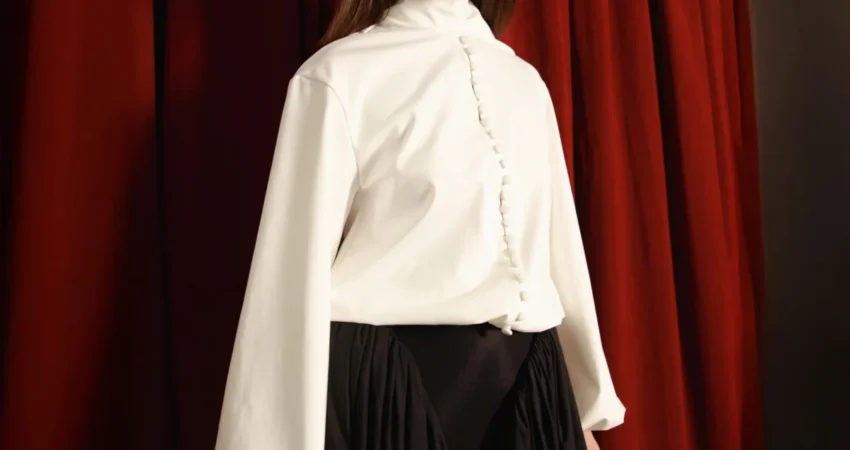
The global fashion landscape is currently witnessing a significant pivot toward the maximalist aesthetics of the 1980s, a movement led prominently by a new wave of Colombian designers and established fashion houses. As the industry prepares for the Spring-Summer 2026 season, the "power dressing" ethos—defined by exaggerated shoulders, voluminous sleeves, and bold silhouettes—has moved from nostalgic retrospection to the forefront of contemporary retail strategy. This resurgence is not merely a stylistic choice but a calculated response to a decade of "quiet luxury" and minimalism, signaling a return to fashion as a medium of visibility and assertive self-expression. Colombian brands, in particular, are leveraging their regional expertise in textiles and tailoring to redefine the 1980s blouse, pairing it with modern staples like straight-leg jeans, pencil skirts, and stirrup leggings to create a bridge between historical reverence and future-forward utility.

The Architectural Foundation of the 2026 Aesthetic
The Spring-Summer 2026 collections have revealed a diverse range of influences, drawing from the fluid 1970s and the grunge-infused 1990s. However, the 1980s remain the dominant pillar for the upcoming summer season. The core of this revival lies in the blouse—a garment that, in the Colombian market, has become a canvas for technical innovation and cultural storytelling. Designers are focusing on specific structural elements: the peplum waist, the satin finish, and the sculptural puff sleeve.
Industry analysts note that this trend aligns with a broader economic shift in the fashion sector. As consumers increasingly seek "investment pieces" that offer high visual impact, the 1980s-inspired blouse provides a versatile solution. It serves as a statement piece that can elevate standard denim or professional trousers, fulfilling the demand for "multi-functional luxury." Colombian designers such as Padova and Maygel Coronel are being cited as primary examples of how this regional talent is influencing global trends through the hybridization of classic Latin American craftsmanship and high-octane 80s glamour.

Detailed Breakdown of the Colombian Blouse Revival
The current market trajectory for Summer 2026 identifies five distinct stylistic categories of blouses that are redefining the female silhouette. Each category reflects a specific facet of the 1980s "power" aesthetic while incorporating modern textile technology.
The Peplum and the Return of the Hourglass
The peplum blouse, characterized by a cinched waist and a flared over-skirt, was a staple of professional attire in the mid-80s. The 2026 iteration, as showcased by the brand Padova, emphasizes a more structured, architectural fall. By pairing these blouses with straight-leg jeans, designers are creating a visual balance that elongates the leg while highlighting the waist. This combination addresses a growing consumer preference for silhouettes that offer both comfort and formal structure.

Satin and the High-Neck Sophistication
Satin was the fabric of choice for the 1980s evening wear, often associated with the high-society aesthetics popularized by figures like Princess Diana. Maygel Coronel has modernized this look for the 2026 season by introducing high-neck, voluminous-sleeved satin blouses. To ground the opulence of the fabric, these pieces are being styled with stirrup leggings—a direct nod to 1980s athletic-wear that has been recontextualized as a high-fashion base layer.
Sculptural Tailoring and the Pencil Skirt
Faride Ramos, a designer known for sartorial precision, has focused on the "sculptural" blouse. These designs utilize darts and tailoring to draw the lines of the body naturally, often incorporating contemporary details like fringe or tailored "botes" (flaps). When paired with the pencil skirt—another 80s icon—the look recreates the professional "power suit" without the need for a heavy blazer, a crucial adaptation for the warming global climate.

Romanticism through Volume
The "puff sleeve" remains the most recognizable hallmark of 1980s fashion. Sixxta has taken this concept into the 2026 season with blouses that feature exaggerated volume at the shoulders, tapering into a "V" cut at the waist to ensure the wearer is not overwhelmed by fabric. In a departure from the traditional, these are being paired with printed denim, suggesting a move toward "maximalist-casual" wear.
Maximalist Details: Bows, Ruffles, and Lace
Finally, the trend toward maximalism is completed by the inclusion of oversized bows and ruffles. Francesca Miranda and María Cabrera are leading this charge, using vibrant prints and lace textures. These blouses are designed to be the focal point of an outfit, often paired with neutral linen trousers or lace skirts to create a sophisticated play on textures.

Chronology of the Trend: From 1980 to 2026
To understand the current resurgence, it is necessary to examine the timeline of these aesthetic markers. Fashion historians track the 1980s revival through a series of cyclical peaks:
- 1981–1988: The height of the "Power Dressing" era. Designers like Claude Montana and Thierry Mugler pioneered the broad-shouldered look to reflect the increasing presence of women in executive roles.
- 1990–2010: A period of relative dormancy for the 80s look as minimalism (the 90s) and "boho-chic" (the 2000s) dominated the runways.
- 2017–2019: The "Retro-Nostalgia" phase. The 80s returned via streetwear and the "ugly sneaker" trend, but had not yet reclaimed formal wear.
- 2024–2025: The "Resurgence of Structure." Following the pandemic-era preference for loungewear, consumers began gravitating toward more "defined" clothing.
- 2026 Projection: The "Full Cycle." The 1980s blouse becomes a staple of the global wardrobe, driven by the Colombian export market and high-fashion runways in Paris and Milan.
Supporting Data: The Economic Impact of Colombian Fashion
The prominence of Colombian brands in the 2026 forecasts is supported by robust economic data. Colombia has established itself as the fashion hub of the Andean region, with Bogotá and Medellín serving as critical centers for design and textile production.

According to data from ProColombia, the government agency in charge of promoting Colombian exports, the fashion sector has seen a steady increase in international demand. In 2023, Colombian fashion exports reached over $900 million, with a significant portion attributed to "added-value" garments like blouses and swimwear. The Spring-Summer 2026 trend is expected to further bolster these figures, as Colombian designers are increasingly featured in global retailers like Net-a-Porter and Saks Fifth Avenue.
Market research indicates that the "Latin American Fashion" segment is growing at an annual rate of 6.5%. This growth is fueled by a "quality-over-quantity" approach, where Colombian manufacturers utilize high-grade cottons and sustainable linens, making their 80s-inspired pieces more attractive to the environmentally conscious modern consumer.

Industry Reactions and Expert Analysis
Fashion critics and retail buyers have reacted positively to the Colombian-led 80s revival. Sarah Jenkins, a senior trend analyst for a major European retail group, suggests that the success of these designs lies in their "emotional resonance."
"The 1980s represented a time of economic ambition and bold visual identity," Jenkins stated. "By bringing back the power blouse, Colombian designers are tapping into a collective desire for confidence. However, they are doing it with a softness—using silks and linens—that makes it wearable for the 2020s."

Furthermore, the integration of these blouses with jeans and skirts is seen as a strategic move to capture the "Gen Z" and "Millennial" markets. These demographics have shown a high affinity for vintage silhouettes but require them to be styled in a way that feels accessible and unpretentious.
Broader Implications for the Global Wardrobe
The return of the 1980s blouse through the lens of Colombian design suggests a permanent shift in how the industry views "seasonal" trends. We are moving away from disposable fashion and toward a model where historical eras are "sampled" and refined with better materials and more inclusive tailoring.

The 2026 season will likely be remembered as the year that "Power Dressing" was democratized. No longer reserved for the corporate boardroom, the structured blouse, the peplum waist, and the voluminous sleeve have been reimagined for the street, the social event, and the everyday wardrobe. As Colombian brands continue to gain international traction, their role as the primary architects of this nostalgic yet innovative aesthetic remains undisputed. The "book of the past," as the industry calls it, has been reopened, and its contents are being rewritten for a new generation of consumers who are no longer afraid to be seen.

0 Comments