
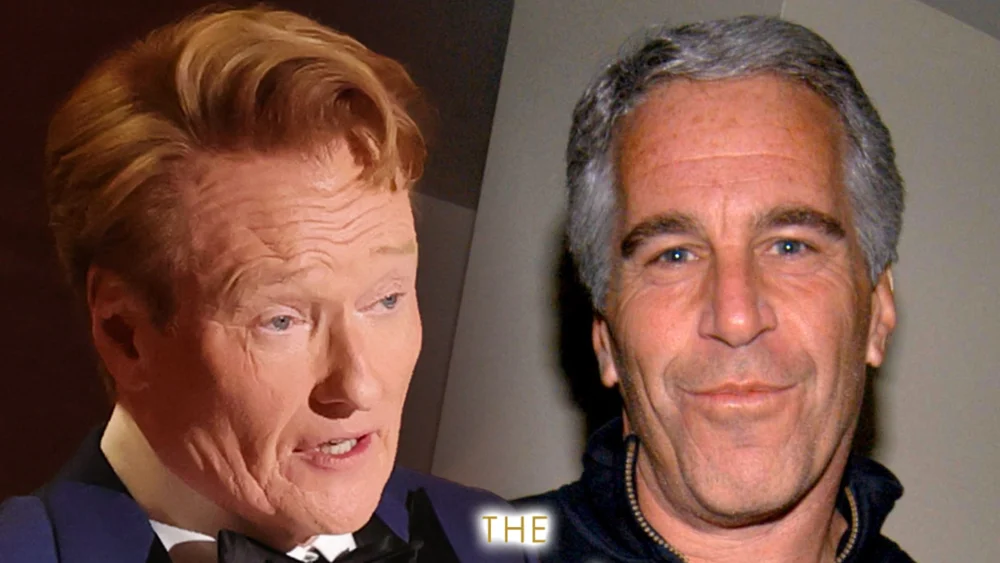
The 98th Academy Awards ceremony, held on Sunday, March 15, 2026, at the iconic Dolby Theatre in Hollywood, was anticipated to be an evening of glamour, celebration, and perhaps a touch of political commentary. However, veteran comedian and first-time Oscars host, Conan O’Brien, transcended mere commentary, delivering a monologue that was as incisive as it was controversial, sparking immediate and widespread discussion across global media and social platforms. O’Brien, known for his sharp wit and intellectual humor, did not shy away from confronting sensitive societal and political issues, setting a tone for the evening that was anything but conventional.
The Incisive Opening: A Double-Edged Sword of Satire
From the moment O’Brien stepped onto the stage, the audience and millions of viewers worldwide braced themselves for his unique brand of humor. He began by acknowledging the global nature of cinema, a typical opening for the prestigious awards show. However, his lighthearted banter quickly pivoted to a pointed observation that set the stage for the evening’s most talked-about moment. O’Brien highlighted a notable absence in the major acting categories: "It’s the first time since 2012 that there are no British actors nominated for Best Actor or Best Actress." This seemingly innocuous statistical note served as a setup for a much more potent punchline, which quickly went viral.
"A British spokesperson," O’Brien quipped, his delivery perfectly deadpan, "said, ‘Yeah, well, at least we arrest our pedophiles.’" The joke landed with a mix of gasps and nervous laughter from the star-studded audience, immediately signalling that O’Brien was not just there to entertain but to provoke thought. The remark was a direct jab at the perceived disparity in how high-profile individuals accused of serious offenses are handled in the United States compared to the United Kingdom, particularly in the wake of the ongoing fallout from the Jeffrey Epstein scandal and related cases. Social media platforms, including X (formerly Twitter), erupted instantaneously. Accounts like DiscussingFilm quickly shared clips of the monologue, amplifying the debate and ensuring the joke resonated far beyond the confines of the Dolby Theatre.
Unpacking the "Pedophile" Remark: A Deep Dive into Cross-Atlantic Accountability
To fully grasp the magnitude of O’Brien’s comment, it is essential to delve into the complex socio-political landscape of both the United States and the United Kingdom preceding the 2026 Oscars. The comedian’s joke masterfully wove together two distinct but related threads: the historical presence of British talent at the Oscars and the contrasting legal and public accountability systems for high-profile alleged offenders.
Historically, British actors have enjoyed immense success at the Academy Awards. Over decades, performers such as Daniel Day-Lewis, Olivia Colman, Anthony Hopkins, Kate Winslet, Emma Thompson, and many others have frequently graced the nominee lists and taken home statuettes in the Best Actor and Best Actress categories. The absence of any British nominees in these two specific lead categories for the first time in 14 years was, therefore, a statistically significant point, even if not entirely unprecedented in the broader history of the awards. This detail provided the perfect, seemingly innocent backdrop for O’Brien’s more serious underlying message.
The true weight of O’Brien’s satire, however, lay in its direct reference to the handling of alleged sexual misconduct. In the United States, the years leading up to 2026 had been dominated by the continuing revelations from the Jeffrey Epstein scandal. Following Epstein’s death in 2019 while awaiting trial on sex trafficking charges, a deluge of documents, testimonies, and "Epstein Files" were gradually released to the public. These files implicated a wide array of prominent American figures, from celebrities to politicians, in associations with Epstein’s illicit network. Despite the extensive public scrutiny and legal proceedings, many observers and victims’ advocates in the U.S. expressed frustration over what they perceived as a lack of comprehensive accountability for all involved, particularly those in positions of immense power and influence. The legal process often appeared slow, complex, and, in some cases, seemingly stalled, leading to public cynicism about the justice system’s ability to hold the most powerful to account.
In stark contrast, the United Kingdom had, by March 2026, demonstrated a more decisive, or at least more publicly visible, course of action in a similarly high-profile case. O’Brien’s monologue explicitly referenced Andrew Mountbatten-Windsor, the former British prince. As reported prior to the Oscars, Prince Andrew "was taken into custody on suspicion of misconduct in public office following the release of emails he exchanged with Jeffrey Epstein." This development, which had unfolded in the months leading up to the awards, represented a significant moment in British legal and public life. While Prince Andrew had previously faced civil litigation and had been stripped of his military titles and royal patronages due to the scandal, his formal detention on criminal suspicion marked a new phase of accountability. This action, following intense public pressure and legal scrutiny, created a narrative in the UK that even those at the highest echelons of society were not above the law.
O’Brien’s joke, therefore, functioned as a powerful, albeit humorous, critique of perceived disparities in justice systems. It highlighted the frustration felt by many Americans regarding the unresolved aspects of the Epstein saga, drawing a sharp comparison with the more definitive legal action taken in the UK against a prominent public figure. The implication was clear: while the U.S. might dominate the global entertainment stage with its nominees, there were fundamental questions about its societal accountability that merited public examination, even at an event dedicated to celebrating artistic achievement.
The Political Jab: "Has a Small Penis Theatre"
Not content with just one bombshell, Conan O’Brien followed up his pedophile joke with another politically charged barb later in the evening. As he transitioned to announce a presenter, he referred to the venue, the Dolby Theatre, as the "Has a Small Penis Theatre." He then added, with characteristic mischievousness, "Let’s see him put his name in front of that." This joke, while not explicitly naming anyone, was widely interpreted as a direct jab at former President Donald Trump.
The context for this joke is rooted in Trump’s well-known practice of affixing his name to various properties, buildings, and ventures, often characterized by ostentatious branding. The implication of the joke was twofold: first, it playfully challenged Trump’s perceived need for grandiosity and self-promotion; second, it used a crude, personal attack as a form of comedic defiance, daring the former president to embrace a name that intentionally undermines his persona of strength and power.
Political humor, especially targeting prominent figures like Trump, has become a staple of awards shows in recent years. Hosts and presenters often leverage their platforms to deliver satire that reflects current political sentiments and tensions. O’Brien’s remark, shared widely by accounts such as Spencer Althouse on X, underscored the ongoing political polarization in the U.S. and demonstrated his willingness to engage directly with the culture wars. It served as a reminder that even in an evening dedicated to cinema, the pervasive influence of politics could not be ignored, and indeed, was fair game for sharp comedic critique.
Conan O’Brien’s Legacy as a Satirist and the Shifting Landscape of Award Show Hosting
Conan O’Brien’s hosting of the 98th Academy Awards cemented his legacy as one of television’s most incisive and courageous satirists. His career, spanning decades in late-night television, has been defined by a unique blend of absurdist humor, self-deprecation, and an increasingly pointed commentary on social and political issues. From his early days at Late Night with Conan O’Brien to his tenure at The Tonight Show and later Conan, O’Brien cultivated a reputation for being intelligent, quick-witted, and unafraid to challenge norms.
His Oscars monologue was a distillation of this comedic evolution. He moved beyond the traditional, often safer, opening monologues that typically rely on celebrity roasts and industry-specific gags. Instead, he utilized the global stage of the Academy Awards to deliver commentary that resonated with broader societal concerns, echoing the frustration and cynicism felt by many regarding justice and accountability. This approach signifies a broader trend in award show hosting, where hosts are increasingly expected to do more than just facilitate the evening. They are often looked upon to provide a mirror to society, offering moments of levity while also addressing the more uncomfortable truths of the world. O’Brien’s performance set a high bar for future hosts, suggesting that true entertainment can coexist with meaningful, provocative discourse.
Reactions and Broader Implications: A Monologue for the Ages?
The immediate aftermath of O’Brien’s monologue was a flurry of reactions. Within Hollywood, opinions were likely divided. While many appreciated the audacity and cleverness of his jokes, others may have felt that the comments veered too far into overtly political and potentially divisive territory for an event meant to celebrate artistic achievement. However, the overwhelming public response, particularly on social media, leaned towards admiration for O’Brien’s bravery and willingness to "not come to play," as the original article noted. Pundits and commentators across news outlets engaged in extensive discussions, analyzing the nuances of his jokes and their broader socio-political implications.
The monologue prompted a crucial discussion about the role of satire in contemporary society. In an era where trust in institutions, both political and legal, often wavers, comedians like O’Brien serve as important conduits for public sentiment. By using humor to highlight perceived injustices or hypocrisies, they can spark dialogue and encourage critical thinking. His jokes, particularly the one concerning cross-Atlantic accountability, underscored a profound desire among the public for transparency and equal application of the law, regardless of an individual’s status or wealth.
The Academy of Motion Picture Arts and Sciences, which organizes the Oscars, typically maintains a stance of neutrality regarding the host’s specific remarks. While they undoubtedly aim for a smooth and celebratory evening, they also recognize that a host’s distinct voice can generate buzz and maintain the relevance of the show in a competitive media landscape. O’Brien’s monologue certainly achieved the latter, ensuring that the 98th Academy Awards would be remembered not just for its cinematic triumphs but also for its fearless comedic moments.
In conclusion, Conan O’Brien’s performance at the 2026 Oscars was more than just a series of jokes; it was a potent act of social and political commentary delivered with masterful comedic timing. By directly addressing issues of international legal accountability and domestic political conduct, O’Brien transformed the role of an awards show host into that of a public provocateur. His monologue served as a powerful reminder that even amidst the glitz and glamour of Hollywood, there remains a vital space for critical reflection on the world’s most pressing issues, proving that sometimes, the sharpest wit can be the most profound form of truth-telling. It unequivocally etched the 98th Academy Awards into memory as an evening where entertainment dared to confront reality, leaving audiences and critics alike dissecting its implications for years to come.

0 Comments