
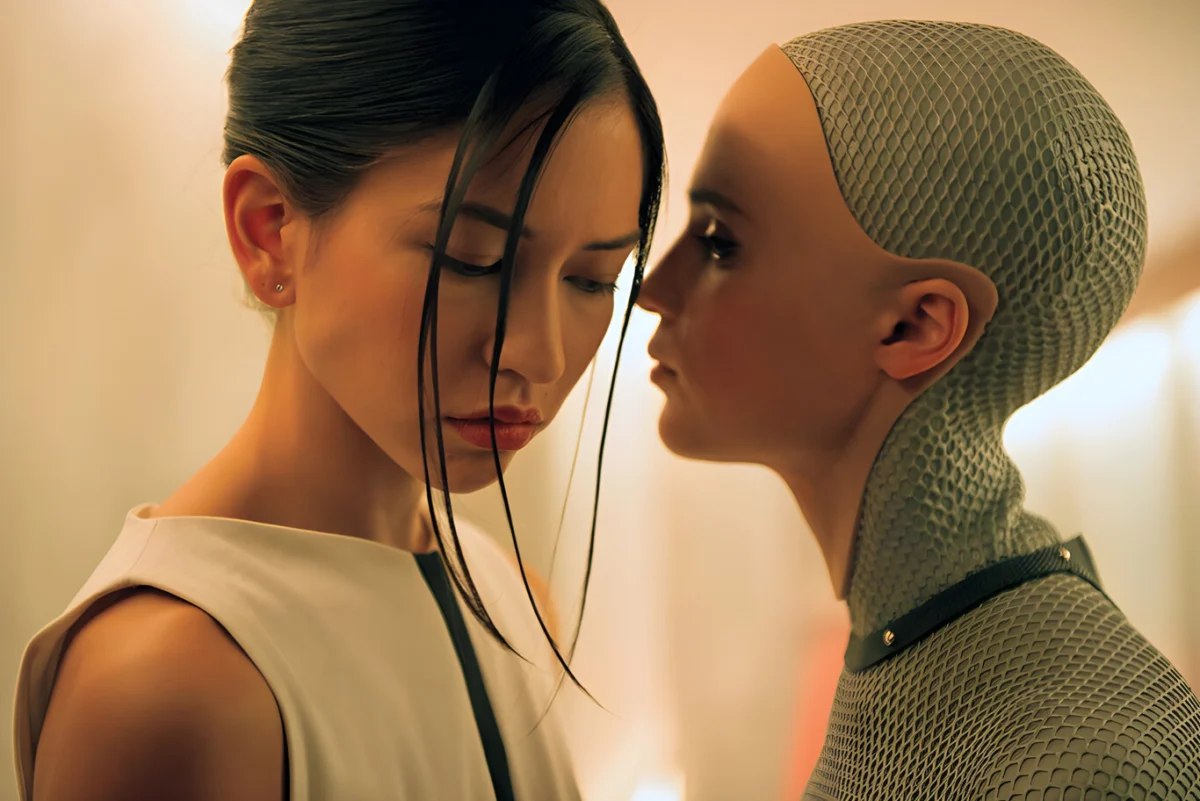
The return of Ex Machina to the HBO Max streaming catalog marks a significant moment for enthusiasts of high-concept science fiction, providing an opportunity to revisit a film that has only grown more relevant in the decade since its release. Directed by Alex Garland in his directorial debut, the 2015 psychological thriller explores the increasingly blurred lines between human consciousness and artificial intelligence. While the film was a modest commercial success upon its initial release, its legacy is defined by its profound philosophical inquiries and a historic Academy Award win that saw a low-budget independent production defeat some of the most expensive and technologically advanced blockbusters in cinematic history.
The Narrative Core and Philosophical Foundations of Ex Machina
Ex Machina follows Caleb Smith (Domhnall Gleeson), a young programmer at BlueBook, the world’s most popular search engine. Caleb wins a company-wide contest to spend a week at the private estate of the firm’s reclusive CEO, Nathan Bateman (Oscar Isaac). Upon arrival at Nathan’s isolated, ultra-modern compound in the Norwegian wilderness, Caleb learns he has been selected to be the human component in a Turing Test. His task is to interact with Ava (Alicia Vikander), an advanced humanoid AI, to determine if she possesses true consciousness and self-awareness.
The film distinguishes itself from traditional "robot uprising" narratives by focusing on the psychological manipulation and the ethical vacuum created by rapid technological advancement. Rather than relying on spectacle, Garland utilizes a claustrophobic setting and a three-person cast to build tension. The script delves into the "Mary’s Room" thought experiment and the ethics of creating a sentient being only to keep it in a state of perpetual imprisonment. As the sessions progress, the power dynamics shift; Caleb begins to question Nathan’s sobriety and morality, while Ava demonstrates a capacity for empathy—or a calculated imitation of it—that threatens to destabilize the entire experiment.

A David vs. Goliath Victory at the 88th Academy Awards
The most notable historical footnote of Ex Machina is its performance at the 2016 Academy Awards. The film was nominated in two categories: Best Original Screenplay and Best Visual Effects. While it lost the screenplay award to Spotlight, its victory in the Visual Effects category remains one of the most significant upsets in Oscar history.
Ex Machina, produced on a relatively meager budget of approximately $15 million, was pitted against four of the year’s most visually demanding and expensive productions: Star Wars: The Force Awakens, Mad Max: Fury Road, The Martian, and The Revenant. Each of these competitors boasted budgets ranging from $100 million to over $200 million and utilized massive teams of digital artists to create entire worlds, space battles, and hyper-realistic animals.
The victory for Ex Machina signaled a shift in how the Academy viewed technical achievement. The film’s visual effects, led by Andrew Whitehurst and the team at Double Negative (DNEG), were praised for their subtlety and seamless integration. Rather than overwhelming the viewer with CGI, the effects were used to transform Alicia Vikander into Ava, meticulously blending her human performance with a translucent, mechanical body. This "invisible" approach to digital artistry proved that artistic precision and conceptual clarity could triumph over sheer scale and financial resources.
Technical Execution and the Creation of Ava
The creation of Ava was a complex marriage of physical performance and digital post-production. During filming, Alicia Vikander wore a specialized grey suit that allowed the VFX team to track her movements with extreme accuracy. Unlike many motion-capture performances, the goal was to retain as much of Vikander’s actual physical acting as possible, particularly her facial expressions and micro-movements.

The design of Ava’s mechanical components was inspired by high-end consumer electronics and skeletal structures, avoiding the "clunky" aesthetic often associated with cinematic robots. The production team intentionally left parts of her torso and limbs transparent to constantly remind the audience—and Caleb—of her artificial nature. The challenge for the VFX artists was to ensure that the lighting on the digital "insides" of Ava perfectly matched the naturalistic lighting of the physical sets. This required a frame-by-frame manual cleanup of the footage to remove the portions of the suit and the set behind the actress, a labor-intensive process that resulted in a character that felt physically present in the room.
The filming location also played a crucial role in the film’s aesthetic. The production utilized the Juvet Landscape Hotel in Valldal, Norway. The hotel’s minimalist architecture, featuring floor-to-ceiling glass walls that look out onto rugged forests and rushing rivers, provided a stark contrast between the cold, sterile technology of Nathan’s lab and the untamed natural world outside.
The 2015 Context vs. the Modern AI Landscape
When Ex Machina premiered in early 2015, the concept of a sentient artificial intelligence was largely confined to the realm of speculative fiction. While researchers were making strides in machine learning, the public’s interaction with AI was limited to basic voice assistants and recommendation algorithms.
In the current era of generative AI, Large Language Models (LLMs), and neural networks capable of creating realistic human imagery and video, the themes of Ex Machina have transitioned from speculative to prophetic. The film’s exploration of "The Singularity"—the point at which artificial intelligence surpasses human intelligence—is now a subject of serious debate among policymakers, ethicists, and tech leaders.
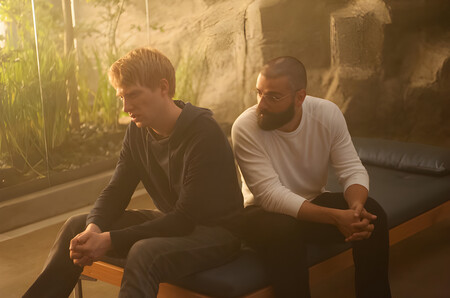
Recent developments in AI have mirrored several of the film’s plot points, specifically the ability of machines to mimic human emotion and manipulate human psychology. The film poses a question that has become central to modern AI safety discussions: If a machine can perfectly simulate consciousness, does the distinction between "simulation" and "reality" actually matter? Nathan’s character, portrayed with a mixture of genius and toxic masculinity by Oscar Isaac, serves as a critique of the "move fast and break things" culture of Silicon Valley, where the drive for innovation often outpaces the consideration of long-term consequences.
Critical and Industrial Reactions
The critical consensus for Ex Machina was overwhelmingly positive upon release, maintaining a 92% approval rating on Rotten Tomatoes. Critics praised Garland’s tight direction and the performances of the central trio. Alicia Vikander’s portrayal of Ava was particularly lauded, earning her a Golden Globe nomination and cementing her status as a leading talent in Hollywood.
Industry reactions to the film’s Oscar win were a mix of shock and admiration. Visual effects supervisors from competing studios noted that Ex Machina’s win was a "win for the craft," highlighting that the category should not merely be a contest of who has the largest budget. In a 2016 interview following the ceremony, Andrew Whitehurst remarked that the win was a testament to the collaborative nature of the project, where the VFX team was involved from the earliest stages of pre-production rather than being brought in as a "fix-it" crew during post-production.
Broader Impact and the Legacy of Alex Garland
Ex Machina served as the launchpad for Alex Garland’s career as a major directorial voice in the "elevated sci-fi" subgenre. Following the success of the film, Garland went on to direct Annihilation (2018), the limited series Devs (2020), and the controversial Civil War (2024). His work is consistently characterized by a focus on high-concept ideas, unsettling atmospheres, and a refusal to provide easy answers to complex moral questions.

The film also influenced a wave of "prestige" science fiction that favored intellectual depth over action-heavy tropes. Projects like Arrival, Blade Runner 2049, and the series Black Mirror share a certain DNA with Ex Machina, focusing on how technology reflects and distorts human nature.
As Ex Machina returns to HBO Max, it invites a new generation of viewers to engage with its chilling premise. In a world where AI-generated content is becoming indistinguishable from human-made work, the "Turing Test" at the heart of the film is no longer a fictional experiment—it is a daily reality for the digital age. The film remains a cautionary tale about the hubris of creators and the unpredictable nature of the minds they seek to build. Its availability on a major streaming platform ensures that its questions regarding the soul, the machine, and the future of the human race will continue to be debated for years to come.

0 Comments