
 Julia Chirkova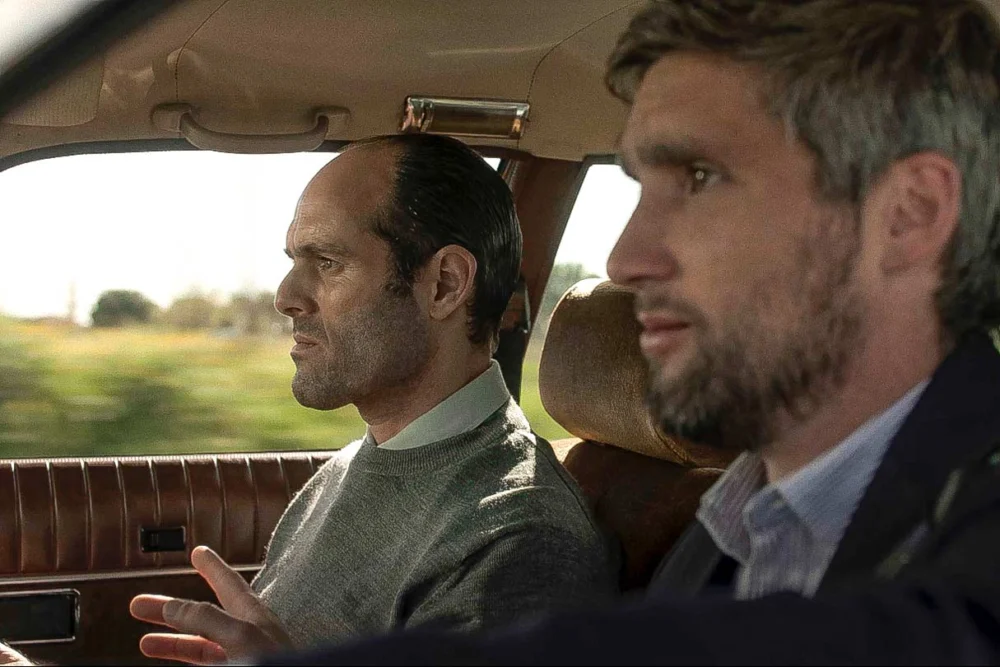
Diego Anido, the acclaimed actor whose recent performance in Rodrigo Sorogoyen’s "As bestas" earned him a Goya nomination, is once again captivating audiences with his starring role in Antonio Vicent’s directorial debut, "Aves de corral." This intricately crafted thriller, blending dark humor with unexpected twists, marks a significant milestone for both Anido and the burgeoning talent of director Vicent. In an exclusive interview, Anido offers profound insights into his current career peak, his creative process, and the collaborative spirit that defined the making of "Aves de corral."
A Career at its Zenith: Balancing Growth and Personal Well-being
Reflecting on his current professional standing, Anido describes it as "perfect, because it is growing." He elaborates, "This is the most significant period of my career. I have been steadily progressing from humble beginnings to where I am now. Crucially, I’ve managed to maintain a healthy balance with my family life, my rest, and my leisure activities, achieving an equilibrium that feels truly ideal." This sentiment underscores a mature perspective on success, one that prioritizes holistic well-being alongside professional achievement. The actor’s ability to navigate increasingly demanding roles while safeguarding personal time is a testament to his disciplined approach and a growing trend among established artists to advocate for sustainable careers.
The Genesis of "Aves de Corral": A Script That Captivates
Anido’s involvement in "Aves de corral" began with a proposal channeled through his representative. The project already possessed significant momentum, with its financing substantially advanced, a crucial factor in ensuring its timely realization. What particularly drew Anido to the script was its literary quality, a rarity he notes with a touch of disappointment for its infrequent appearance in contemporary cinema. "The script possessed something that I found striking and not as common as it should be," Anido explains. "The monologues and dialogues of the characters are exceptionally well-constructed from a literary standpoint. They function effectively, conveying profound ideas, and fulfilling the narrative purpose of characters speaking when necessary. More importantly, they introduce references that enrich each scene."
He draws a compelling analogy to jazz music, where seemingly disparate notes combine to create a cohesive and moving piece. "It’s a bit like jazz music," he remarks. "They say music ‘walks,’ even with its wild, disconnected, absurd notes, yet none are superfluous. In this script, I felt the text ‘walk,’ and when you encounter that in a theatrical text, a stage production, or a film, it’s a scarce and highly attractive value." This appreciation for well-crafted dialogue and thematic depth highlights Anido’s commitment to projects that offer more than mere entertainment, seeking out narratives that resonate on an intellectual and artistic level.
"Aves de Corral": A Thriller Steeped in Dark Humor and Unexpected Turns
Describing "Aves de corral" for an audience unfamiliar with its premise, Anido offers a vivid summary. "It’s a thriller with a high dose of dark humor," he states. "It features a large number of characters, an exceptional cast – especially for a debut film from a relatively unknown director. The dialogues and situations are highly amusing, with very unexpected developments. There’s a great deal of uncertainty; you never know what’s going to happen. However, I believe there are plenty of ingredients for the audience to have a thoroughly enjoyable time."
The film’s ensemble cast, a deliberate choice by director Vicent, aims to create a rich tapestry of characters, each contributing to the escalating suspense and comedic undertones. The interplay between these diverse personalities, amplified by the film’s unpredictable narrative, promises a cinematic experience that keeps viewers on the edge of their seats while also eliciting laughter.
Portraying Santiago: A Character Defined by Savant Syndrome
Anido’s character, Santiago, is central to the film’s convoluted plot. He explains Santiago’s unique characteristics: "Santiago has Savant syndrome, a type of ASD where individuals are highly dependent but possess an exceptionally developed intellectual capacity in areas such as music or mathematics." The core conflict of the film is ignited when Santiago is mistakenly identified by a band of assassins. "The plot is triggered because my character is confused by a group of assassins," Anido reveals. "They mistake him for their target, believing him to be a very dangerous and powerful man, which leads to him being pursued. This situation is highly comical and generates very peculiar moments." This central misunderstanding sets in motion a series of events that are both thrilling and absurd, showcasing Anido’s ability to inhabit complex characters.

Collaboration with Director Antonio Vicent: A Creative Partnership
The rapport between Anido and director Antonio Vicent was instrumental in shaping the character of Santiago. Anido recalls their initial meeting at the San Sebastián Festival, a chance encounter that quickly evolved into a deep discussion about the film. "Antonio is a very open professional," Anido shares. "We met at the San Sebastián Festival, at a party, and from the first minute, we started talking about the film, about the work. I saw that he was a very open person, willing to listen to the ideas I had already developed after reading the script. We crafted the character together, and that is pure gold for an actor. Being allowed to create the character is an incredible experience." This collaborative approach, where the director empowers the actor to contribute creatively, is a hallmark of inspired filmmaking and often results in more nuanced and authentic performances. Vicent’s willingness to integrate Anido’s input speaks to a shared vision and a mutual respect for the artistic process.
An Impressive Ensemble Cast: A Symphony of Talent
"Aves de corral" boasts an impressive roster of talent, including José Luis García Pérez, Chechu Salgado, Antonio Durán "Morris," Olivia Baglivi, Roberto Enríquez, and Pedro Casablanc. Anido specifically highlights his interactions with Chechu Salgado, Olivia Baglivi, and the esteemed Antonio Durán "Morris." "I primarily acted with Chechu Salgado, Olivia Baglivi, and ‘Morris’," Anido states, adding with admiration, "’Morris’ is a god in Galicia, and he should be recognized as such throughout Spain too. He deserves altars of adoration!" (laughs).
The experience of working with such accomplished actors was, for Anido, seamless and enjoyable. "It was very easy to work with them," he affirms. "They are actors who enjoy playing, and when they have a proposal, the rest of us go along with it. The entire cast functioned as a team, much like road construction crews who work incredibly hard but then, during breaks, discuss topics entirely unrelated to their jobs. It was wonderful to collaborate with all of them." This camaraderie and shared passion for performance fostered a dynamic on set that translated into a cohesive and compelling on-screen presence.
The Enduring Power of the Cinematic Experience
In an era dominated by streaming services and smaller screens, Anido emphasizes the importance of experiencing films like "Aves de corral" in a theatrical setting. "I believe so," he responds when asked about the current sweet spot of Spanish cinema and the significance of watching such films in theaters. "The planning for this film is audacious. There are several long takes and camera movements that are pure cinema. These are not typically seen in series and cannot be fully appreciated on a small screen. Perhaps we are more accustomed to seeing them in commercials or large productions."
He further elaborates on the impact of seeing the film on a large screen: "The viewer who sits in front of a large screen knows that this is a debut film made with a very low budget, born out of immense enthusiasm. They can see the risk-taking and the cinematic understanding that went into deciding on certain shots, and they can savor the quality of the planning, the cinematography… Undoubtedly, it’s a film to be seen in a cinema, and I hope it will be." This advocacy for the theatrical experience underscores Anido’s appreciation for the immersive qualities of cinema and the unique artistic intent behind films that are crafted with visual storytelling as a primary focus.
Championing New Voices: The Importance of Emerging Creators
Anido passionately advocates for supporting emerging filmmakers like Antonio Vicent, recognizing their vital role in shaping the future of cinema. "Absolutely," he agrees when the importance of focusing on new creators is raised. "In Don DeLillo’s novel ‘White Noise,’ there’s a character with many theories, one of which posits that youth is lost for many reasons, and I absolutely disagree." He continues, "There are adult generations who believe the past was better and that nothing new can be created. They are not trusting new generations, and that’s a mistake, because that signifies death."
He elaborates on the dynamic between established and emerging artists: "New generations possess the ideas that will populate the present and the future. Those of us who are no longer so young try to assert ourselves to remain relevant and avoid being marginalized, but in this case, we have been able to coexist. I was able to coexist with Antonio and see that he is a very young person with a remarkably mature writing style, reformulating things in a fresh and youthful manner. This should be supported and seen. In these times, anything that offers a slight escape from reality is beneficial." This perspective highlights the symbiotic relationship between experience and innovation, where seasoned artists can mentor and collaborate with younger talents, fostering a vibrant and evolving artistic landscape.
A Prolific Future: A Slate of Exciting Projects

Anido’s career is set for a remarkable surge in visibility with several upcoming projects. Audiences can anticipate his appearances in "La hoguera," "O pasadelo das vacas," "Upiro," "Arriba Tutto," and "Cada día nace un listo." Reflecting on this abundance of work, he expresses a sense of gratitude mixed with a touch of exhaustion. "Yes, the truth is that last year, without really noticing, I made seven films and one series," he recounts. "One project arrived, then another, then another… and by the end of the year, I thought, ‘Good heavens, perhaps it’s time to rest a little, isn’t it?’" (laughs). He adds, "But I was fortunate to have periods of rest between projects. However, a period of extensive promotion awaits me, as all these films need to be promoted. Making them is one thing, but then comes the task of promoting them all!" (laughs). This candid admission underscores the demanding nature of a successful acting career, where the work extends far beyond the set.
The Dual Identity: Actor and Playwright
Anido’s multifaceted artistic identity extends to his work as a playwright. He explains how his roles as author and actor inform each other: "In theater, acting is never the same from one project to another," he begins. "If I work on someone else’s project, I am very much at the service of the person who wrote or directed the text." This collaborative aspect, he notes, is a profound joy. "It makes you part of a large team, and that is wonderful, working with large teams of people and living among them."
However, when he creates his own texts for performance, it’s a different kind of fulfillment. "When I create my own texts to perform them myself, it’s a gift I can give myself," he reveals. "I can write because I know what I can convincingly present on stage." This direct connection between authorial intent and performance allows for an intimate creative feedback loop. "The relationship I have between author and actor is very peculiar because it’s very direct: the actor writes, and the actor hears it at the same moment the author is writing. Sometimes, the author even writes what they believe the actor can do. An audiovisual screenwriter can do the same, and indeed, there are screenwriters who think of actors when they write. However, afterward, there’s the handover, and then it changes hands."
He finds particular resonance in how his filmmaking work mirrors his writing process. "What I find interesting is that I discover over time that my work in films is very similar to the work I do with myself when I write," he explains. "I take the film and I believe I understand it through multiple readings. I visualize the film and understand its code, my place within it, and how I can be an element of tension within the film at all times." The fundamental goal of any narrative, he asserts, is to maintain audience engagement through tension. "Every work must generate tension; the audience must be in suspense all the time, because that is the objective of stories. As an actor, I always think about how I can, with this character proposed to me, be an element of tension. Being an author also helps me greatly in considering these options, things that I, as an actor, know I can defend during a shoot. Furthermore, characters like this one in ‘Aves de corral’ are also nourished by my creative experience, and I believe that is very positive."
The Lasting Impact of "As bestas"
Anido reflects on his experience in Rodrigo Sorogoyen’s "As bestas" with deep appreciation. "While being part of the film’s cast, it’s impossible for me to have the same experience as the audience watching it," he admits. "However, it’s a title that holds a significant place in my professional life, like a trophy, an Olympic medal that I have won. Instead of having it on a shelf at home, it floats in the air, and when someone reminds me of it, I recall that experience."
He draws a parallel to the achievements of athletes: "I recently saw the case of Oriol Cardona, the skier who won a gold medal at the Winter Olympics. And I thought that ‘As bestas,’ in my career, is something similar to what he must be experiencing: something unexpected, a medal, a trophy, and an unforgettable moment in my journey as an actor." This comparison highlights the profound and enduring impact of critical and commercial success on an artist’s career and personal satisfaction.
Unfulfilled Ambitions: The Quest for Cinematic Protagonism
Looking ahead, Anido articulates a clear ambition that he has yet to fully realize. "Of course, I would love to play leading roles in cinema, and I mean that in the plural!" he exclaims with a smile. "I want to have that experience, and I am beginning to realize that it’s no small feat. It’s very different to be a supporting actor, no matter how much presence you have, to being a protagonist who is in 98% of the shots. That work is very hard, extremely hard, and I am eager to undergo that experience. I am increasingly taking on slightly larger characters, and I want to have that experience under my belt as well." This ambition signals a desire to push his artistic boundaries further and to engage with the profound challenges and rewards of carrying a film from start to finish. Anido’s journey, marked by his dedication to craft, his collaborative spirit, and his continuous pursuit of growth, promises a compelling trajectory in the evolving landscape of Spanish and international cinema.


 Eva Lovia
 Julia Prastini
 Nila Kartika Wati
 Lina Irawan
 Jia Lissa