
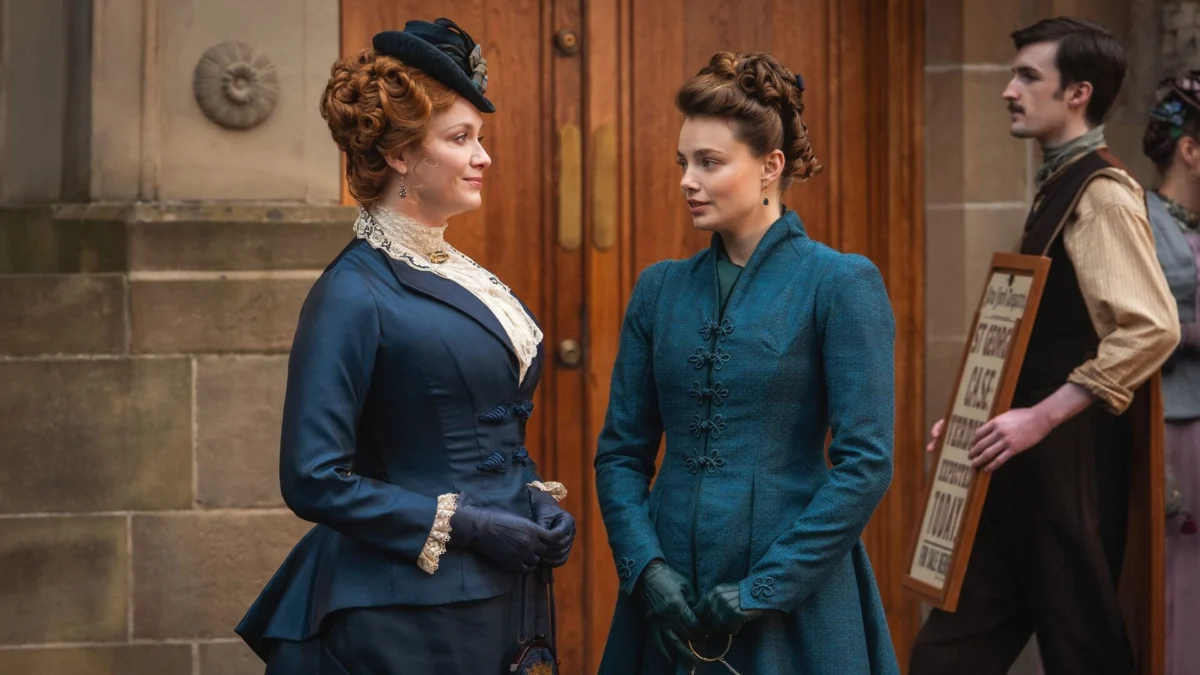
The landscape of contemporary television has seen a profound resurgence in the popularity of period dramas, a trend punctuated by the enduring success of series such as The Bridgerton and Manual para señoritas. Amidst this cultural fascination with the past, the Apple TV+ original series The Buccaneers: Aristocrats for Love has re-emerged as a cornerstone of the genre. Originally premiering on November 8, 2023, the production has maintained a consistent presence in streaming charts, finding renewed vigor and a expanded viewership as it moves through the 2026 broadcast cycle. Directed in its inaugural season by BAFTA Award-winner Susanna White, the series presents a sophisticated blend of 19th-century social politics, romantic entanglement, and a distinctly modern sensibility that challenges the rigid structures of the Victorian era.
Set against the backdrop of the 1870s, the narrative follows a group of affluent, spirited young American women who descend upon the London social season. Their arrival is not merely a quest for matrimonial alliances but a collision of cultures: the unbridled energy and "new money" of the American Gilded Age meeting the stifling traditions and "old world" expectations of the British aristocracy. This central conflict provides a rich tapestry for exploring themes of independence, identity, and the price of social mobility.

The Narrative Core and Character Dynamics
At the heart of The Buccaneers is a meticulously crafted ensemble cast that breathes life into the unfinished final novel of Pulitzer Prize-winning author Edith Wharton. The story centers on Nan St. George, portrayed by Kristine Froseth, whose journey from an unassuming young girl to the Duchess of Tintagel serves as the emotional anchor of the series. Nan’s character arc is defined by her struggle to reconcile her innate desire for freedom with the heavy responsibilities of her sudden elevation in rank.
Supporting this central narrative are the diverse experiences of her companions. Alisha Boe portrays Conchita Closson, who becomes Lady Brightlingsea. Her character highlights the difficulties of assimilation, as her vibrant personality and American customs are met with cold disdain by her British in-laws. Josie Totah delivers a standout performance as Mabel Elmsworth, a character whose wit and sharp intellect allow her to navigate the treacherous waters of high society with a unique perspective. Aubri Ibrag, as Lizzy Elmsworth, represents the more ambitious side of the American contingent, showcasing the strategic maneuvers required to secure a future in a world where women’s options were severely limited.
The matriarchal influence is represented by Christina Hendricks, who plays Mrs. St. George. Hendricks brings a nuanced authority to the role, depicting a mother who is both a product of her time and a fierce protector of her daughters’ interests. The male counterparts, including Matthew Broome as Guy Thwaite and Josh Dylan as Lord Richard Marable, provide the necessary romantic tension while also illustrating the varying degrees of reform and resistance within the British upper class.

Historical and Literary Context: The "Dollar Princess" Phenomenon
The premise of The Buccaneers is rooted in a historical reality known as the "Dollar Princesses." During the late 19th and early 20th centuries, hundreds of wealthy American heiresses traveled to Europe—specifically the United Kingdom—to trade their vast fortunes for aristocratic titles. This exchange was mutually beneficial in a pragmatic sense: American families gained social prestige and entry into the most exclusive circles of the British Empire, while impoverished British peers received the capital necessary to maintain their crumbling ancestral estates.
Edith Wharton, who began writing the novel late in her life, intended for the story to be a biting critique of this transactional nature of marriage. Although Wharton died in 1937 before she could complete the manuscript, the Apple TV+ adaptation honors her legacy by focusing on the psychological toll of these arrangements. The series moves beyond the surface-level glamour of palaces and balls to interrogate the loss of agency experienced by women who were essentially treated as commodities in a global social market.
Production Values and Creative Vision
The visual language of The Buccaneers is a significant factor in its critical and commercial longevity. The production design captures the opulence of the 1870s with an attention to detail that rivals the most prestigious cinematic efforts. From the sprawling estates of the English countryside to the meticulously reconstructed interiors of London townhouses, the setting serves as a character in its own right, representing the "gilded cage" that the protagonists must navigate.

Susanna White’s direction is instrumental in bridging the gap between historical accuracy and modern relatability. In interviews regarding the series’ development, White emphasized that while the show honors the 1870s setting, it was never intended to be a dry museum piece. "The ambition was never to make something that felt like it belonged in the past," White stated. "The goal was to imagine what it felt like to be a 19th-century teenager with the same passions, friendships, and fears that young people experience today."
This creative philosophy is further reflected in the show’s soundtrack, which features contemporary music. This anachronistic choice serves to heighten the emotional resonance of the scenes, drawing a direct line between the rebellious spirit of the "buccaneers" and modern youth culture. It is a stylistic hallmark that has become a signature of the "new period drama" movement, aimed at a younger, more diverse audience.
Chronology of a Resurgence: 2023 to 2026
The trajectory of The Buccaneers from its 2023 debut to its current status in 2026 reflects a shifting pattern in how audiences consume prestige television.

- November 2023: The series premieres on Apple TV+, receiving praise for its cast and vibrant aesthetic. It is immediately compared to Bridgerton, though critics note its more grounded exploration of female friendship.
- Early 2024: Following strong viewership numbers, the series is renewed for a second season. Social media engagement spikes as viewers dissect the finale’s cliffhangers regarding Nan’s marriage and Jinny’s escape from an abusive relationship.
- 2025: Production on subsequent seasons expands the world of the show, introducing new characters and exploring the burgeoning feminist movements of the late 19th century.
- 2026: The series enters a period of peak relevance. With the completion of Season 2 and the announcement of further installments, The Buccaneers has transitioned from a "hit show" to a cultural staple. Its availability on platforms like Prime Video in various territories has further broadened its international footprint.
Comparative Analysis: The Bridgerton Effect and Genre Evolution
It is impossible to discuss The Buccaneers without acknowledging the "Bridgerton Effect." The success of Shonda Rhimes’ Netflix juggernaut opened the door for period dramas that prioritize diverse casting and modern sensibilities over strict adherence to historical minutiae. However, The Buccaneers distinguishes itself through its specific focus on the Anglo-American cultural divide.
While Bridgerton often leans into a fantasy-inspired version of the Regency era, The Buccaneers utilizes the framework of Edith Wharton’s realism. The stakes in The Buccaneers are often more precarious; the threat of social ruin, the reality of domestic abuse, and the legal limitations of women’s rights in the 1870s are presented with a gravity that balances the show’s more romantic elements. Susanna White’s vision ensures that the "clash of cultures" remains the primary engine of the plot, rather than just a background detail.
Industry analysts point to this balance as the reason for the show’s sustained growth. By providing both the escapism of high-society romance and the substance of a character-driven drama, the series appeals to multiple demographics.

Broader Impact and Industry Implications
The continued success of The Buccaneers in 2026 has significant implications for the streaming industry. It reinforces the value of literary adaptations that are willing to take risks with their source material. By taking an unfinished novel and expanding its world, the creators of the show have demonstrated that classic literature can be a fertile ground for long-form storytelling that feels urgent and relevant.
Furthermore, the show’s focus on female friendship and empowerment has resonated deeply in a post-modern media environment. The evolution of the protagonists from "young and carefree" girls to "confident and self-assured" women mirrors the personal growth of its audience. The series has sparked a renewed interest in the works of Edith Wharton, leading to a surge in book sales and academic interest in her observations on class and gender.
As the 2026 television season progresses, The Buccaneers: Aristocrats for Love stands as a testament to the power of well-executed historical fiction. It proves that while fashions and social norms may change, the fundamental human desires for love, autonomy, and belonging remain constant. Between the palaces of London and the promises of a new world, the story of the buccaneers continues to capture the imagination of a global audience, ensuring its place in the pantheon of modern television classics.

0 Comments