
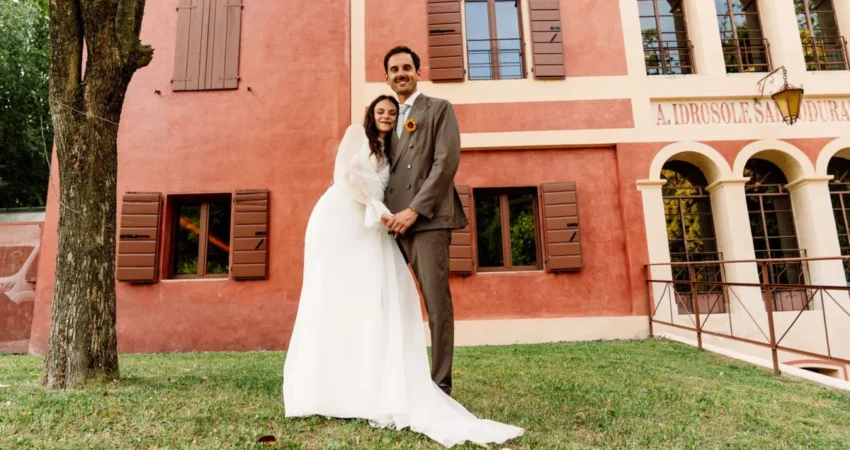
The celebrated Italian singer-songwriter and television personality Francesca Michielin has officially wed her partner, Davide, in a ceremony that harmoniously blended high-fashion sophistication with deeply rooted familial traditions. Held at the historic Antica Pieve di Sant’Eusebio, the event served as a curated reflection of Michielin’s multifaceted public and private identity. Collaborating with renowned stylist Susanna Ausoni, the artist navigated a complex aesthetic journey that transitioned from ethereal, fairy-tale romanticism during the religious rites to a vibrant, jazz-age-inspired celebration for the reception. This strategic duality in her sartorial choices, beauty transitions, and floral arrangements underscores a broader trend in contemporary celebrity weddings where personal narrative is prioritized alongside brand-aligned luxury.
The Dual-Aesthetic Sartorial Strategy: From Pronovias Atelier to Privée
The cornerstone of the wedding’s visual narrative was Michielin’s selection of two distinct gowns from Pronovias, a global leader in the luxury bridal sector. For the solemnity of the ceremony, Michielin donned the "Heraldine" model from the Atelier Pronovias collection. This choice was not merely aesthetic but served as a sartorial tribute to her mother, featuring voluminous sleeves and a silhouette that echoed her mother’s own bridal attire. The gown’s design, characterized by an "almost magical soul," drew direct comparisons to the bohemian and avant-garde style of British musician Florence Welch. By integrating these elements, Michielin bridged the gap between 1970s-inspired romanticism and modern haute couture.
As the event transitioned from the sacred environment of the church to the festive atmosphere of the evening reception, the wardrobe shifted to the "Sinope" gown from the Pronovias Privée collection. This second look moved away from the "fairy-tale" volumes of the morning, embracing the structured yet fluid energy of the 1920s. Inspired by the Charleston era, the dress featured intricate detailing and a silhouette designed for movement, reflecting what Michielin described as her "rocker soul." The use of two high-end gowns highlights a growing economic trend within the $70 billion global bridal industry, where "second looks" or reception dresses have become a standard requirement for high-profile nuptials, allowing celebrities to showcase different facets of their personality and brand partnerships.
In a departure from the maximalist jewelry trends often seen in celebrity weddings, Michielin opted for understated elegance. Her choice of three small, brilliant earrings from the Milanese brand Lil Milano emphasized a minimalist luxury. Notably, she chose to wear her engagement ring throughout the day, intentionally disregarding traditional superstitions that suggest brides should avoid wearing other rings on their wedding day to focus solely on the wedding band.
Architectural and Familial Significance of Antica Pieve di Sant’Eusebio
The choice of venue was perhaps the most significant logistical decision of the event, grounding the high-fashion spectacle in local history and personal heritage. The Antica Pieve di Sant’Eusebio is not merely a historical landmark but a site of profound familial importance for Michielin. It is the parish where she was raised, where she first explored her musical talents in the choir, and most significantly, the location where her parents were married decades prior.
The church itself carries the mark of her family’s craftsmanship; her grandfather, Luigi, an artisan and painter, was personally involved in the restoration of specific elements of the building. This connection transforms the venue from a simple backdrop into a living museum of the artist’s lineage. The integration of family history into the physical space of the wedding aligns with a resurgence in "heritage weddings," where affluent couples prioritize locations with genealogical significance over popular destination wedding hubs.
Botanical Symbolism: The Narrative of Sunflowers and Delphiniums
The floral design, executed by Costanza Guerino of Officina Floreale, was built upon a specific color palette of yellow and blue, chosen for their symbolic weight rather than mere visual appeal. The yellow was represented by sunflowers, a bloom that Michielin identifies as her personal emblem. The origin of this connection dates back to her mother’s pregnancy; upon announcing the news, Michielin’s uncle presented her mother with a sunflower from a nearby field. Since then, the flower has remained a constant motif in the singer’s life, symbolizing resilience and the fulfillment of a long-awaited desire.
Complementing the sunflowers were deep blue delphiniums. These flowers were specifically chosen to evoke the landscapes of the Asiago plateau, where Michielin spent the formative summers of her youth. In the language of flowers, delphiniums represent attachment and the feeling of "home," further reinforcing the theme of geographical and emotional roots. The bouquet served as a portable representation of these "enchanted forests" and Cimbrian legends, blending the wild beauty of the Italian mountains with the structured elegance of a formal ceremony.
A Chronology of Transformation: Beauty and Hair Evolution
The wedding day followed a strict chronological progression in terms of "beauty logic," managed by hair and makeup experts Luciano Chiarello and Angelo Rosa Uliana. The objective was to visualize two versions of the bride: the "ethereal" and the "rocker."
- The Ceremony Phase: The makeup was designed to be "almost imperceptible," focusing on luminous skin, light shadows, and enhanced natural features. This "clean girl" aesthetic was paired with "mermaid waves"—soft, flowing hair with a precise middle part—to complement the romanticism of the Pronovias Atelier gown.
- The Reception Phase: As the sun set, the aesthetic shifted toward a more aggressive, high-energy look. The makeup was updated with glittered eyelids and dark lips, signaling a transition into the artist’s more rebellious musical persona. The hairstyle was simultaneously transformed into a 1990s-style braided updo, featuring a deliberate zigzag part. This shift mirrors the evolution of Michielin’s career, which began with the innocence of a talent show win and matured into a sophisticated, genre-blending artistry.
Tradition Reinterpreted: The "Something Blue" Custom
While much of the wedding was a forward-looking display of style, Michielin remained observant of the traditional "Something old, something new, something borrowed, something blue" adage. However, she applied a unique color-coded twist to the tradition. Instead of the conventional blue, she incorporated pistachio green—a color that served as a thread through the reception’s details.
She wore a pair of pistachio-colored shoes that had belonged to her mother, serving as both the "something old" and "something borrowed." This choice was coordinated with her nail polish and, notably, the tie worn by the groom, Davide. This level of color coordination suggests a meticulously planned visual identity for the couple, ensuring that even the traditional elements felt modern and integrated into the overall design scheme.
Broader Impact and Cultural Implications
The wedding of Francesca Michielin and Davide represents more than a private union; it is a cultural data point reflecting the current state of the Italian creative industry. By choosing local artisans, family-linked venues, and Italian-influenced aesthetics, Michielin reinforces the "Made in Italy" brand, even while utilizing a global powerhouse like Pronovias.
From a marketing perspective, the event provides significant visibility for the brands involved. Pronovias, by dressing one of Italy’s most respected young artists, solidifies its appeal to a demographic that values both tradition and "indie-sleaze" or "bohemian" influences. Lil Milano similarly benefits from the endorsement of a celebrity who values minimalist, ethical luxury over ostentation.
Furthermore, the wedding sets a precedent for how public figures can balance the demands of a high-profile event with genuine personal narrative. By focusing on her grandfather’s paintings, her mother’s shoes, and the choir where she learned to sing, Michielin effectively humanized her celebrity status. This approach resonates with a modern audience that increasingly demands authenticity from influencers and public figures.
In summary, the Michielin-Davide wedding was a masterclass in thematic consistency. Every element, from the 1920s-inspired "Sinope" dress to the sunflowers of the Asiago plateau, served a specific purpose in telling the story of the bride’s past, present, and future. It stands as a testament to the power of thoughtful curation in the modern age of celebrity, where a wedding is not just a party, but a profound statement of identity.

0 Comments