
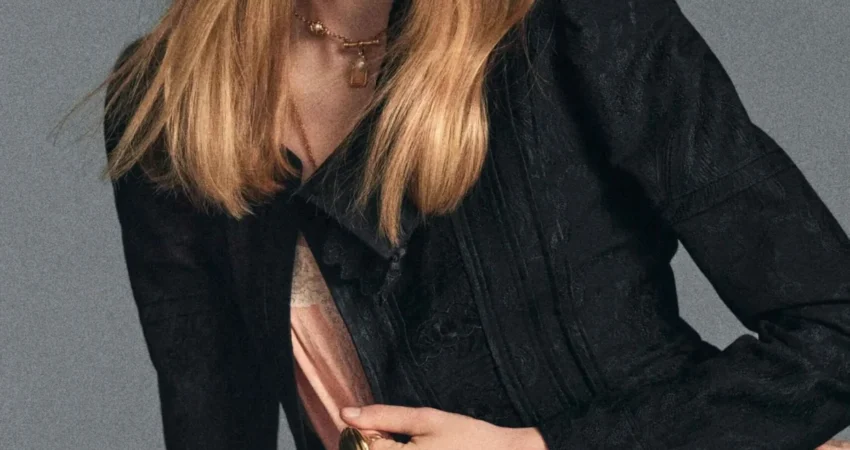
The global beauty and fashion industries have reached a pivotal juncture as the 2026 style calendar reveals a significant departure from the minimalist, "quiet luxury" aesthetics that dominated the previous three years. According to reports from major fashion weeks in Paris, Milan, New York, and London, the hair trends for 2026 are defined by a dualistic approach: the celebration of extreme length and volume on one hand, and the adoption of radical, geometric short cuts on the other. This shift represents a broader cultural movement toward "expressive individualism," where the hair is treated not merely as an accessory but as a primary medium for personal branding and historical homage. As the industry transitions from the Spring-Summer (SS26) cycle into Autumn-Winter (AW26), experts observe a clear trajectory toward nostalgic revivals, specifically targeting the 1970s, 1980s, and the early 2000s (Y2K) era.

The Autumn-Winter 2026 Forecast: Maximalism and Textural Depth
The Autumn-Winter 2026 season is characterized by a "more is more" philosophy. After several seasons where the "Italian Bob" and "Old Money" blunt cuts reigned supreme, the pendulum has swung back toward high-maintenance, high-impact styles. The primary narrative for the colder months revolves around three core pillars: nostalgic fringes, effortless manes, and hybrid silhouettes.

The Return of the Extra-Long (XL) Mane
The most visible trend for AW26 is the decisive return of extra-long hair. This movement was signaled earlier in the year by houses such as Bottega Veneta and Christian Dior, but it has reached its zenith in the collections of Isabel Marant, Etro, and Gabriela Hearst. Unlike the sleek, glass-hair trends of the late 2010s, the 2026 XL mane is textured, healthy, and slightly "undone." Stylists at the Milan shows emphasized that this look requires a rigorous hair-care regimen, fueling a projected 6.4% growth in the professional scalp-care and serum market. The XL trend is seen as a rejection of the high-frequency cutting cycles of the bob era, allowing for greater versatility in styling, from bohemian waves to architectural updos.

Hybrid Cuts: The Mixie and the Bixie
Innovation in 2026 is found in the "hybridization" of classic cuts. The "Mixie"—a combination of the pixie’s short, textured front and the mullet’s elongated back—has emerged as a favorite for Balenciaga and Chanel. This style caters to the growing demand for androgynous and gender-fluid aesthetics. Similarly, the "Bixie" (a Bob-Pixie hybrid) has been revitalized by Dolce & Gabbana and Fendi. Taking cues from 1960s icons like Twiggy and 1990s figures like the late Princess Diana, the Bixie offers a structured yet soft alternative for those transitioning from shorter styles.

Nostalgic Fringes and the Side-Swept Revival
Fringes are the defining detail of the AW26 season. The "Textured Fringe," inspired by 1970s muses Jane Birkin and Farrah Fawcett, has been integrated into the shows of Louis Vuitton and Collina Strada. This look prioritizes movement and a "lived-in" feel, often accompanied by intentional frizz to enhance spontaneity. Simultaneously, the "Side-Swept Bang" has made an unexpected return. Popularized in the early 2000s by figures like Jennifer Aniston, this diagonal fringe has been reinterpreted by McQueen and Christian Dior with a focus on elegance rather than the "emo" subculture associations of its original iteration.

Spring-Summer 2026: Precision and Functional Elegance
As the industry looks toward the warmer months of 2026, the focus shifts to styles that balance high fashion with functional ease. The Spring-Summer trends are markedly more geometric, focusing on face-framing techniques and the "French Girl" effortless chic.

Micro-Bangs and Straight Bobs
The "Baby Bang" or short straight fringe (cut above the eyebrows) appeared prominently in the Sacai and Altuzarra shows. This bold choice is often paired with lacy, straight hair to create a sharp, futuristic silhouette. Complementing this is the "Short Bob," a perfectly straight cut that follows the jawline. This style remains a staple due to its popularity among celebrities like Hailey Bieber and Lily Collins. Stylists often cite the "2.25-inch rule"—a measurement from the earlobe to the chin—as the deciding factor for clients considering this radical shortening.

The Mid-Length (Midi) Renaissance
For those seeking a middle ground, the "Midi" or mid-length cut has seen a resurgence through Fendi and Jean Paul Gaultier. Terminating just below the shoulders, the 2026 Midi is often layered to provide volume without the weight of an XL mane. This cut is positioned as the "utility player" of the season, offering enough length for intricate braids and buns while remaining manageable for the active consumer.

Chronology of the 2026 Hair Evolution
The transition into the 2026 trends did not happen in a vacuum. A timeline of the last 24 months shows a clear progression:

- Early 2024: The "Butterfly Cut" and "Wolf Cut" dominate social media, introducing the public to heavy layering.
- Late 2024: A shift toward "Quiet Luxury" hair—blunt bobs and monochromatic colors.
- 2025: The "Naturalism" phase, where air-drying and natural textures were celebrated on runways like Miu Miu.
- Early 2026: The introduction of the "Retro Cycle," where designers began mining the 70s and 80s for more dramatic silhouettes.
- Late 2026: The establishment of the "Individualist" era, where contrasting trends (XL vs. Pixie) coexist.
Industry Analysis: The Economics of 2026 Trends
The shift toward diverse hair trends has significant implications for the global beauty economy. According to market analysts, the "XL Mane" trend is expected to drive a surge in the hair extension market, which is forecasted to reach a valuation of $4.2 billion by the end of 2026. Conversely, the popularity of the "Mixie" and "Bixie" requires high-precision cutting skills, leading to a renewed emphasis on advanced education for salon professionals.

Furthermore, the "lived-in" and "frizz-friendly" styles seen at Simone Rocha and Valentino have altered the product landscape. Demand for heavy silicones and ultra-hold sprays has declined, replaced by "texture sprays," "dry oils," and products that promote hair health over artificial shine. This aligns with the broader consumer shift toward sustainability and "clean beauty" formulations.

Expert Statements and Reactions
Lead stylists at the 2026 Paris Fashion Week have commented on the psychological aspect of these trends. "We are seeing a rejection of the ‘perfect’ aesthetic," noted one creative director for a major French house. "The 2026 woman wants hair that looks like it has a history—whether that’s the nostalgia of a 70s shag or the rebellious spirit of a 2000s side-fringe. It’s about character, not just symmetry."

Salon owners in major urban centers report that the "French Fringe" is currently the most requested service. This specific style, which blends seamlessly into the rest of the hair through internal layering, is praised for its ability to soften facial features and provide a youthful, "effortless" appearance. "It’s the ultimate low-commitment change," says a New York-based celebrity stylist. "It allows a client to feel like they’ve had a total transformation without losing their length."

Broader Impact and Implications
The 2026 hair trends are a reflection of a society navigating the tension between heritage and futurism. By reviving styles from the 70s, 80s, and 2000s, the fashion industry provides a sense of familiar comfort in a rapidly changing technological landscape. However, by modernizing these cuts with new techniques—such as internal thinning for the "Shag" or scalp-first care for "XL hair"—the industry ensures that these looks remain relevant for the modern consumer.

As we move deeper into the decade, the "individualism" seen in 2026 is likely to become the standard. The days of a single, monolithic "it-cut" are over. Instead, the 2026 landscape offers a menu of options that cater to different face shapes, hair textures, and lifestyle needs. Whether it is the bold "Garçon" cut for the minimalist or the cascading "XL Mane" for the maximalist, 2026 stands as a year where personal style finally overrides trend conformity. The hair salon has evolved from a place of maintenance to a laboratory of identity, ensuring that the trends of 2026 will leave a lasting mark on the history of beauty.

0 Comments