
 Lina Irawan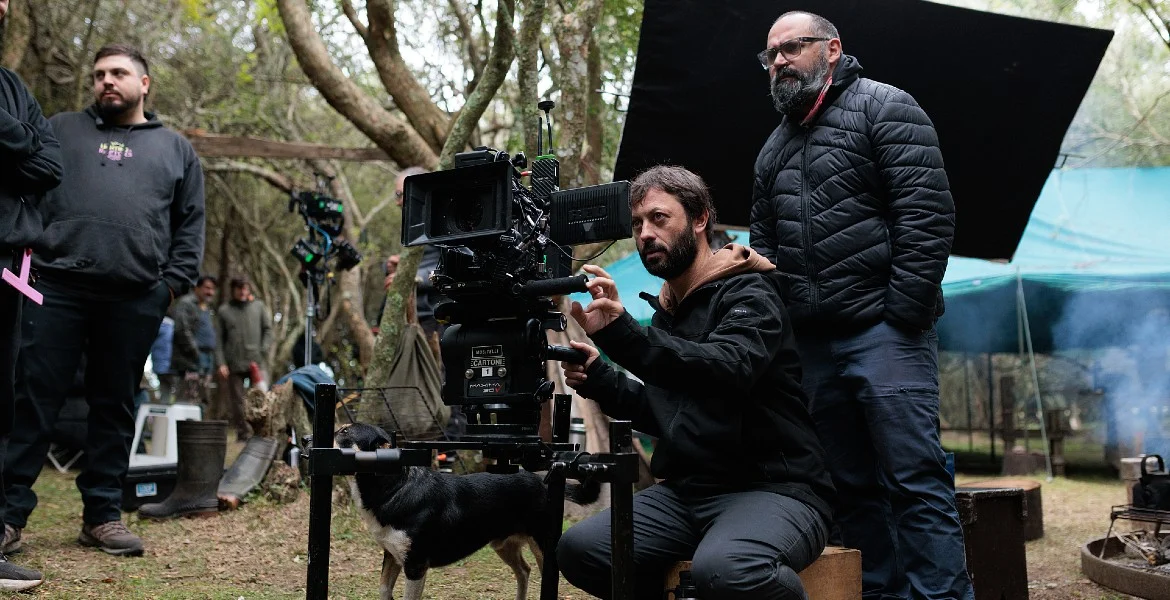
The first week of June marked the successful conclusion of principal photography for "Caza y pesca" (Hunting and Fishing), the latest feature film from director Guillermo Carbonell. Filmed across the diverse landscapes of the Lavalleja and Montevideo departments in Uruguay, the production signifies a major milestone for the regional film industry, blending high-concept genre storytelling with a robust international co-production model. Produced by Uruguayan outfits Murdoc and El Cielo Cine in collaboration with Spanish partners MGC and Kilo Vivo, the film is now entering an intensive post-production phase with eyes set on a 2027 premiere at major international film festivals.
A Survival Narrative Rooted in Regional Tension
"Caza y pesca" is a survival thriller that explores the volatile intersection of recreation and violence. The plot follows three friends who embark on a fishing trip, seeking a reprieve from their daily lives in the rugged wilderness of Uruguay. However, their excursion takes a dark and harrowing turn when they cross paths with a sinister group of wild boar hunters and their pack of trained dogs. The confrontation escalates into a desperate struggle for survival, pitting the amateur fishermen against seasoned killers who view the terrain as their own personal hunting ground.
The project marks Guillermo Carbonell’s debut as a solo feature film director. While "Caza y pesca" is his first individual full-length venture, Carbonell is no stranger to the genre or the complexities of international production. He previously directed the acclaimed short film "La peste" and served as a co-director on the horror anthology "You Shall Not Sleep Tonight," working alongside Ben Deka and Julien Deka. His transition to solo feature filmmaking is viewed by industry analysts as a natural progression for a director who has spent years refining a visual language rooted in suspense and atmospheric tension.
Production Logistics: The Guerrilla Mindset on a Professional Scale
The production of "Caza y pesca" was characterized by a unique tactical approach, which Carbonell describes as a "guerrilla cinema" mentality executed by a full-scale professional crew. This strategy was born out of the necessity to balance the high stakes of a thriller—which requires intricate coverage and multiple camera angles to build suspense—with the financial realities of independent filmmaking.
According to Carbonell, the greatest challenge was reconciling the ambition of the script with the constraints of the production schedule. Thrillers, by their nature, demand a specific cinematic language that allows for the stretching of time and the manipulation of pace through editing. To achieve this, the team filmed extensively, capturing scenes from numerous perspectives to provide the editor with the necessary material to construct a taut, high-tension narrative.
The logistical hurdles were further complicated by the film’s reliance on outdoor locations and the inclusion of trained animals. Lavalleja, known for its rocky hills and dense vegetation, provided a visually stunning but physically demanding backdrop. The presence of trained dogs, essential to the plot’s "boar hunter" antagonists, required specialized handlers and a patient filming schedule to ensure both safety and authentic performances. Carbonell credited his crew’s professionalism and ability to find "efficient and high-impact visual solutions" as the primary reason the production remained on schedule despite these complexities.
A High-Profile Cast and Creative Team
The film features a distinguished cast that bridges the cinematic traditions of the Southern Cone and Europe. Leading the ensemble is César Troncoso, one of Uruguay’s most internationally recognized actors, known for his work in "The Pope’s Toilet" and numerous Brazilian and Argentine productions. Joining him are Juan Grandinetti, Lautaro Bettoni, Santiago Musetti, and Marta Fuenar. This mix of veteran talent and rising stars is expected to give the film significant appeal across both Latin American and Spanish markets.
The screenplay was penned by Rodolfo Santullo, a prolific figure in the world of South American comics and literature. Santullo’s previous screenwriting credits include "La teoría de los vidrios rotos" and "Buscando a Clara," both directed by Diego "Parker" Fernández. His expertise in narrative structure and suspense is a cornerstone of the project.
On the technical side, the film benefits from the vision of Director of Photography Matías Lasarte and Art Director Marcelino Carballo. The crucial task of assembling the final film falls to Alejandro Lázaro, a veteran editor with a storied career in Spanish cinema. Lázaro’s filmography includes iconic titles such as Álex de la Iglesia’s "La comunidad" and "800 balas." His involvement is seen as a strategic move to ensure the film meets the rhythmic and technical standards required for the international genre circuit.
Institutional Support and the Co-Production Model
"Caza y pesca" serves as a prime example of the effectiveness of Uruguay’s current audiovisual incentive programs. The film received substantial backing from the Agencia del Cine y el Audiovisual del Uruguay (ACAU), formerly known as ICAU. This support manifested through multiple channels, including scriptwriting grants and the PUA (Programa de Uruguay Audiovisual) Cash Rebate, a vital financial instrument that encourages local production and international partnerships.
Additional domestic support came from the FONA Production Fund of the Intendency of Montevideo and the local government of Lavalleja through its "Lavalleja Filma" office. The international dimension of the project was solidified by the Government of the Canary Islands, which provided support for minority co-productions in Spain.
The project’s journey through the development circuit also highlights its perceived potential. Before a single frame was shot, "Caza y pesca" was selected for several prestigious industry labs and markets, including:
- Ventana Sur: Featured in the "El Principio del Film" and "Blood Window Lab" sections.
- Iberseries & Platino Industria: Selected for the Co-production Forum.
- EntreFronteras: Participated in the Co-production Meeting.
- BIF Market: Presented at the Brussels International Fantastic Film Festival market.
These selections provided the producers with early opportunities to secure sales agents and distribution interest, long before the production wrapped in June.
Chronology of Development and Future Outlook
The timeline for "Caza y pesca" reflects the deliberate and meticulous pace of modern high-end independent cinema:
- Development (2021-2023): Scriptwriting by Santullo and participation in international markets to secure financing and co-production partners.
- Pre-production (Early 2024): Casting and location scouting in Lavalleja and Montevideo.
- Principal Photography (May – June 2024): Filming on location in Uruguay.
- Post-production (Late 2024 – 2025): Editing by Alejandro Lázaro, followed by sound design and color grading.
- Market Strategy (2024 – 2026): Preliminary sales talks initiated at the Marché du Film in Cannes.
- Release (2027): Targeted premiere at a Tier-1 international film festival, followed by a theatrical and streaming rollout.
The decision to target 2027 for a release allows the production team ample time to perfect the complex post-production requirements of a thriller and to strategically align the premiere with major genre-focused festivals such as Sitges, Fantasia, or the midnight sections of Berlin or Cannes.
Implications for the Uruguayan Film Industry
The production of "Caza y pesca" arrives at a time when Uruguayan cinema is increasingly moving beyond its traditional "minimalist" roots and embracing genre-driven narratives with commercial potential. For decades, the local industry was defined by quiet, character-driven dramas. However, the global success of Uruguayan filmmakers like Fede Álvarez ("Don’t Breathe") and Gustavo Hernández ("The Silent House") has paved the way for a new generation of directors to explore horror, thrillers, and action.
By utilizing the PUA Cash Rebate and fostering co-productions with Spain, "Caza y pesca" demonstrates a sustainable model for mid-budget genre films in the region. This approach not only provides jobs for local crews and actors but also ensures that the final product has a clear pathway to international audiences. The use of Lavalleja as a primary location also underscores the potential for "film tourism" and the decentralization of the Uruguayan film industry, which has historically been centered in the capital of Montevideo.
As the film enters the editing room, the industry will be watching closely. If "Caza y pesca" succeeds in translating its "guerrilla speed" into a polished, high-tension cinematic experience, it will further solidify Uruguay’s reputation as a burgeoning hub for sophisticated genre cinema in Latin America. For now, the successful wrap of principal photography stands as a testament to the resilience and growing ambition of the country’s audiovisual sector.



 Eva Lovia
 Julia Chirkova
 Julia Prastini
 Nila Kartika Wati
 Jia Lissa