
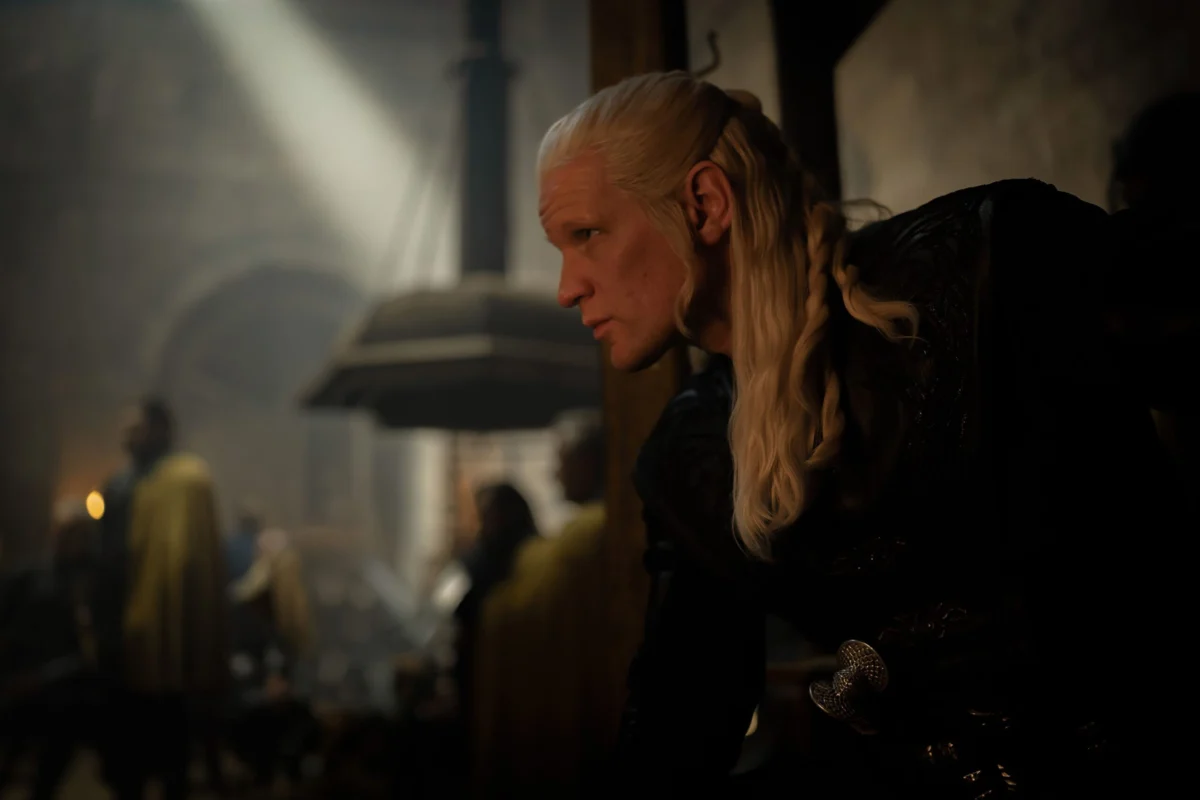
The fifth episode of the third season of House of the Dragon represents a pivotal shift in the strategic landscape of the Dance of the Dragons, moving away from the immediate spectacle of dragon-led aerial combat toward the more insidious and lethal world of political sabotage and psychological warfare. As the conflict deepens, the episode, titled for its focus on the "Feast for Traitors," reveals the fracturing internal dynamics of both the Black and Green councils. The narrative focus shifts toward the consequences of a fragmented leadership, where the disappearance of key figures and the rise of secondary power players like Ormund Hightower create a vacuum of authority that threatens to consume the Seven Kingdoms. This episode serves as a masterclass in tension, illustrating how the absence of a clear front line makes the war far more dangerous for those vying for the Iron Throne.
The Fragile Sovereignty of Queen Rhaenyra Targaryen
At the heart of the episode is the escalating paranoia of Queen Rhaenyra Targaryen. Despite her position on Dragonstone, the Queen finds herself increasingly isolated, not by the strength of her enemies’ armies, but by the uncertainty of their locations. The primary source of her anxiety is the unexplained disappearance of Aegon II and Aemond Targaryen. In military terms, the loss of visual or intelligence confirmation on the enemy’s primary assets—their kings and dragonriders—is a catastrophic intelligence failure. Rhaenyra’s fear is rooted in the realization that an invisible enemy is far more difficult to combat than one entrenched on a battlefield.
Adding to this atmospheric dread is the shadow cast by Ormund Hightower. Operating out of Tumbleton, a location of immense strategic value due to its proximity to King’s Landing and its role as a logistical hub, Ormund has begun a campaign of destabilization. Unlike the direct assaults seen in previous episodes, Ormund’s tactics are focused on making Rhaenyra’s reign appear illegitimate and weak. By targeting her infrastructure and her most loyal domestic force, the City Watch, Ormund is effectively strangling the Black faction’s influence from within the Reach and the Crownlands.
The Schism Between the Dragon and the Queen
The interpersonal conflict between Rhaenyra and Prince Daemon Targaryen reaches a new fever pitch in this installment. Daemon, ever the proponent of "fire and blood," advocates for a scorched-earth policy. His demand to incinerate Tumbleton is a classic example of total war theory—removing the enemy’s base of operations regardless of civilian or strategic cost. However, Rhaenyra’s hesitation is presented not merely as indecision, but as a calculated risk. Tumbleton serves as a vital artery for the defense and supply of King’s Landing. To destroy it would be to win a tactical victory at the cost of a long-term strategic catastrophe.
This disagreement highlights the fundamental difference in their philosophies of power. While Daemon views power as something to be seized through terror, Rhaenyra is still attempting to govern a realm she hopes to inherit intact. This friction is further complicated by the situation with the Gold Cloaks. The City Watch, traditionally loyal to Daemon, has been operating without pay, a situation that typically leads to mutiny in any historical military context. Daemon’s ability to maintain their loyalty through charisma and the promise of future spoils is a testament to his personal influence, yet it underscores the precarious nature of the Blacks’ military funding.
The Revelation of the Daeron Targaryen Coin
A critical turning point in the episode occurs during a brutal interrogation led by Daemon. After capturing an agent of Ormund Hightower tasked with assassinating members of the Gold Cloaks, a physical piece of evidence is recovered: a coin bearing the visage of Daeron Targaryen. This "supporting data" is of immense political significance. In the world of Westeros, the minting of currency is a sovereign act. By producing coins with Daeron’s face and naming him the "future king," Ormund Hightower is signaling a formal move to bypass the missing Aegon II and the volatile Aemond in favor of a more manageable or perhaps more present claimant.
Daemon’s presentation of this coin to Rhaenyra serves as a "told-you-so" moment. For Daemon, this is the ultimate proof that the Hightowers are not merely defending a claim but are actively restructuring the monarchy. The psychological impact on Rhaenyra is evident; the realization that her enemies are already preparing for a post-Aegon world suggests a level of planning and resources that the Black Council has yet to match.
The Captivity of the Green King and the Harrenhal Hex
While the political fires burn on Dragonstone, the physical state of the Green faction’s leadership is revealed to be dire. Aegon II and Lord Larys Strong are shown in a state of degradation, held in a camp where they have been reduced to the status of captives or slaves. The arrival of Tyland Lannister offers a glimmer of hope for a coordinated escape, but this is quickly undermined by Aegon’s characteristic impulsivity. By murdering the camp leader who discovered his crown, Aegon prioritizes his ego and immediate survival over a stealthy, strategic retreat. This act ensures that their path to safety will be paved with further violence and likely pursuit.
Simultaneously, Aemond Targaryen remains sequestered at Harrenhal, under the influence of the enigmatic Alys Rivers. The episode leans heavily into the supernatural atmosphere of the cursed fortress. Aemond’s protection by Alys—and his subsequent violent defense of her against searching soldiers—suggests a shift in his character. He is no longer just a warrior; he is becoming a figure entwined with the occult forces of the Riverlands. The implication for the broader war is significant: an Aemond who is untethered from the Green Council and influenced by a "witch" is a wildcard that neither side can truly account for in their battle plans.
The Nihilism of Ser Criston Cole
The sub-plot involving Ser Criston Cole provides a bleak look at the morale of the Green military. Cole’s journey into the Riverlands in search of an army is portrayed as a death march. The internal friction between Cole and Ser Gwyne Hightower reflects the broader collapse of the Green coalition. Gwyne’s attempt to persuade Cole to return to the safety of Tumbleton is met with a chilling admission of nihilism. Cole’s declaration that he no longer serves anyone but himself—and his apparent desire for a warrior’s death—marks the end of his journey as a traditional knight of the Kingsguard. When Gwyne abandons him, Cole is left as a solitary, destructive force, heading toward an inevitable and bloody confrontation with the Riverland forces.
The Internal Collapse of the Red Keep
In King’s Landing, the situation is equally dire. The episode explores a harrowing domestic conflict involving Alicent Hightower and her daughter, Helaena. Alicent’s attempt to force an abortive potion upon Helaena is a desperate move to control the succession and perhaps spare a future child from the horrors of the war. However, the intervention of Lady Mysaria, the "White Worm," adds a layer of espionage to the family tragedy.
Mysaria’s presence in the Red Keep, and her discovery of Alicent’s secrets, demonstrates how compromised the palace security has become. The subsequent attempt by Alicent and Helaena to flee through the secret passages of the castle ends in a literal and metaphorical darkness. Their entrapment in the lightless interiors of the Red Keep serves as a potent symbol for the state of the Green faction: trapped by their own architecture, isolated from their allies, and unable to find a path forward.
Chronology of Key Events: Episode 5
- 00:00 – 10:00: Rhaenyra expresses growing paranoia over the missing Aegon II and Aemond; Ormund Hightower’s influence in Tumbleton is established as a primary threat.
- 10:00 – 25:00: Daemon and Rhaenyra clash over the strategic necessity of burning Tumbleton; Daemon secures the temporary loyalty of the unpaid Gold Cloaks.
- 25:00 – 40:00: Daemon captures and interrogates a Hightower assassin; the Daeron Targaryen "future king" coin is discovered.
- 40:00 – 55:00: Aegon II kills his captor at the slave camp; Aemond defends Alys Rivers at Harrenhal, showcasing a new, darker alliance.
- 55:00 – 70:00: Ser Criston Cole is abandoned by Ser Gwyne after declaring his nihilistic intentions; Alicent and Helaena fail to escape the Red Keep and become trapped in the walls.
- 70:00 – End: Daemon discovers the slaughtered Gold Cloaks and the "Feast for Traitors" message; Ormund Hightower is revealed as the architect of the urban terror.
Broader Impact and Strategic Implications
The conclusion of the episode, featuring the discovery of the murdered Gold Cloaks and the blood-smeared message "a feast for traitors," signals a transition into a more visceral stage of the civil war. The strategic takeaway is clear: Ormund Hightower has successfully brought the war to the streets of the city in a way that traditional armies cannot easily counter. By utilizing guerrilla tactics and psychological terror, the Hightower forces are effectively neutralizing the advantage of the Gold Cloaks without needing a full-scale siege.
Furthermore, the revelation of Daeron Targaryen’s emergence as a "future king" suggests that the Greens are prepared to pivot their political strategy. If Aegon II is seen as a liability or is truly lost, the promotion of Daeron provides a fresh start for the Hightower cause, one that might be more palatable to the wavering lords of the Reach.
For Rhaenyra, the episode is a stark warning. Her reluctance to use her dragons for fear of destroying the realm’s infrastructure has allowed her enemies to use her own cities against her. As the episode closes with the image of Daemon standing among his fallen men, the message is one of vulnerability. The "Feast for Traitors" is not just a warning to the Gold Cloaks; it is a declaration that no one is safe within the walls of the city, and the shadows are now as much a battlefield as the skies. This shift toward internal sabotage and the rise of "invisible" threats like Ormund and Alys Rivers suggests that the next phase of the Dance of the Dragons will be defined not by who has the largest dragon, but by who can survive the rot from within.

0 Comments