
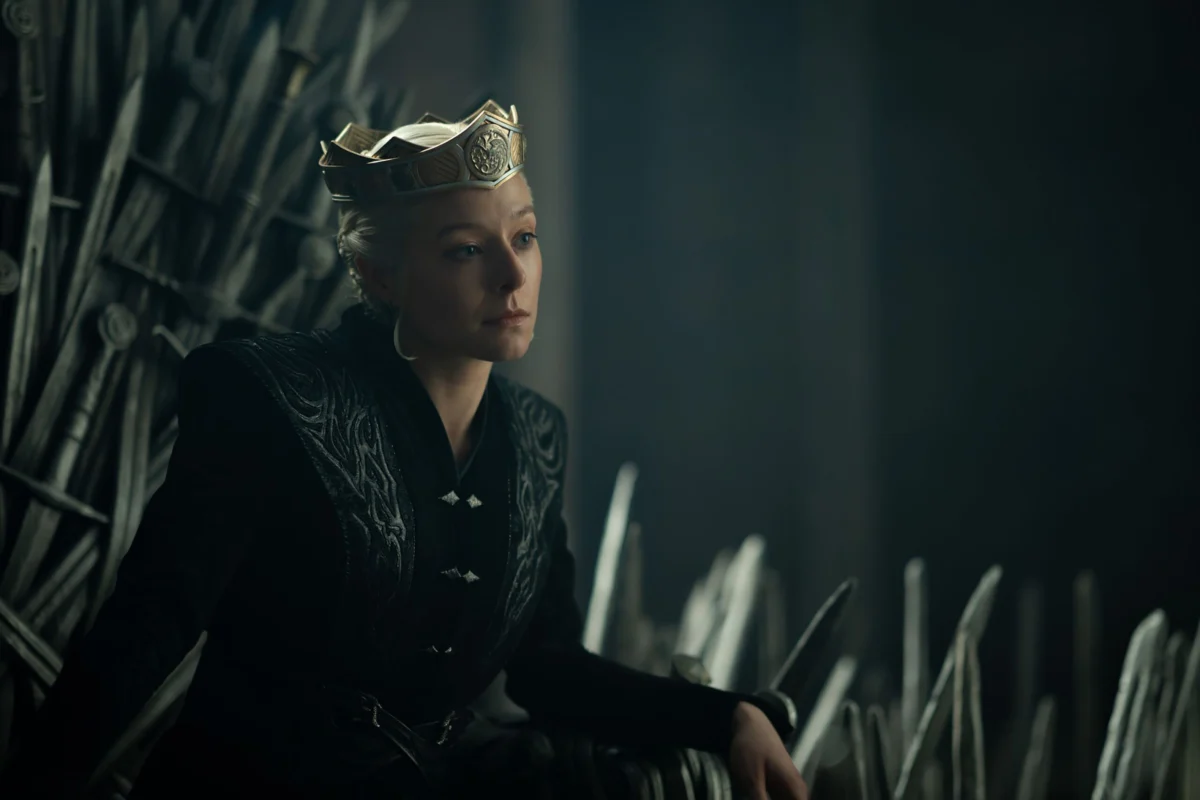
The sixth episode of the third season of House of the Dragon marks a definitive turning point in the Targaryen civil war, signaling the beginning of the end for several key players while deepening the shadows surrounding Rhaenyra Targaryen’s occupation of the capital. As the narrative enters its final stretch for the season, the episode—titled for the shifting tides of loyalty and the physical manifestations of divine right—delivers a series of tactical shifts and symbolic warnings that suggest the "Black" Queen’s hold on the Seven Kingdoms is more precarious than ever. From the ignominious death of a former Lord Commander to the discovery of ancient relics in the cursed halls of Harrenhal, the episode meticulously deconstructs the cost of the crown.
The Death of Ser Criston Cole: An Unceremonious End for the Kingmaker
The episode opens with the abrupt and violent conclusion of Ser Criston Cole’s journey. The Lord Commander of the Kingsguard, often referred to as "The Kingmaker" for his pivotal role in crowning Aegon II, meets a fate that stands in stark contrast to his self-image as a chivalric hero. After retreating from several skirmishes in the Riverlands, Cole continues his attempt to rally remnants of the Green army against the relentless pressure of the Rivermen.
His demise is orchestrated by a tactical ruse. Encountering a battalion that appears to have been slaughtered, Cole’s remaining men are lured into a state of false security. The "corpses" are revealed to be living soldiers from House Tully and House Strong—loyalists to Rhaenyra—who had been tracking Cole’s movements for weeks. Under the command of the young and increasingly formidable Lord Oscar Tully, the ambush is executed with clinical efficiency.
Unlike the glorious death on the battlefield that Cole had envisioned for himself, he is cut down by a volley of arrows before he can even draw his sword for a final stand. This lack of a "warrior’s death" serves as a narrative commentary on the nature of the Dance of the Dragons: a war that has stripped away the romanticism of knighthood, leaving only the grim reality of attrition. The loss of Cole deprives the Green faction of its most experienced field commander and its most fervent ideological engine.
Sovereignty and Superstition: Rhaenyra and the Iron Throne
In King’s Landing, the atmospheric tension shifts from the battlefield to the Red Keep. Rhaenyra Targaryen, despite holding the city, finds herself besieged by administrative and strategic pressures. Her primary concern remains the advancing forces of Ormund Hightower, and she struggles with the moral and political implications of using her dragons to incinerate Tumbleton—a move that would secure her victory but likely alienate the smallfolk and the nobility alike.
The episode’s most discussed sequence involves Rhaenyra cutting herself on the Iron Throne during a heated audience with the city’s representatives. The symbolism here is heavy and intentional, drawing direct parallels to her father, King Viserys I, whose body was slowly consumed by infections caused by the throne’s many blades. In Westerosi lore, the Iron Throne is said to "reject" those who are unworthy or unfit to rule—a superstition that began with Maegor the Cruel.
For Rhaenyra, the cut is not merely a physical wound but a psychological one. It suggests that despite her bloodright, the seat of power remains an adversarial entity. This event occurs just as the city’s infrastructure begins to crumble; the Gold Cloaks, once the backbone of her urban defense, have begun to desert in mass numbers following a series of internal skirmishes. The vacuum of power left by the departing city watch leaves the Red Keep vulnerable, a fact emphasized when an unidentified assassin nearly succeeds in taking the life of Prince Daemon Targaryen. The assassin’s dying confession—that the chaos in the city is being fueled by an untraceable, non-aligned insurgency—underscores the terrifying reality that Rhaenyra may be ruling over a graveyard of her own making.
The Tumbleton Infiltration: The Reach in Turmoil
The theater of war in the Reach provides the episode’s most complex political maneuvering. Lord Ormund Hightower is seen hosting his brother, Ser Gwyane, where he reveals a long-term strategy to place Daeron Targaryen on the throne. Daeron, the youngest son of Alicent and Viserys, has long been the Greens’ "secret weapon" due to his dragon, Tessarion, and his reputation for being more stable than his elder brothers.
The tension escalates with the arrival of a group of soldiers claiming to represent House Baratheon, stating they are ready to defect from Rhaenyra’s cause and swear fealty to Daeron. However, this is revealed to be a high-stakes espionage mission authorized by the Queen. Gwyane Hightower, displaying a level of intuition and ruthlessness previously unseen, identifies the infiltrators. Rather than taking prisoners for interrogation, he executes them, signaling a hardening of the Hightower resolve. While Gwyane had previously expressed a desire to return to the safety of Oldtown, the discovery of the spies forces his hand, cementing his role as a key lieutenant in the Hightower campaign.
The Secrets of Harrenhal: Dreamfyre’s Legacy
At Harrenhal, the narrative takes a turn into the mystical. Prince Aemond Targaryen, having recovered from previous wounds, intends to depart with Vhagar to rejoin the main host. He is stayed by Alys Rivers, the enigmatic seer of the castle. In a departure from the source material found in George R.R. Martin’s Fire & Blood, the series introduces a significant new element: a hidden clutch of dragon eggs within the castle walls.
Alys reveals five eggs that allegedly belonged to Dreamfyre, the dragon currently ridden by Helaena Targaryen. According to the lore established in the episode, these eggs were laid by Dreamfyre during the final years of Queen Rhaena Targaryen (the daughter of Aenys I), who spent her twilight years at Harrenhal.
This discovery provides Aemond with a new objective. By securing these eggs, he aims to establish a separate power base, ensuring that the Green lineage remains dominant even if their current adult dragons are lost. The presence of these eggs introduces a "wild card" into the war’s endgame, as the potential for new dragons could shift the balance of power back toward the Greens, who currently suffer from a numerical disadvantage in terms of active riders.
Ethical Erosion and the Final Gambit
The episode concludes with a series of domestic and political betrayals that highlight Rhaenyra’s shifting morality. Upon learning of Helaena Targaryen’s pregnancy, Rhaenyra does not offer the clemency many expected. Instead, she uses the information to tighten her grip on Helaena and Alicent, effectively treating the unborn child as a political hostage.
Alicent Hightower, desperate to find a way out of her imprisonment and protect her daughter, is forced into a humiliating compromise. After Helaena experiences a prophetic vision—symbolized by an intricate embroidery of a burning tower—Alicent reveals Aemond’s likely location to Rhaenyra. However, Rhaenyra refuses to risk her own knights in a direct confrontation. Instead, she utilizes Alicent as a decoy, forcing her former friend into the field to lure Aemond into a trap. This decision marks a point of no return for Rhaenyra’s character, as she sacrifices the last vestiges of her personal relationships for tactical gain.
Analysis of Implications
The events of Season 3, Episode 6, suggest a grim trajectory for the remainder of the series. The death of Criston Cole removes the last "true believer" from the Green cause, leaving only those motivated by survival or raw ambition. Simultaneously, Rhaenyra’s injury on the throne and the desertion of the Gold Cloaks suggest that her physical possession of King’s Landing is a hollow victory.
Data from the episode’s internal timeline suggests that the war has entered a phase of total exhaustion. The mention of the Baratheon "spies" indicates that even the Great Houses are now resorting to desperate measures of deception rather than open warfare. Furthermore, the introduction of the Dreamfyre eggs at Harrenhal serves as a narrative bridge to the future of the franchise, potentially linking the events of the Dance to the eventual rebirth of dragons centuries later.
As the season moves toward its finale, the central question remains: what will be left of the realm once the fires of the Targaryen civil war finally burn out? Rhaenyra’s willingness to use Alicent as bait and her indifference to the "rejection" of the Iron Throne indicate a queen who is no longer ruling by right, but by sheer, bloody-minded persistence. The stage is now set for a final confrontation in the Reach and a potential tragedy within the walls of the Red Keep.

0 Comments