
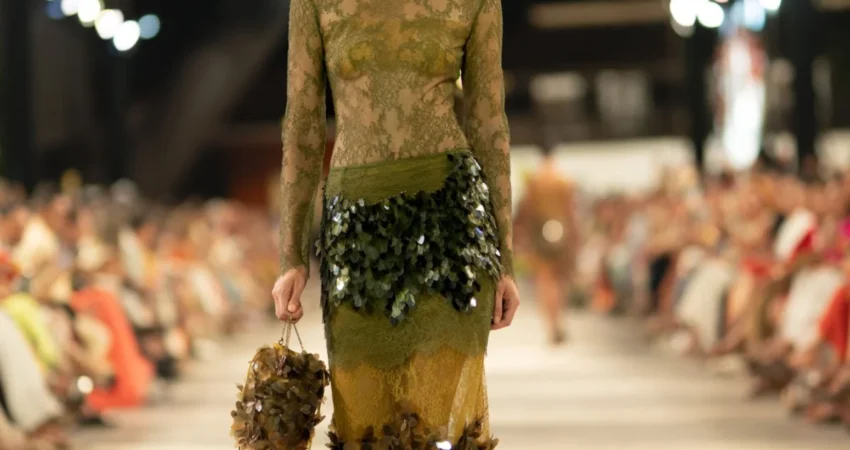
The intersection of contemporary fashion and local identity has found a new epicenter in the Colombian Caribbean, where the traditional narratives of the region are being translated into a sophisticated global design language. This evolution was recently showcased during IXEL Itinerante Valledupar, an event held under the thematic banner, "The land where the soul sings and fashion dresses in culture and tradition." By integrating the rhythmic cadence of Vallenato music with high-fashion editorial narratives, the event marked a significant milestone in the maturity of regional design within the global industry.
IXEL Itinerante serves as an extension of the IXEL Moda congress, which has historically been a pillar of the Latin American fashion circuit. The Valledupar edition focused on the indispensable links between plastic arts, music, and textile design. According to Érika Rohenes, Executive President of Ixel Moda, the mission of the itinerant format is to dismantle the isolation of fashion, fostering a constant conversation with popular culture and regional heritage. The event demonstrated that local expressions are not merely decorative elements but are the primary assets for building design proposals with international projection.

The Convergence of Art, Academia, and Regional Identity
The proceedings commenced at the Casa-Museo Castro Monsalvo, a historical landmark in Valledupar that served as the backdrop for a multidisciplinary exhibition. The showcase featured the work of 26 designers, nine plastic artists, and one photographer, all tasked with translating the musical poetics of the legendary composer Rafael Escalona into tangible forms. The exhibition, titled "Moda & Arte: Tributo al Maestro Escalona," bridged the gap between jewelry, leather goods, contemporary fashion, and fine arts.
This curatorial exercise was not limited to aesthetics; it served as a bridge between modern design and the ancestral knowledge of the region’s ethnic groups. Danilo Cañizares, the exhibition’s curator and academic director of IXELMODA, emphasized that the project was rooted in the concept of magical realism. Cañizares noted that the literary world of Gabriel García Márquez finds its sonic equivalent in the lyrics of Escalona. This connection was famously highlighted when García Márquez received the Nobel Prize in Literature in Sweden, where the sounds of Vallenato—rather than traditional European waltzes—accompanied the celebration of Colombian culture.
The academic component of the event was further solidified through the "Moda & Música" panel held at the Auditorium of the Fundación Universitaria Área Andina. This forum brought together design leaders, editorial critics, and cultural journalists to analyze how Vallenato lyrics and artisanal traditions are transformed into textile narratives. The discussion focused on the methodological rigor required to move beyond "ornamental" uses of culture, urging creators to investigate the history and territory of the region to produce meaningful structures.

Chronology of an Interdisciplinary Tribute
The event followed a structured timeline designed to immerse participants in the cultural ecosystem of the Cesar department:
- Inauguration and Curatorial Tour: The opening at Casa-Museo Castro Monsalvo allowed attendees to witness how 2D and 3D art forms could coexist. Pieces were designed exclusively for this exhibition, ensuring a unique narrative thread that followed Escalona’s discography.
- Academic Exchange: The "Moda & Música" symposium provided a theoretical framework, establishing the socio-economic importance of the "Orange Economy" (creative industries) in regional development.
- The Central Runway: Held at the iconic Plaza Alfonso López, the "Homenaje al Valle" (Tribute to the Valley) runway featured eight unpublished capsule collections. Each collection was inspired by a classic Vallenato song and accompanied by live musical performances.
- Social Impact Initiative: Following the main events, resources were mobilized to support the municipality of Dosquebradas and other communities recently affected by seismic activity in Colombia, highlighting the event’s commitment to social responsibility.
Supporting Data: The Economic Impact of Colombian Fashion
The significance of events like IXEL Itinerante Valledupar is underscored by the economic weight of the fashion industry in Colombia. According to data from Inexmoda and the National Administrative Department of Statistics (DANE), the fashion sector accounts for approximately 9.4% of the country’s industrial GDP and employs over 600,000 people.
By decentralizing fashion events from major hubs like Medellín and Bogotá, IXEL Itinerante taps into the "Orange Economy," which represents nearly 3% of Colombia’s national GDP. The integration of regional music and tourism with fashion exhibitions creates a multi-sectoral economic boost. In Valledupar, the event stimulated local tourism and provided a platform for local designers such as Naiduth Geles and José Cuello to share the stage with internationally recognized figures like Hernán Zajar and Beatriz Camacho.

Analysis of the "Homenaje al Valle" Runway
The climax of the event, the "Homenaje al Valle" runway, served as a practical application of the academic theories discussed. Eight designers presented capsules that interpreted the soul of the Caribbean through different lenses:
- Hernán Zajar: Taking inspiration from "La casa en el aire," Zajar utilized fluid textures and exuberant prints. His work reflected the literal and metaphorical "house in the clouds" described by Escalona, focusing on the airy, dreamlike quality of the Caribbean landscape.
- Lina Cantillo: Known for her mastery of tailoring, Cantillo interpreted "Mi hermano y yo" by Emiliano Zuleta. She transitioned her sartorial expertise into an emotional narrative, referencing personal and regional history through structured yet evocative menswear and unisex pieces.
- Beatriz Camacho: In collaboration with Daniela García, Camacho focused on "Amor Sensible" by Freddy Molina. Her collection emphasized contemporary elegance and a subtle femininity, using natural fibers and earthy tones that reflect the landscape of the Cesar region.
- Judy Hazbún: Interpreting "Sin medir distancias" by Gustavo Gutiérrez, Hazbún showcased an eclectic range of looks. This included a "jean-pollera" (a denim-based traditional skirt) crafted by local weavers and a conceptual wedding dress that served as the collection’s finale.
- Jorge Duque: Duque’s interpretation of "La creciente" by Hernando Marín Lacouture was a technical triumph. He used materials such as rubber, leather, and metal beads to create metaphors for fire and water. His opening look—a perforated corset—and his "golden mermaid" dress made of metallic paillettes were highlights of the evening.
- Regional Talent: Naiduth Geles ("Los caminos de la vida"), José Cuello ("La cañaguatera"), and Darío Valencia ("Vallenato nobel") provided the local perspective. Cuello’s use of feathers and stonework captured the festive spirit of the "Cañaguatera" woman, while Valencia’s work paid direct homage to the literary legacy of One Hundred Years of Solitude.
Official Responses and Strategic Implications
Local authorities and cultural leaders have praised the event for its role in cultural preservation. The Mayor’s Office of Valledupar and the Governorate of Cesar highlighted that such initiatives help safeguard Vallenato music, which was declared an Intangible Cultural Heritage in Need of Urgent Safeguarding by UNESCO in 2015.
From a strategic standpoint, IXEL Itinerante Valledupar demonstrates a shift in how Colombian fashion is marketed. Rather than competing solely on manufacturing costs, the industry is pivoting toward "storytelling" and "origin-based branding." By tethering high fashion to the globally recognized genre of Vallenato, Colombian designers are creating a niche that is difficult for mass-market global competitors to replicate.

Broader Impact and Future Outlook
The success of the Valledupar edition suggests that the future of Colombian fashion lies in its ability to remain "glocal"—globally competitive while remaining locally rooted. The event proved that the "sophistication" of regional design does not require the abandonment of tradition but rather its elevation through rigorous design methodology and interdisciplinary collaboration.
Furthermore, the philanthropic aspect of the event—directing funds toward earthquake victims and the municipality of Dosquebradas—reinforces the industry’s role as a driver of social cohesion. As IXEL Itinerante continues its journey through other Colombian regions, it establishes a blueprint for how cultural heritage can be converted into sustainable economic and social capital.
In conclusion, IXEL Itinerante Valledupar was more than a series of runways; it was a validation of the Caribbean’s cultural wealth. By transforming the "realismo mágico" of the Vallenato lyrics into high-fashion textiles and three-dimensional art, the event has set a new standard for cultural diplomacy and industrial maturity in the Latin American fashion sector. The dialogue between the accordion and the needle has proven that when fashion listens to the soul of a region, it speaks a language that the entire world can understand.

0 Comments