
The twenty-third edition of CPH:DOX, the Copenhagen International Documentary Film Festival, marks a significant milestone for Latin American cinema as more than half a dozen productions from the region prepare for their international debuts. Scheduled to take place from March 11 to 22 in the Danish capital, the festival serves as a premier global platform for non-fiction storytelling, blending artistic innovation with pressing socio-political commentary. This year’s selection highlights a diverse array of narratives ranging from indigenous mycological wisdom in Mexico to the harrowing realities of reproductive rights in the Dominican Republic, and the enduring echoes of political exile in Chile. The presence of these films in Copenhagen, coupled with a notable selection at the ParisDOC Work-in-Progress section during Cinéma du Réel, underscores the growing influence and maturity of Latin American documentary filmmaking on the world stage.
The Main Competition and the Global Rise of Mexican Documentary
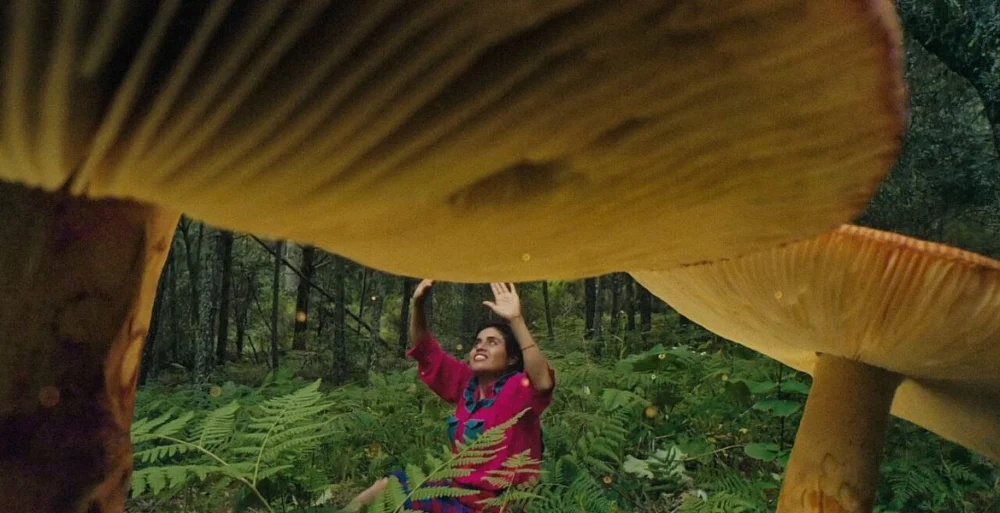
At the heart of the festival lies the Dox:Award, the main international competition which this year features 12 world premieres. Among this elite selection is the Mexican documentary "Hijas del bosque: crónicas del micelio" (Daughters of the Forest: Mycelium Chronicles), directed by Otilia Portillo Padua. Known for her previous acclaimed works such as "Pajareros" and "Diario a tres voces," Portillo Padua turns her lens toward the intricate world of fungi through the eyes of two indigenous mycologists. The film is produced by Paula Arroio and Elena Fortes via Oscura Producciones and Sandbox Films, with critical financial backing from EFICINE, Mexico’s primary fiscal incentive for film production.
The selection of "Hijas del bosque" in the Dox:Award category is indicative of a broader trend: the increasing international appetite for films that bridge the gap between scientific inquiry and ancestral knowledge. By following the "fungal paths" of its protagonists, the documentary explores themes of ecological interconnectedness and cultural preservation. Furthermore, the film’s distribution strategy reflects its high commercial and critical expectations, as it is set for a near-simultaneous premiere at the SXSW (South by Southwest) festival in Austin, Texas, running from March 12 to 18. This dual-festival launch in two of the most influential markets for independent cinema—Europe and North America—positions the film as a frontrunner for international distribution and awards consideration in the 2024 circuit.
Advocacy and Human Rights: The Dominican Republic’s "Niñas escarlata"
The Human Rights Award section of CPH:DOX is reserved for films that challenge injustice and provide a voice to the marginalized. This year, the category hosts the world premiere of "Niñas escarlata" (Scarlet Girls), the feature-length debut of Dominican filmmaker Paula Cury Melo. Produced by Cury Melo under the Cristal Cine banner in co-production with Germany’s Parabellum Film and Mexico’s Disruptiva Films, the documentary tackles one of the most contentious issues in the Caribbean: forced motherhood and clandestine abortion.
The film arrives at a critical juncture for the Dominican Republic, a nation where abortion remains entirely criminalized under all circumstances, including when the life of the mother is at risk or in cases of rape and incest. Through personal testimonies and investigative rigor, "Niñas escarlata" provides a stark look at the consequences of these draconian laws. Industry analysts suggest that the film’s inclusion in CPH:DOX will amplify the international pressure on regional governments regarding reproductive rights. The co-production model—linking Dominican, German, and Mexican interests—demonstrates the necessity of international cooperation in bringing sensitive political subjects to the screen when local funding or political climates may be restrictive.
Emerging Voices and the Next:Wave Category
The Next:Wave competition, specifically curated for emerging filmmakers who push the boundaries of the documentary form, features the world premiere of "Aquí se escucha el silencio" (Here One Hears the Silence). This Chilean-Spanish co-production is directed by the duo Gabriela Pena and Picho García. The project is a collaborative effort involving Grieta Cine, Cine Matriz (led by Gabriela Sandoval), and Gris Medio (led by Efthymia Zymvragak).
The documentary follows a granddaughter’s journey through the fragmented memory of three generations as she returns to a family home abandoned during a period of political exile. In the context of Chilean history, where the legacy of the Pinochet dictatorship continues to influence contemporary social discourse, "Aquí se escucha el silencio" serves as a poignant exploration of how trauma and displacement are inherited. The film’s presence in the Next:Wave category highlights the festival’s commitment to supporting new directorial voices from the Southern Cone who are finding innovative ways to visualize the invisible scars of history.
Experimental Narratives and Short Form Innovation
The New Vision category at CPH:DOX is dedicated to the most experimental and boundary-pushing works in the documentary field. This year, the section features the European premiere of "Jirapo," a Colombian-Portuguese short film directed by María Rojas Arias and produced by Andrés Jurado. The film utilizes a non-linear narrative to draw parallels between the life cycles of bees, the lingering structures of the colonial past, and the personal family history of a biologist. This thematic layering is characteristic of a new wave of Colombian filmmakers who utilize the short film format to conduct deep intellectual and visual inquiries into national identity.
Also premiering in the New Vision section is "Pacífico," a Franco-Colombian short directed and produced by Daniel Duque. The film continues the trend of exploring the Pacific coast’s unique cultural and ecological landscape, often through an ethnographic and sensory lens. Meanwhile, the Fact Award category, which honors documentaries that excel in investigative journalism and the presentation of complex truths, features "The Great Experiment." This US-Mexican co-production, directed by Stephen Maing and Eric Daniel Metzgar and produced by Farihah Zaman, examines systemic issues through a binational lens, further cementing the collaborative ties between the Mexican and American documentary industries.
Non-Competitive Highlights and Broadening Horizons
Beyond the competitive spheres, CPH:DOX includes several high-profile Latin American titles in its peripheral programming. The festival welcomes "Un hijo propio" (A Son of One’s Own), directed by the Academy Award-nominated Chilean filmmaker Maite Alberdi. While the film is a Mexican production, Alberdi’s involvement brings a level of prestige and international recognition to the project, following her success with "The Mole Agent" and "The Eternal Memory."
Additionally, the Colombia-United States co-production "Barrio Triste," directed by the filmmaker known as STILLZ, will be showcased. STILLZ, widely recognized for his work in music videos for global icons like Bad Bunny, brings a distinct visual aesthetic to the documentary format, exploring urban realities with a stylized, cinematic approach. The inclusion of these titles in non-competitive sections allows the festival to provide a comprehensive overview of the region’s diverse output, ranging from established masters to cross-over visual artists.
Industry Development: ParisDOC and the Future of "Plaza Giordano Bruno"
While CPH:DOX serves as a platform for finished works, the 13th edition of ParisDOC Work-in-Progress, held during the Cinéma du Réel festival in France, focuses on films in their final stages of production. Mexico’s presence here is represented by Juan Manuel Sepúlveda’s latest project, "Plaza Giordano Bruno." The film is a production of Sepúlveda’s Fragua Cinematografía in collaboration with French producer Sophie Salbot of Athenaïse.
"Plaza Giordano Bruno" documents a contemporary humanitarian crisis in the heart of Mexico City: the resistance and daily life of approximately one hundred Haitian migrants camping in the namesake plaza after being displaced. Sepúlveda, a veteran filmmaker known for his unflinching look at social inequality, uses the work-in-progress platform to secure the final technical and financial support needed for a late 2024 or early 2025 release. The selection of this project in Paris underscores the international relevance of Mexico’s migration policies and the role of documentary film as a vital tool for real-time social documentation.
Chronology of Events and Strategic Implications
The scheduling of these festivals creates a strategic "spring window" for Latin American documentary filmmakers. The timeline for March 2024 is as follows:
- March 11: Opening of CPH:DOX in Copenhagen.
- March 12-18: SXSW Film & TV Festival in Austin, featuring the North American premiere of "Hijas del bosque."
- March 11-22: Competitive screenings at CPH:DOX, including world premieres for "Niñas escarlata" and "Aquí se escucha el silencio."
- Late March: ParisDOC Work-in-Progress sessions in Paris, providing a bridge for films like "Plaza Giordano Bruno" to enter the European market.
The concentration of Latin American talent in these venues is not accidental. It is the result of a concerted effort by regional film institutes, such as IMCINE in Mexico and the Ministry of Cultures in Chile, to promote international co-productions. By partnering with European and American entities, Latin American filmmakers gain access to sophisticated post-production facilities and broader distribution networks that are often unavailable domestically.
Analysis of Broader Impact
The robust presence of Latin American cinema at CPH:DOX 2024 reflects a shift from purely observational documentaries to works that are cinematically ambitious and politically defiant. The films selected this year do not merely report on issues; they challenge the viewer’s perception of reality through experimental techniques and deeply personal narratives.
For the regional film industries, these selections provide essential validation. Success at a festival like CPH:DOX often leads to acquisition by major streaming platforms or international broadcasters like ARTE or the BBC, ensuring that stories about indigenous mycologists or the struggle for reproductive rights reach a global audience. Moreover, the focus on themes such as migration, memory, and ecology aligns with the current global discourse, making Latin American stories universally relevant while remaining deeply rooted in local specificities. As these films prepare for their screenings in Copenhagen and Paris, they carry with them the weight of their respective nations’ histories and the innovative spirit of a new generation of storytellers.

0 Comments