
The Culinary-to-Cosmetic Pipeline: Why Sardines?
The journey of the sardine from the pantry to the vanity is rooted in a broader cultural obsession with "tinned fish culture." Over the past three years, particularly on platforms like TikTok and Instagram, the "tinned fish date night" became a viral sensation, rebranding humble canned goods as sophisticated, artisanal experiences. This shift was supported by significant nutritional data: sardines are dense in protein and omega-3 fatty acids, nutrients essential for the health of hair, skin, and nails.
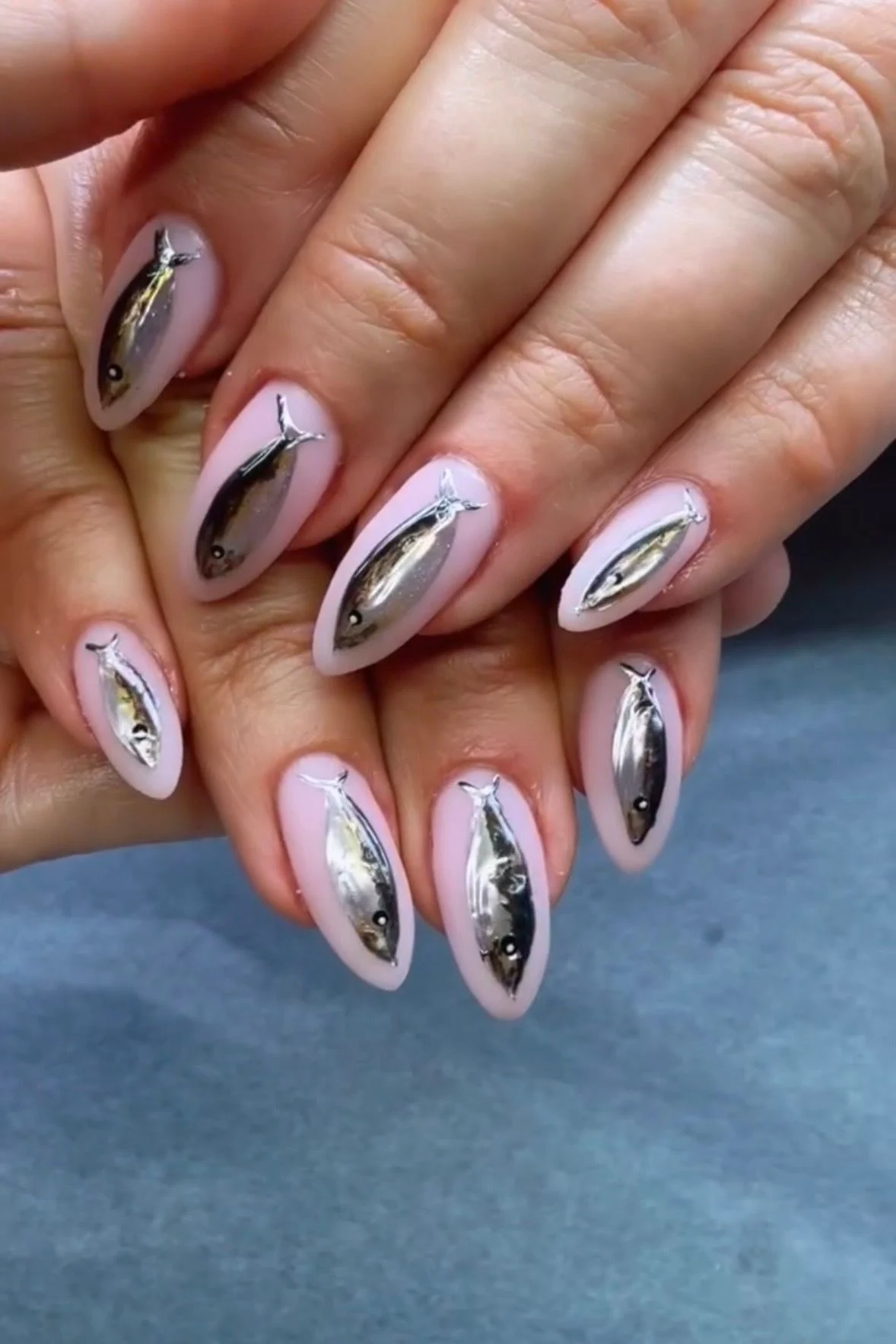
As consumers began to associate the sardine with wellness and a specific "European summer" aesthetic, the imagery began to permeate fashion. Beaded handbags shaped like sardine tins and lightweight dresses featuring aquatic prints appeared on runways and in boutique collections. The logical conclusion of this trajectory was the integration of the motif into nail art, a medium known for its ability to adopt and miniaturize complex cultural trends. The sardine manicure is characterized by its unexpectedness; it balances the kitsch of "camp" fashion with the technical precision of fine art.

The Pioneers of Aquatic Realism in Nail Art
Several high-profile nail artists have been instrumental in codifying the sardine manicure. Jen Seales, a prominent figure in the professional nail community, recently gained viral attention for a design she created for a client, which she described as "surprisingly chic." Seales’ approach utilizes a translucent nude base, allowing the focus to remain entirely on the hand-painted fish. Each nail features an individual sardine rendered in a palette of white, cerulean, and forest green, mimicking the natural coloration of the saltwater fish.
In Dallas, artist Cameron Short, known as @reallynichenails, took the concept a step further by drawing inspiration from fishing lures. Short’s work highlights a different facet of the trend: the "fishing-core" aesthetic. By studying real-life fishing lures and lures found on community forums like Reddit, Short developed a series of press-on nails that utilize 3D textures and metallic finishes to create a fotorrealistic representation of aquatic equipment. This specific niche emphasizes the "niche" in her brand name, appealing to a demographic that values hyper-originality over traditional beauty standards.
Hang Nguyen, a celebrity manicurist known as @thehangedit, has also contributed to the movement by expanding the taxonomy of fish-inspired nails. Rather than sticking solely to sardines, Nguyen has experimented with fotorrealistic designs of the cardinal tetra and other tropical species. According to Nguyen, the anatomy of a fish is uniquely suited for the nail canvas. "The shape of the fish fits perfectly with that of a natural nail," she noted, explaining that the elongated body of the fish mirrors the vertical space of the nail bed.

Technical Innovations Driving the Trend
The surge in popularity of the sardine manicure is not merely a result of changing tastes but also a reflection of technological advancements in nail products. The ability to create a "realistic" fish on a surface as small as a fingernail requires tools that were not widely available to the average consumer a decade ago.
- Magnetic Polishes (Cat-Eye Effect): These polishes contain tiny magnetic particles that can be manipulated with a magnet before the polish dries. In the context of fish nails, this technique is used to create the shimmering, shifting light effect seen on real scales.
- Chrome and Metallic Powders: The application of fine metallic powders over a gel base allows artists to achieve a mirror-like finish. This is essential for replicating the silver belly of a sardine.
- Building Gels and 3D Resins: To mimic the texture of a fish or a fishing lure, artists use thick building gels to create raised surfaces. This adds a tactile dimension to the manicure, moving it away from 2D painting and into the realm of sculpture.
- Micro-Painting Brushes: The precision required for the eyes and fins of a sardine necessitates ultra-fine synthetic brushes, which have seen a surge in sales as "micro-art" becomes a dominant trend in the industry.
Market Context and Consumer Demographics
The global nail care market is currently valued at approximately $11 billion and is projected to grow at a compound annual growth rate (CAGR) of 4.5% through 2030. Within this market, the "professional nail art" segment is the fastest-growing. Analysts attribute this to Gen Z and Millennial consumers who view manicures as a form of self-expression and "wearable art" rather than just a grooming routine.
The sardine trend fits into the "New Maximalism" category. After years of "Clean Girl" aesthetics—characterized by sheer pinks and neutral tones—there is a documented pivot toward "maximalist realism." Consumers are increasingly seeking out designs that serve as conversation starters. Data from social media listening tools indicate that searches for "unusual nail art" and "realistic animal nails" have increased by over 150% year-over-year.

Chronology of the Aquatic Aesthetic
To understand the current state of the sardine manicure, one must look at the timeline of ocean-inspired beauty trends over the last several seasons:
- Summer 2023: Mermaidcore. This trend focused on iridescent "pearl" finishes, seafoam greens, and soft pastels. It was a romanticized, fantasy-based version of the ocean.
- Spring 2024: Shell Textures. The trend moved toward 3D elements, with "oyster shell" nails and textured ridges becoming popular. This marked the beginning of a move toward more literal interpretations of the sea.
- Summer 2024: The Sardine Peak. The transition from fantasy (mermaids) to reality (sardines). This stage is defined by literalism, darker color palettes (deep blues and silvers), and a nod to culinary and Mediterranean influences.
- Forecast 2025/2026: Aquatic Industrialism. Experts predict the next phase will involve more "industrial" ocean elements, such as rusted anchor textures, fishing net patterns, and further explorations into the "fishing lure" aesthetic pioneered by artists like Cameron Short.
Broader Cultural Implications and Official Responses
The fashion industry has responded to the sardine trend with a mix of amusement and strategic adoption. Vogue US recently noted that the trend is "unexpectedly chic," a sentiment echoed by fashion editors who have begun pairing these manicures with high-end Mediterranean-inspired resort wear.
From a psychological perspective, the sardine manicure represents a "reclamation of the mundane." By taking a common, often overlooked object like a small fish and treating it with the reverence of fine art, consumers are expressing a desire for authenticity and humor in their personal style. It is a rejection of the overly polished, filtered aesthetic that dominated the 2010s.

Furthermore, the trend has implications for sustainability and environmental awareness. While the nails themselves are a cosmetic choice, the conversation around them often touches upon marine life and the health of the oceans. Some artists have used their platforms to highlight the importance of sustainable fishing practices, linking their art back to the source of their inspiration.
Conclusion: The Future of Ocean-Inspired Design
As we move toward the 2026 fashion cycle, the "Sardine Manicure" serves as a case study in how niche interests can achieve mainstream visibility through social media and technical innovation. The trend proves that there is no limit to what can be considered "aesthetic" in the modern era. Whether it is the iridescent shimmer of a sardine’s scales or the bright, neon colors of a fishing lure, the beauty industry is increasingly looking toward the natural—and sometimes the gritty—world for its next wave of inspiration.
The question for the next season is not whether aquatic designs will remain popular, but which specific creature will be the next to capture the public’s imagination. With the infrastructure for hyper-realistic nail art now firmly in place, the transition from sardines to more complex marine ecosystems is inevitable. For now, the sardine remains the reigning icon of this movement: a small, silver symbol of a culture that finds beauty in the most unexpected of places.

0 Comments