
 Nila Kartika Wati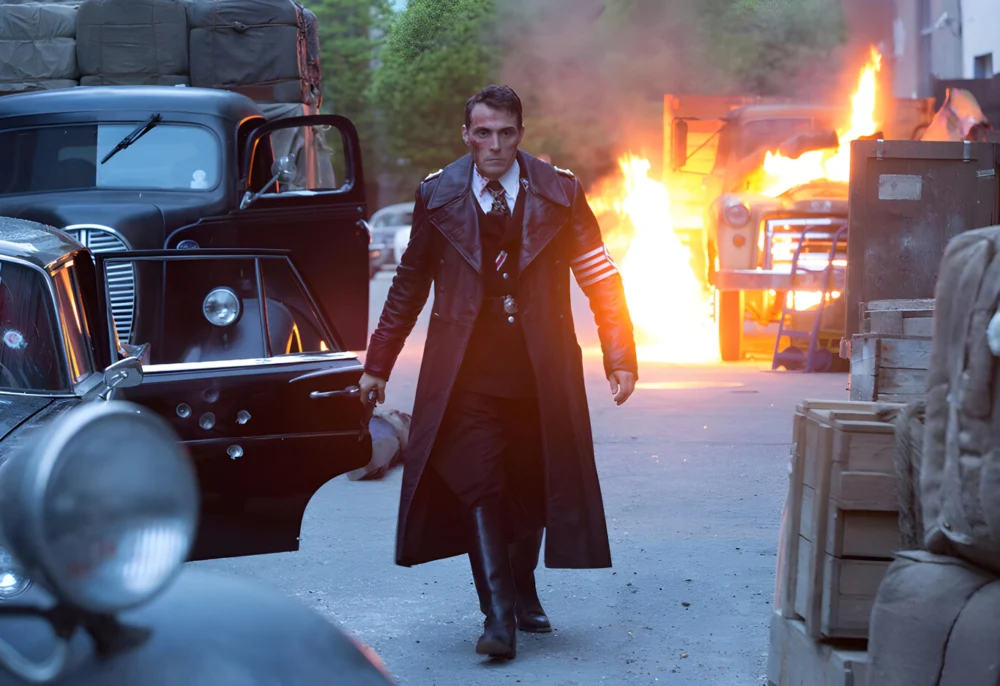
The landscape of digital streaming services has witnessed a significant shift with the unexpected migration of one of Amazon Prime Video’s most foundational original series, The Man in the High Castle, to the Netflix global catalog. After more than 4,000 days since its initial pilot debut in 2015, all four seasons of the dystopian science fiction drama are now available to a broader audience on Netflix, marking a rare instance where a flagship "Original" from one major tech-backed streamer becomes available on a primary competitor’s platform. This transition represents a strategic evolution in content licensing, as older prestige dramas are increasingly utilized to generate secondary revenue streams and reach demographic segments that may have bypassed the initial release window.
Historical Context and the Legacy of Philip K. Dick
The Man in the High Castle is an adaptation of the 1962 Hugo Award-winning novel of the same name by Philip K. Dick, a seminal figure in science fiction whose works have inspired cinematic landmarks such as Blade Runner, Total Recall, and Minority Report. The series explores an "alternate history" or uchronia—a subgenre of speculative fiction that reimagines the outcome of pivotal historical events. In this specific narrative, the Axis powers emerged victorious in World War II, leading to the total collapse of the United States and its subsequent occupation by foreign powers.
The television adaptation was spearheaded by Frank Spotnitz, known for his extensive work on The X-Files, and produced under the banner of Ridley Scott’s Scott Free Productions. When the pilot premiered in January 2015, it became Amazon’s most-watched original series pilot to date, signaling the retail giant’s serious intent to compete with established networks and Netflix in the realm of high-budget, prestige television. The show’s arrival on Netflix now provides a retrospective look at the era of "Peak TV" when streaming services began investing heavily in world-building and high-concept narratives.

A Detailed Chronology of the Series Development
The journey of The Man in the High Castle from page to screen was a decades-long process. Various attempts to adapt Dick’s complex novel were made throughout the 1990s and 2000s, but the scale of the world-building required a budget and creative freedom that traditional broadcast networks were hesitant to provide.
- January 2015: The pilot episode is released on Amazon Prime Video as part of their "pilot season" program, where viewer feedback determined which shows would receive full-season orders.
- November 2015: Season 1 premieres in its entirety, receiving critical acclaim for its visual fidelity and atmospheric tension.
- December 2016: Season 2 debuts, expanding the scope of the world beyond the borders of the former United States and introducing more overt science fiction elements, including the concept of the multiverse.
- October 2018: After a lengthy production hiatus and a change in showrunners, Season 3 is released, diving deeper into the "Heimat" (the Nazi homeland) and the scientific experiments regarding interdimensional travel.
- November 2019: The fourth and final season concludes the narrative, focusing on the Black Communist Rebellion and the ultimate fate of the ruling regimes.
- 2024: The series makes its debut on Netflix, signifying the end of its period of total exclusivity on the Prime Video platform.
Narrative Structure and Geographic World-Building
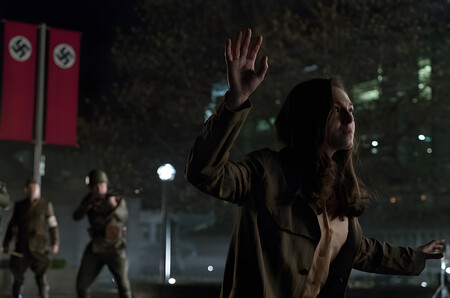
The series is set in 1962, twenty years after the Allied surrender. The geography of the former United States serves as a physical representation of the geopolitical tension between the two remaining superpowers. The East Coast and Midwest comprise the "Greater Nazi Reich," a territory characterized by brutal efficiency, advanced technology, and the systematic erasure of American cultural identity. The West Coast is governed as the "Japanese Pacific States," where traditional Japanese customs are superimposed onto the landscape of San Francisco and Los Angeles, creating a unique cultural synthesis.
Between these two empires lies the "Neutral Zone," a lawless buffer state along the Rocky Mountains where outcasts, refugees, and resistance members operate in the shadows. The plot is set in motion when Juliana Crain, a young woman living in San Francisco, comes into possession of a clandestine film reel titled The Grasshopper Lies Heavy. Unlike the propaganda newsreels of the era, this film depicts an alternate reality where the Allies won the war. This MacGuffin serves as the catalyst for a sprawling espionage thriller that questions the nature of reality, destiny, and the moral weight of individual choices within an oppressive system.
Technical Achievement and Production Design
One of the primary reasons for the sustained critical interest in the series is its impeccable production design. Executive Producer Ridley Scott brought a cinematic eye to the project, ensuring that the "Americanized" versions of Nazi and Imperial Japanese aesthetics felt grounded and terrifyingly plausible. The art department was tasked with creating everything from period-accurate consumer products with totalitarian branding to massive architectural projects, such as the "Volkshalle" in Berlin, based on the real-life designs of Albert Speer.

The show received two Primetime Emmy Awards for its cinematography and main title design, reflecting its status as a technical triumph. Industry analysts have often pointed to the series as a benchmark for how streaming platforms can achieve "feature film quality" on a serialized budget. The use of visual effects to transform modern-day Vancouver (the primary filming location) into 1960s New York and San Francisco remains a highlight of the production’s technical legacy.
Critical Reception and Supporting Data
Throughout its four-season run, The Man in the High Castle maintained a high level of critical standing. On the review aggregator Rotten Tomatoes, the series holds an overall critics’ score of 84%, with particular praise directed toward the performances of its ensemble cast.
- Rufus Sewell (John Smith): His portrayal of a high-ranking Nazi official who was once an American soldier was widely cited as one of the most complex "villain" arcs in modern television.
- Alexa Davalos (Juliana Crain): Critics lauded her ability to anchor the show’s increasingly metaphysical plot points with a grounded, emotional performance.
- Cary-Hiroyuki Tagawa (Nobusuke Tagomi): His character provided a philosophical heart to the show, exploring the spiritual implications of the multiverse.
The Hollywood Reporter described the series as a "triumph of production design," while Variety noted that the show "masterfully balances the political with the personal." The data suggests that while the show was a "slow burn" in terms of pacing, it maintained high retention rates among viewers who prioritized complex world-building over traditional action-oriented narratives.
Market Analysis: The Implications of Licensing Shifts
The move of The Man in the High Castle to Netflix is indicative of a broader trend in the "Streaming Wars." Historically, platforms like Amazon and Netflix guarded their original content with extreme exclusivity to drive subscriptions. However, as the market reaches saturation, the financial logic is shifting.
Industry analysts suggest several reasons for this move:
- Monetization of Library Content: Older "Originals" eventually reach a point of diminishing returns in terms of attracting new subscribers. Licensing these titles to other platforms allows the original creator to recoup production costs through licensing fees.
- Brand Synergy: By placing a Ridley Scott-produced series on Netflix, Amazon may be seeking to keep the IP relevant for potential future reboots or spin-offs, exposing it to Netflix’s larger global subscriber base of over 260 million users.
- The "Suits" Effect: Following the massive resurgence of the legal drama Suits after it moved to Netflix, many studios are hoping that "platform hopping" will breathe new life into older, high-quality shows that may have been overlooked during their initial runs.
Broader Impact on the Science Fiction Genre
The Man in the High Castle paved the way for a new wave of high-concept, high-budget science fiction on television. Before its success, many networks viewed "alternate history" as too niche for a mainstream audience. Following its release, we have seen an influx of similar projects, including HBO’s Watchmen, which also utilized alternate history to explore contemporary social issues, and Apple TV+’s For All Mankind, which imagines a world where the Soviet Union reached the moon first.
The series also contributed to the mainstreaming of the "multiverse" concept. Long before the Marvel Cinematic Universe made the idea of branching timelines a household topic, The Man in the High Castle was exploring the quantum mechanics and philosophical dread of knowing that a "better" version of the world exists just out of reach. It treated the multiverse not as a playground for cameos, but as a source of existential conflict for characters trapped in a nightmare.
Conclusion and Viewer Outlook
The availability of The Man in the High Castle on Netflix provides a timely opportunity for a new generation of viewers to engage with a story that remains disturbingly relevant. In an era of heightened political polarization and discussions regarding the fragility of democratic institutions, the show’s exploration of how ordinary people adapt to—or resist—totalitarianism offers more than just entertainment; it serves as a profound psychological study.

With all 40 episodes now accessible on the world’s largest streaming platform, the series is poised for a significant cultural reappraisal. Whether viewed as a cautionary tale, a technical masterpiece, or a faithful tribute to the mind of Philip K. Dick, The Man in the High Castle stands as a pillar of modern science fiction that has finally broken free from its platform-exclusive origins to claim its place in the wider digital canon.

 Eva Lovia
 Julia Chirkova
 Julia Prastini
 Jia Lissa
 admin
admin