
 Lina Irawan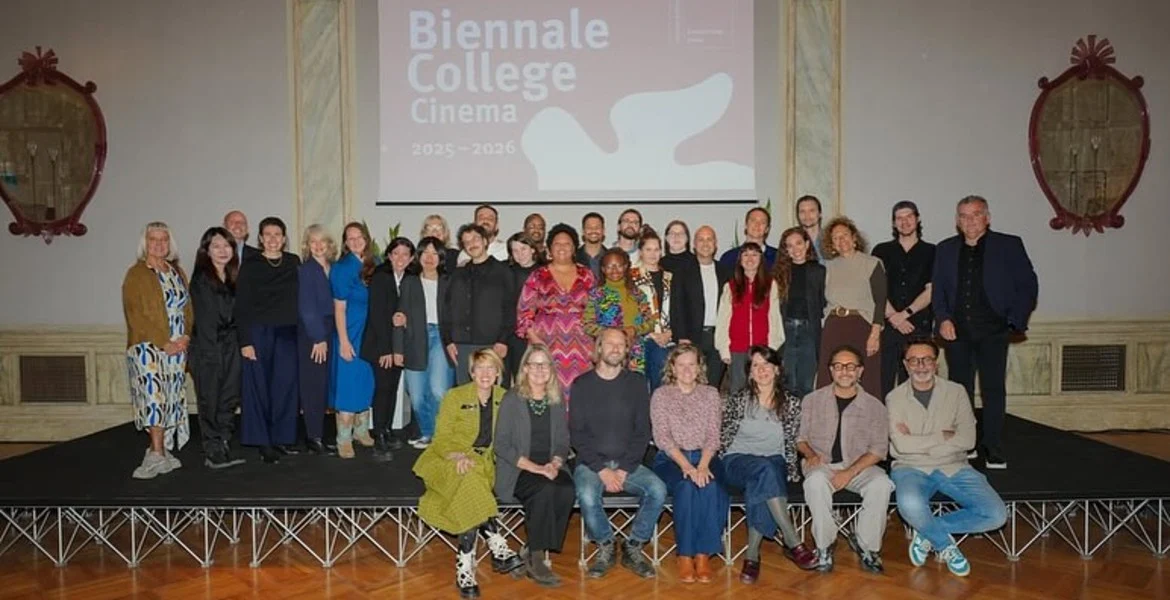
La Biennale di Venezia has officially opened the application process for the 15th edition of the Biennale College Cinema, a high-level training and production program designed to foster the development of micro-budget feature films from emerging directors and producers worldwide. This initiative, which has become a cornerstone of the Venice International Film Festival’s commitment to new talent, seeks to select up to nine projects led by teams consisting of a director and a producer. To be eligible, directors must be working on either their first or second feature-length film, while producers are required to demonstrate professional experience by having completed at least three previous productions.
The Biennale College Cinema is structured as a comprehensive incubator that provides more than just financial assistance. Selected teams will undergo an intensive training and development program conducted entirely in English. This curriculum is designed to cover the full spectrum of modern filmmaking, ranging from artistic development and script doctoring to the complexities of international production, financing, and marketing. Furthermore, the program places a significant emphasis on contemporary industry challenges, including audience design and global distribution strategies, ensuring that the resulting films are not only artistically sound but also commercially viable within the international festival circuit.
Following the initial workshop phase, a rigorous selection process will narrow the field down to four final projects. These selected films will move into the production stage, where they will each receive a government-backed grant of 200,000 euros from La Biennale di Venezia. This funding is intended to cover the entirety of the production costs under a micro-budget framework. According to the official guidelines, the films must be completed between January and August 2027, with their world premieres scheduled for the 2027 edition of the Venice International Film Festival. The deadline for international applications is set for July 6, 2024.
A Legacy of Supporting Latin American and Global Cinema
The Biennale College Cinema has established a formidable track record of nurturing projects that go on to achieve international acclaim. Latin American filmmakers, in particular, have found the program to be a vital springboard for their careers. Past participants who successfully navigated the program include José María Avilés from Ecuador with the film "Al Oriente," and José Pablo Escamilla from Mexico with "Lumbrensueño." Other notable alumni include Sol Berruezo Pichon-Rivière from Argentina, who developed "Nuestros días más felices," and Jorge Thielen Armand from Venezuela, whose film "La soledad" gained significant attention on the festival circuit.
More recently, the program supported the development of "Tijuana, todavía," the debut feature from Mexican director Gabriel Gutiérrez. This project was awarded one of the coveted production grants, highlighting the program’s continued focus on diverse voices from the Global South. By providing both the financial means and the professional network necessary to complete a feature film, the Biennale College Cinema effectively bridges the gap between independent vision and professional execution.
The Hubert Bals Fund and the HBF+Europe Post-Production Call
Parallel to the developments in Italy, the Hubert Bals Fund (HBF), managed by the International Film Festival Rotterdam (IFFR), has announced its 2026 call for the HBF+Europe: Post-production Support scheme. This initiative is specifically designed to assist filmmakers from Latin America, Africa, Asia, the Middle East, and certain regions of Eastern Europe who are in the final stages of completing their films. The program operates on a co-production model, requiring a partnership between a non-European producer and a European partner.
The HBF+Europe call is open until June 22, 2024, and targets feature-length fiction films or documentaries that have already completed principal photography and are currently in post-production. A key requirement for eligibility is that the project must not have confirmed a world premiere at the time of application. The application itself must be submitted by the minority European co-producer, who will also be responsible for managing the financial agreement and the disbursement of funds.
The fund prioritizes emerging filmmakers who are working on their first, second, or third feature films, although it remains open to more established directors who demonstrate a clear need for support. The selection committee will choose up to three projects, each eligible for a maximum grant of 60,000 euros. A specific financial stipulation of this grant is that 25% of the funds must be spent within the country of the applicant (the European co-producer), while the remaining 75% can be allocated to post-production expenses in other territories.
Chronology of Deadlines and Production Milestones
For filmmakers and producers planning their submission strategy, the following timeline outlines the critical milestones for both the Biennale College Cinema and the Hubert Bals Fund:
- June 22, 2024: Deadline for the Hubert Bals Fund (HBF+Europe) Post-production Support applications. This is the final date for European minority co-producers to submit documentation for films in the editing or sound-mixing stages.
- July 6, 2024: Deadline for the Biennale College Cinema international call. Teams must submit their project treatments, producer biographies, and director portfolios by this date.
- Late 2024 – Early 2025: Selection and initial workshops for the Biennale College Cinema. The nine selected teams will participate in the first round of intensive training in Venice.
- 2025 – 2026: Final selection of the four Biennale College Cinema projects that will receive the 200,000-euro production grant.
- January – August 2027: Production and post-production window for the films funded by the Biennale College Cinema.
- September 2027: World premiere of the Biennale College Cinema films at the 84th Venice International Film Festival.
Technical Requirements and Selection Criteria
The selection process for both programs is highly competitive, reflecting the prestige of the sponsoring institutions. For the Biennale College Cinema, the "micro-budget" designation is a central criterion. Projects must demonstrate that they can be realistically executed within the 200,000-euro limit without compromising artistic quality. The selection committee looks for "innovative and low-cost" approaches to storytelling that utilize creative cinematography and narrative structures to overcome financial constraints.
For the Hubert Bals Fund, the emphasis is on the "artistic necessity" of the project and its potential for international festival success. Since the fund is designed to support co-productions, the strength of the partnership between the European and non-European producers is scrutinized. The HBF seeks to support cinema that is socially relevant, aesthetically adventurous, and representative of the filmmaker’s local culture, while also being accessible to a global audience.
Broader Impact on the Global Film Industry
The existence of these two funding streams highlights a significant shift in how independent cinema is financed and distributed in the 21st century. As traditional studio financing becomes increasingly risk-averse, international film festivals have stepped in to act as incubators, financiers, and distributors. Programs like Biennale College Cinema and the Hubert Bals Fund are essential for maintaining diversity in the cinematic landscape, ensuring that voices from regions with less developed film infrastructures can still reach the world stage.
Industry analysts suggest that the rise of such "festival-led" production models has created a new ecosystem where the prestige of a festival selection is integrated into the very fabric of a film’s creation. By providing the funding and the premiere platform simultaneously, La Biennale di Venezia effectively guarantees its "College" films a level of visibility that most independent features struggle to achieve. Similarly, the Hubert Bals Fund’s post-production support often acts as the final "seal of approval" that helps a film secure a high-profile premiere at festivals like Rotterdam, Berlin, or Cannes.
Furthermore, the focus on co-production in the HBF+Europe scheme encourages long-term professional relationships between European and international production houses. This not only facilitates the transfer of technical expertise but also helps build a more integrated and collaborative global film community.
Official Reactions and Industry Implications
While official statements from the organizers emphasize the "educational and transformative" nature of these calls, industry reactions point to the practical necessity of such funds in an era of rising production costs. Producers in the Latin American and African sectors have frequently cited the Hubert Bals Fund as a "lifeline" for projects that might otherwise languish in the editing room due to a lack of local post-production grants.
The Biennale College Cinema, meanwhile, is praised for its "360-degree" approach. By teaching directors and producers about marketing and audience design alongside creative development, the program addresses a common criticism of film schools—that they often fail to prepare artists for the business realities of the industry. The 200,000-euro grant, while modest by Hollywood standards, is viewed by the independent community as a significant sum that allows for complete creative freedom, free from the commercial pressures of traditional financiers.
As the deadlines approach, the international filmmaking community remains focused on these opportunities as vital pathways for the next generation of cinematic storytellers. With the 2027 Venice Film Festival already on the horizon for prospective applicants, the cycle of development, production, and exhibition continues to serve as the heartbeat of the global independent film industry.



 Eva Lovia
 Julia Chirkova
 Julia Prastini
 Nila Kartika Wati
 Jia Lissa