
Historical Foundation and the 1863 Context
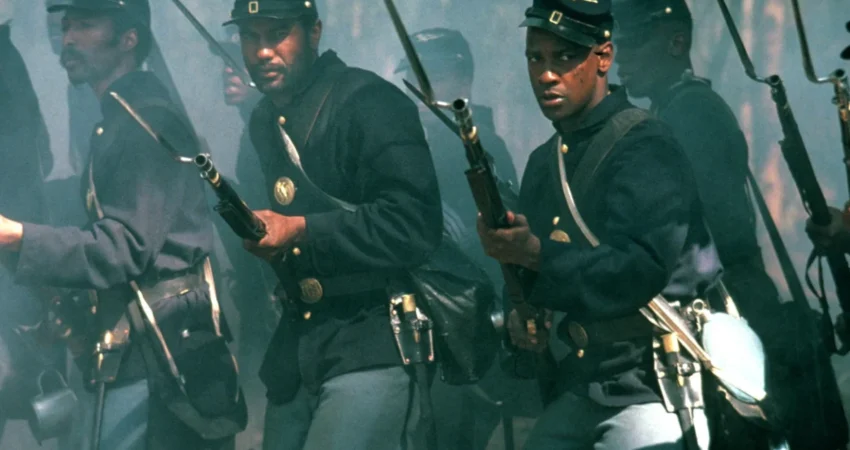
The narrative of the film is deeply rooted in the historical realities of 1863, a pivotal year for the United States. Following President Abraham Lincoln’s Emancipation Proclamation, which took effect on January 1, 1863, the Union Army officially began recruiting Black soldiers. The 54th Massachusetts was the brainchild of Governor John A. Andrew, an ardent abolitionist who sought to prove that African Americans possessed the courage and discipline required for military service.
To lead the regiment, Andrew selected Robert Gould Shaw, the young son of prominent Boston abolitionists. Shaw, portrayed in the film by Matthew Broderick, was only 25 years old when he accepted the colonelcy. The film utilizes Shaw’s real-life letters—which are currently preserved at Harvard University—to provide a narrative framework. These documents offer an intimate look at Shaw’s internal struggle as he transitioned from a privileged officer to a leader deeply committed to the men under his command. While Shaw is the central figure, the film’s strength lies in its depiction of the rank-and-file soldiers, many of whom were former slaves seeking to reclaim their dignity through the ultimate act of citizenship: fighting for the preservation of the Union and the end of slavery.
Production and Narrative Development
Directed by Edward Zwick and written by Kevin Jarre, the production of the film was an ambitious undertaking for TriStar Pictures. With a budget of approximately $18 million, the film aimed for a high degree of historical authenticity. This was achieved through the use of thousands of Civil War reenactors and meticulous attention to period detail, from the Enfields carried by the infantry to the specific shades of Union blue in the uniforms.
The narrative focuses on the internal and external battles faced by the 54th. Externally, they faced the Confederate Army, which had issued a decree stating that any Black soldier caught in a Union uniform would be executed or sold into slavery, and any white officer leading them would face similar execution. Internally, the men had to contend with the Union’s own institutional racism. The film highlights the pay disparity of the time; Black soldiers were initially paid $10 per month, minus a $3 clothing fee, while white privates received $13 with no deduction. The historical 54th Massachusetts famously refused to accept any pay at all until the disparity was corrected, a moment of collective defiance that is poignantly captured in the film.
The Performance of Denzel Washington and the Whipping Scene
While the ensemble cast was widely praised, Denzel Washington’s portrayal of Private Silas Trip, a defiant and cynical runaway slave, became the film’s emotional center. Washington’s performance was characterized by a raw, simmering intensity that represented the collective trauma and anger of the enslaved population.
The most discussed moment of the film is the sequence in which Trip is whipped for alleged desertion. In a display of "Method" acting, Washington insisted on being subjected to the physical reality of the scene to better inhabit the character’s psyche. The director, Edward Zwick, has frequently recounted the filming of this sequence, noting that the single tear that rolls down Washington’s cheek was unscripted and occurred naturally during the take.

"Denzel was prepared for anything and went deep into the character," Zwick stated in an interview with Den of Geek. "A deep humiliation, the theft of his dignity. I told the director of photography not to stop and to let the camera roll until Denzel could interpret the scene. What he discovered was the loss of control. And what followed is one of the most powerful moments I have seen in cinema." This scene served as a catalyst for Washington’s career, leading to his first Academy Award for Best Supporting Actor in 1990.
Technical Excellence and Artistic Contributions
The visual and auditory landscape of the film contributed significantly to its impact. The cinematography, handled by the legendary Freddie Francis, captured the grime of the camps and the chaotic horror of the battlefield with a painterly quality. Francis was awarded an Oscar for his work, specifically for his ability to use natural light to evoke the mid-19th century.
The musical score, composed by James Horner, is often cited as one of the greatest in the history of war films. Incorporating the Boys Choir of Harlem, Horner’s score provided a choral, almost spiritual weight to the soldiers’ journey. The music does not merely underscore the action; it elevates the sacrifice of the 54th to a mythic level, particularly during the climactic assault on Fort Wagner.
Critical Reception and Awards
Upon its release on December 15, 1989, the film received near-universal acclaim. On the review aggregator Rotten Tomatoes, it maintains a 95% approval rating, with critics praising its refusal to sanitize the brutality of the era. The late Roger Ebert gave the film 3.5 out of 4 stars, noting that while the film is seen through the eyes of a white officer, the "real subject" is the Black soldiers who earned their place in history.
At the 62nd Academy Awards, the film was nominated for five Oscars and won three:
- Best Actor in a Supporting Role: Denzel Washington
- Best Cinematography: Freddie Francis
- Best Sound: Donald O. Mitchell, Gregg Landaker, Elliot Tyson, and Russell Williams II
The film’s success at the Oscars signaled a growing appetite in Hollywood for historical dramas that addressed the complexities of the American identity and the unresolved scars of the Civil War.
Historical Accuracy and Creative Liberties
While the film is lauded for its authenticity, historians have noted several creative liberties taken by the screenwriters. For instance, the characters of Trip (Washington) and Rawlins (Freeman) are fictionalized composites intended to represent the diverse backgrounds of the soldiers. In reality, a significant portion of the 54th Massachusetts consisted of free Black men from the North, including two sons of the famed abolitionist Frederick Douglass.
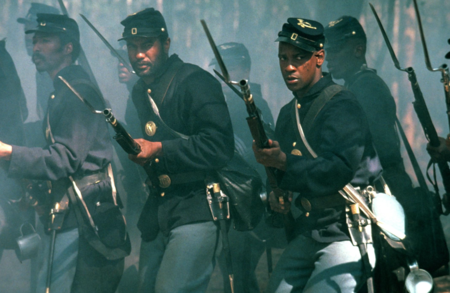
The film’s climax—the July 18, 1863, assault on Fort Wagner in South Carolina—is historically accurate in its outcome but dramatized in its choreography. The 54th suffered nearly 50% casualties during the charge, including Colonel Shaw, who was buried in a mass grave with his men. The Confederate commanders intended this as an insult, but Shaw’s family famously responded that there was no holier place for him to be buried than with his brave and devoted soldiers. This historical postscript reinforces the film’s theme of brotherhood transcending social and racial barriers.
Broader Impact and Cultural Implications
The legacy of the film extends far beyond the box office. Before its release, the contribution of Black soldiers to the Union victory was a footnote in many American history textbooks. The film’s popularity spurred a renewed interest in the United States Colored Troops (USCT), leading to increased scholarship and the dedication of various memorials.
The film is frequently used in educational settings to facilitate discussions on the Civil War, the abolitionist movement, and the evolution of civil rights. It challenges the "Lost Cause" mythology by centering the narrative on the agency of Black men fighting for their own liberation. By showing these men not just as victims of slavery, but as disciplined, fierce, and noble soldiers, the film reframed the historical narrative for a modern audience.
Contemporary Accessibility
In the current digital landscape, the film remains a staple for cinephiles and history enthusiasts alike. As of late 2023, the film is available for digital rental and purchase on major platforms including Amazon Prime Video and Apple TV. Its continued presence on streaming services ensures that new generations can witness the performances of Washington and Freeman, and engage with the enduring questions of honor, sacrifice, and the definition of a "just war."
The film serves as a reminder that the struggle for dignity is a perennial theme in the human experience. Through the meticulous direction of Edward Zwick and the transformative performances of its cast, the production remains a visceral exploration of courage. It does not merely reconstruct the past; it makes the viewer feel the weight of history with an intensity that few war films have matched in the decades since its premiere.

0 Comments