
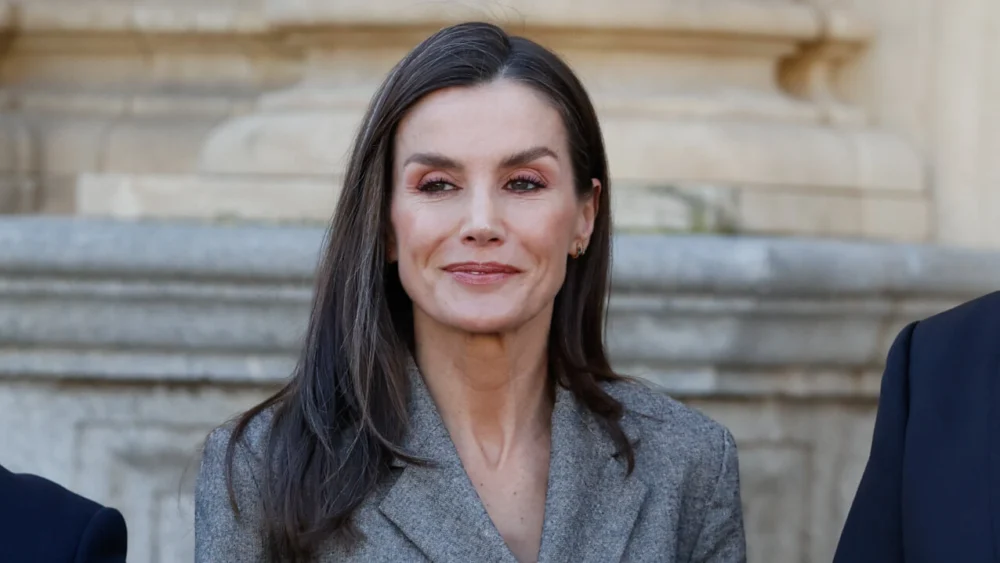
The Spanish monarch, Queen Letizia, presided over the closing ceremony of the third edition of the Master’s Degree in International Reporting on March 12, an event jointly organized by Radio Televisión Española (RTVE) and the University of Alcalá (UAH). Held at the historic premises of the University of Alcalá de Henares, a UNESCO World Heritage site, the ceremony served as a platform for the Queen to reinforce her long-standing commitment to the integrity of the press and the promotion of Spanish industry. Dressed in a sophisticated grey sartorial ensemble from the Spanish retail giant Zara, the Queen’s appearance was not merely a fashion statement but a calculated nod to the "working girl" aesthetic that has come to define her contemporary royal persona.

During the event, Queen Letizia, who worked as a journalist for CNN+ and TVE before her marriage into the Royal House, delivered a series of remarks highlighting the evolving challenges of the media landscape. She specifically addressed the necessity of protecting the journalistic profession in an era of rapid technological transition, emphasizing the ethical integration of Artificial Intelligence (AI) and the enduring importance of on-the-ground reporting. The ceremony was attended by prominent figures from the Spanish media sector, academic authorities from UAH, and the graduating cohort of students who represent the next generation of international correspondents.
A Strategic Return to Journalism Roots
For Queen Letizia, the graduation ceremony at the University of Alcalá was more than a routine official engagement. It represented a homecoming to the professional world she inhabited for over a decade. Before becoming the Princess of Asturias in 2004, Letizia Ortiz Rocasolano was a highly respected journalist, covering major international events such as the 9/11 attacks in New York and the Iraq War. Her presence at a Master’s program for International Reporting adds a layer of institutional weight and personal credibility to the proceedings.

The Master’s program, a collaboration between Spain’s public broadcaster RTVE and one of the world’s oldest universities, is designed to equip students with the tools necessary to navigate the complexities of global news. In her address to the graduates, the Queen noted that the role of the reporter is more vital than ever in a world saturated with misinformation. She urged the new journalists to maintain the "human element" of storytelling, even as digital tools and AI become more prevalent in newsrooms.
The Queen’s focus on AI reflects a broader European discourse regarding the regulation of digital content and the preservation of intellectual property in journalism. By addressing these topics, the Spanish monarchy aligns itself with contemporary social and professional concerns, positioning the Crown as an institution that is engaged with the technical and ethical shifts of the 21st century.

Chronology of the Royal Visit
The official visit followed a precise itinerary designed to maximize interaction between the Queen and the academic community:
- 11:00 AM – Arrival and Official Reception: Queen Letizia arrived at the Rectorate of the University of Alcalá, where she was greeted by the Rector of UAH, the President of RTVE, and local government officials.
- 11:15 AM – Briefing Session: A private meeting was held with the directors of the Master’s program to discuss the curriculum’s adaptation to the current geopolitical climate and the impact of the RTVE training center (Instituto RTVE).
- 11:45 AM – Graduation Ceremony: The main event took place in the Paraninfo, the university’s historic Great Hall. The Queen listened to the valedictorian speech and participated in the distribution of diplomas to the graduating class.
- 12:30 PM – Keynote Address: The Queen offered her closing remarks, focusing on the defense of the profession and the challenges of international reporting.
- 1:00 PM – Informal Meeting: Following the ceremony, the Queen spent time with the students and their families, engaging in informal conversations about their professional aspirations and the current state of the media.
The "Letizia Effect" and the Choice of Spanish Sastrería
From a stylistic perspective, the Queen’s choice of attire for the March 12 event was a masterclass in professional elegance. She opted for a grey, two-piece suit with a subtle marl or "jaspeado" effect, sourced from Zara. This choice is significant for several reasons. Firstly, it continues her tradition of supporting "Marca España" (Brand Spain), blending high-end accessories with accessible "Made in Spain" garments.

The suit featured a structured blazer with defined shoulder pads and a slightly tailored waist, which the Queen wore fastened to emphasize a sharp, professional silhouette. This was paired with straight-leg trousers that offered a classic, flattering drape. The ensemble was a departure from the more romantic, ruffled blouse she had worn just a day prior at the Zarzuela Palace, signaling a shift to a more sober, "executive" demeanor suitable for an academic and professional environment.
To complete the look, she chose black polished leather loafers from the Menorcan brand Pons Quintana. The shift from high heels to flat or low-heeled shoes has been a notable trend in the Queen’s recent appearances, attributed by royal commentators to both a desire for a more modern, pragmatic image and her well-documented foot condition (chronic metatarsalgia and Morton’s neuroma). Her jewelry was kept to a minimum, featuring discreet gold earrings from the Spanish firm Gold & Roses.

The economic impact of her wardrobe choices, often referred to as the "Letizia Effect," remains substantial. When the Queen wears a garment from a mass-market retailer like Zara, it frequently leads to a surge in sales for that specific item, reinforcing Inditex’s position as a cornerstone of the Spanish economy.
The Power Suit as a Permanent Wardrobe Staple
The Queen’s appearance coincides with a resurgence of tailoring in global fashion. For decades, the "power suit" has served as a symbol of female authority and professional competence. This season, major fashion houses have reaffirmed the suit’s status as an essential wardrobe component.

- Giorgio Armani: Often credited with revolutionizing the suit for both men and women, the Armani legacy continues to prioritize "slow tailoring"—meticulously constructed garments designed to last a lifetime. The Spring/Summer 2026 collections from Armani have featured grey and neutral tones similar to those worn by the Queen.
- Max Mara: Known for its architectural approach to clothing, Max Mara’s latest runway shows have highlighted the grey suit as the ultimate "utility" luxury for the modern woman.
- Dior and Chanel: While Dior has reimagined its iconic Bar jacket in various grey wools, Chanel has adapted its classic tweed into suit-like combinations that bridge the gap between tradition and modern office wear.
The Queen’s Zara ensemble mimics these high-fashion silhouettes, making the "royal look" attainable for the general public. For those looking to replicate the style, the current market offers several alternatives:
- Zara: Offers wool-blend blazers and matching trousers that emphasize structure and neutrality.
- H&M: Provides "oversize" variations for a more relaxed, "working girl 2.0" aesthetic.
- NA-KD: Focuses on relaxed-cut designs that move away from the rigidity of traditional corporate wear.
Broader Implications for the Spanish Monarchy
The Queen’s participation in the RTVE-UAH ceremony is part of a broader strategy by the Spanish Royal House to modernize the institution’s image. By focusing on education, professional excellence, and the challenges of the digital age, Queen Letizia helps to project a monarchy that is useful, informed, and synchronized with the concerns of the Spanish citizenry.

Furthermore, her defense of the journalism profession comes at a time when the media is facing significant economic and social pressure. Her call to "protect the profession" is seen by analysts as a subtle but firm defense of the freedom of the press and the necessity of objective truth in a democratic society.
As the ceremony concluded, the Queen’s message was clear: whether through the lens of a camera or the fabric of a suit, the commitment to quality, heritage, and the future remains the guiding principle of her public service. The graduates of the third edition of the Master’s in International Reporting leave their studies not only with a diploma but with a royal endorsement of their chosen path, reminding them that in an age of AI, the human reporter remains irreplaceable.

0 Comments