
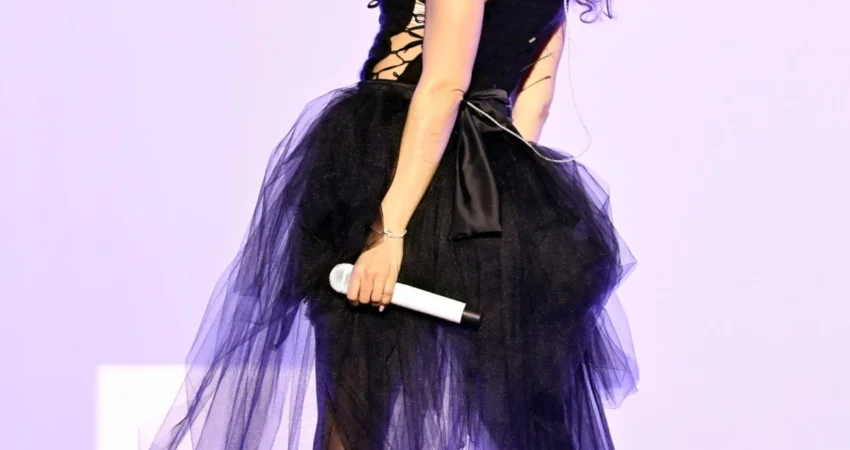
The Spanish singer-songwriter Rosalía has officially brought her internationally acclaimed LUX Tour to a close, culminating in a series of high-profile performances in Mexico that underscored the deep cultural ties between her contemporary avant-garde style and traditional Latin American music. During the final leg of the tour, the artist revealed that her hit single "La Perla" was fundamentally shaped by the influence of Mexican ranchera icon Paquita la del Barrio. Specifically, Rosalía cited the legendary track "Rata de dos patas" as the primary inspiration for a song that has evolved into a modern anthem for those navigating the complexities of heartbreak and betrayal. This revelation provides critical context for the "confessional" segment of her show, a theatrical centerpiece that has garnered significant attention across social media and the global music industry.
The Evolution of the Confessional Ritual
Throughout the LUX Tour, the performance of "La Perla" transitioned from a standard musical number into an interactive ritual of vulnerability and storytelling. The staging featured a stylized confessional booth where Rosalía invited a "special guest"—often a high-profile figure from the local culture of the host city—to share a personal anecdote regarding a "perla" (a term used here to describe a person who caused emotional distress or significant romantic disappointment).
This segment served a dual purpose: it humanized the global superstar by positioning her as a confidante and provided a platform for other public figures to dismantle their polished personas. The resulting stories ranged from the humorous to the profoundly moving, creating a unique rapport with audiences that often exceeded tens of thousands of attendees per night. Industry analysts suggest that this level of audience engagement has set a new precedent for how pop stars integrate fan interaction and guest appearances into the narrative structure of a concert.
Chronology of Key Confessions Across the LUX Tour
The confessional segment visited multiple global hubs, with each guest bringing a distinct perspective on the "perla" archetype. The following chronology highlights the most impactful moments of the tour’s narrative arc:
Buenos Aires: La Joaqui and the Weight of Expectations
In Argentina, the singer La Joaqui utilized the confessional to discuss the internal pressure of romantic expectations. She recounted a specific journey where she anticipated a marriage proposal, only to realize that her partner did not share those intentions. La Joaqui’s testimony was notable for its self-reflection; she identified the "perla" not as the individual, but as her own willingness to accept "doses of love that were insufficient" out of a fear of abandonment. This moment resonated deeply with the Argentinian audience, highlighting the psychological nuances of modern dating.
Madrid: Aitana and the Sincerity of Infidelity
During the Madrid stop, Spanish pop sensation Aitana shared a story that immediately triggered widespread speculation among fans and the press. She described an ex-partner who, after one year of relationship, explicitly stated his intention to be unfaithful. Rosalía’s probing questions led to the suggestion that the individual in question was a fellow musician who had previously utilized public relations maneuvers involving Aitana’s image. The confession highlighted the often-cynical intersections of celebrity romance and marketing.
Bogotá: Tokischa’s Unconventional Narratives
In Colombia, the Dominican artist Tokischa, a frequent collaborator of Rosalía, brought a lighter, more transgressive tone to the stage. Given their well-documented friendship and professional history (including hits like "Linda"), the two shared a rapport that allowed Tokischa to candidly discuss her past experiences as a "sugar baby." This confession aligned with Tokischa’s public persona of radical honesty and sexual liberation, further diversifying the types of stories shared within the confessional framework.
Los Angeles: Karol G and the Airport Abandonment
The Los Angeles performance featured Colombian superstar Karol G, who provided one of the most dramatic accounts of the tour. She detailed a relationship where her partner refused to celebrate her birthday and ultimately ended the relationship in an airport waiting room just before a scheduled trip. Karol G’s description of "unloading her bags" and "getting off the flight" served as a powerful metaphor for reclaiming her autonomy, a theme that has defined much of her recent discography.
London: Cara Delevingne and Gender Dynamics
In the United Kingdom, actress and model Cara Delevingne joined Rosalía to discuss the challenges of her romantic history. Delevingne spoke about her recurring attraction to heterosexual women, describing it as a "challenge." She further critiqued traditional gender dynamics, suggesting a dissatisfaction with the emotional and physical labor often found in heteronormative structures. This confession added a layer of socio-political commentary to the segment, touching on queer identity and the fluidity of attraction.
The Mexican Finale: A Return to Roots
The conclusion of the LUX Tour in Mexico City was a massive cultural event, drawing over 60,000 spectators. The final confessionals featured Mon Laferte and Wendy Guevara, two figures who represent very different but equally significant facets of the Mexican cultural landscape.
Mon Laferte, the Chilean-Mexican singer-songwriter, offered a subversive take on the confessional by identifying herself as the "perla." She confessed to the "sin" of loving too intensely and dedicating entire albums to individuals who did not deserve her artistic labor. Rosalía’s response—that Laferte’s only crime was "dedicating songs that were too good to men who were too foolish"—was met with thunderous applause, reinforcing the tour’s theme of female empowerment through art.
The final guest of the tour was Wendy Guevara, the social media personality and television host who has become a symbol of trans visibility in Mexico. Guevara spoke with raw honesty about a past relationship where she was financially exploited and "hidden away" by her partner. Her use of the colloquialism "hiding me like a stolen motorcycle" struck a chord with the audience. Rosalía’s closing statement to Guevara—"He who does not care for you, he who does not love you, let him go to hell"—served as the definitive end to the tour’s narrative cycle.
Supporting Data and Tour Impact
The LUX Tour has been a commercial and critical powerhouse. While official final figures are still being tallied by promoters, preliminary data suggests the following impact:
- Attendance: The tour reached an estimated 1.5 million fans across four continents.
- Social Media Reach: Clips from the "La Perla" confessionals have generated over 500 million views across TikTok and Instagram, significantly boosting the track’s streaming numbers on platforms like Spotify and Apple Music.
- Economic Influence: In Mexico City alone, the tour’s final nights contributed to a significant spike in local hospitality and tourism revenue, particularly in the areas surrounding the venue.
- Cultural Legacy: The integration of Paquita la del Barrio’s influence has led to a 25% increase in searches for "Rata de dos patas" among Gen Z listeners in Spain and the United States, indicating a cross-generational and cross-border musical exchange.
Analytical Implications of the Confessional Format
From a journalistic and musicological perspective, Rosalía’s LUX Tour represents a shift toward "narrative-driven" live performances. By utilizing the confessional booth, Rosalía moved beyond the role of a traditional singer and assumed the role of a curator of human experience. This format addresses the modern audience’s desire for authenticity and "behind-the-scenes" access, even within the highly produced environment of a stadium tour.
Furthermore, the choice of guests indicates a strategic effort to align with local movements and identities. By featuring artists like Tokischa, Karol G, and Wendy Guevara, Rosalía successfully navigated the diverse cultural landscapes of the Spanish-speaking world, positioning herself as a unifying figure in the global "Latino" and "Hispanidad" music explosion.
Conclusion and Broader Impact
The LUX Tour concluded not just as a series of concerts, but as a comprehensive cultural statement. By connecting the dots between the raw, emotive power of Paquita la del Barrio and the sleek, digital-age production of the 21st century, Rosalía has solidified her position as a bridge between tradition and the future.
The "La Perla" confessionals will likely be remembered as the defining feature of this era of her career—a masterclass in how to turn personal heartbreak into a collective, celebratory experience. As the artist prepares for her next creative chapter, the industry will undoubtedly look to the LUX Tour as a blueprint for high-concept, emotionally resonant global touring. The final message of the tour remains clear: the "perlas" of the past are merely stepping stones to the empowerment of the present.

0 Comments