
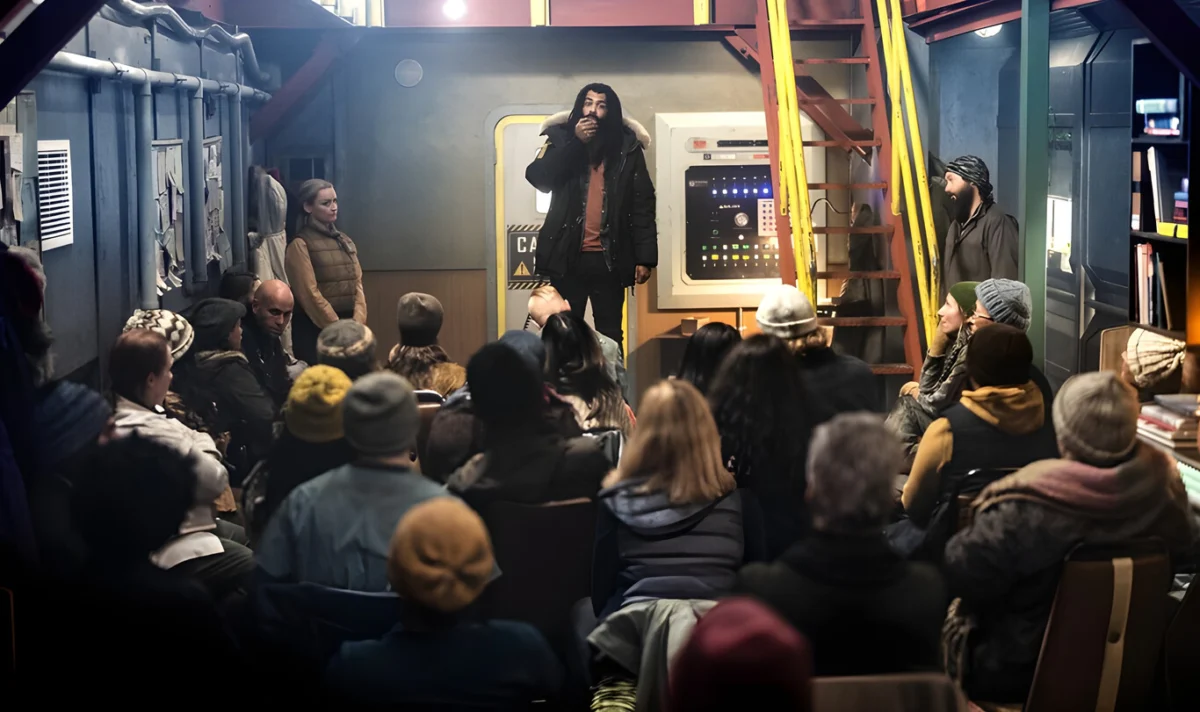
The landscape of contemporary science fiction has been significantly shaped by stories of survival against insurmountable odds, yet few titles have managed to capture the claustrophobic tension of societal collapse as effectively as Snowpiercer. Currently available on Netflix in various international territories, the series serves as a sprawling expansion of the 2013 film directed by Academy Award winner Bong Joon-ho. As a reimagining of both the film and the seminal 1982 French graphic novel Le Transperceneige, the television production delves into the intricacies of human nature, resource management, and the brutal reality of a rigid class hierarchy. Set seven years after the world has become a frozen wasteland, the narrative follows the remnants of humanity as they inhabit the Snowpiercer, a massive, perpetually moving train consisting of 1,001 cars that circles the globe to maintain heat and life.
The Foundations of the Frozen Wasteland
The intellectual property behind Snowpiercer originated with the graphic novel Le Transperceneige, written by Jacques Lob and illustrated by Jean-Marc Rochette. The source material provided a bleak, monochromatic look at a future where geoengineering gone wrong—specifically the release of the cooling agent CW-7—plunged the Earth into a new ice age. The 2013 film adaptation brought this vision to a global audience, starring Chris Evans and Tilda Swinton, and established the core metaphor: the train as a microcosm of global capitalism.
The television series, which premiered in 2020, takes a different approach to the timeline. While the film was a high-octane sprint from the "Tail" to the "Engine," the series functions as a slow-burn political thriller and police procedural. It introduces Andre Layton (Daveed Diggs), the world’s last remaining homicide detective, who is brought forward from the impoverished Tail section to solve a murder in the opulent First Class cars. This narrative choice allows the audience to explore the train’s complex infrastructure and the diverse factions that keep the "Great Ark" running.
A Chronology of Development and Distribution
The path to bringing Snowpiercer to the small screen was marked by significant production challenges and network transitions. Understanding the timeline of the series is essential for viewers, particularly regarding its availability on streaming platforms like Netflix.
In 2015, Tomorrow Studios optioned the rights to the story, and by 2016, a pilot was ordered by TNT. The development process was prolonged by creative differences; the original pilot director, Scott Derrickson, famously declined to participate in reshoots after a change in showrunners from Josh Friedman to Graeme Manson. Despite these behind-the-scenes hurdles, the series premiered on May 17, 2020, to strong viewership numbers.
The distribution of the series has been equally complex. While Netflix holds the international streaming rights for the first three seasons, the production was caught in the crossfire of the Warner Bros. Discovery merger in 2023. As a result, the fourth and final season was removed from TNT’s schedule as a cost-cutting measure, despite production being completed. In early 2024, AMC acquired the rights to the fourth season, which premiered in July 2024 in the United States. However, for viewers in regions like Mexico, the fourth season remains absent from the Netflix library, creating a fragmented viewing experience that often leads fans back to the original 2013 film to find thematic closure.
Narrative Mechanics and Production Design
One of the most significant enrichments the series offers over its cinematic predecessor is the sheer scale of its production design. The train is not merely a setting but a character in its own right. The production team, led by designer Barry Robison, created distinct visual identities for each of the train’s "classes."

First Class is characterized by neo-classical elegance, featuring lush dining rooms, a "Nightcar" for entertainment, and even an aquarium car that serves as both a luxury and a food source. Second and Third Class represent the industrial backbone of the train, consisting of laboratories, agricultural cars (the "Ag-Sec"), and cramped living quarters. The Tail, conversely, is a dark, windowless void of repurposed shipping containers, reflecting the desperation of those who boarded the train by force during the "Departure."
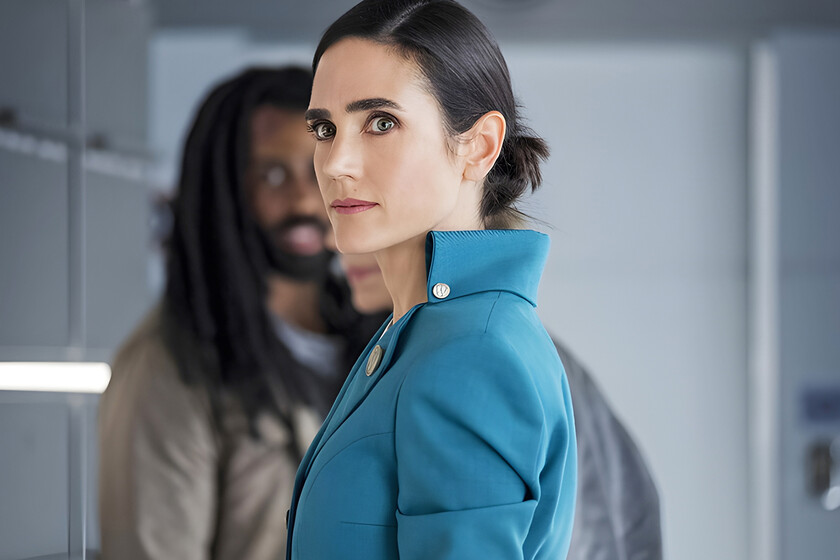
This detailed environment serves the series’ central theme: the fragility of a closed ecosystem. The show meticulously tracks the "calories in vs. calories out" logic of the train. Every riot in the Tail affects the oxygen levels in the Front; every technical failure in the Engine threatens the survival of all 3,000 passengers. This interdependence creates a high-stakes political environment where Melanie Cavill (Jennifer Connelly), the Head of Hospitality and the "Voice of the Train," must balance authoritarian control with the constant threat of revolution.
Analysis of Sociopolitical Implications
Snowpiercer functions as a stark critique of contemporary social structures. By physicalizing the "upward mobility" of the American Dream into a literal move from the back of a train to the front, the series highlights the systemic barriers that prevent equality.
- Class Warfare and Resource Allocation: The series explores the ethics of rationing. In a world with finite resources, who decides who eats? The First Class passengers, who funded the train’s construction, believe their survival is a contractual right. The Tailies, who represent the "uninvited," argue for the fundamental right to exist.
- Climate Change and Geoengineering: The backstory of the "Freeze" serves as a cautionary tale regarding "techno-fixes" for environmental crises. The disaster was caused by humans attempting to reverse global warming with chemicals, suggesting that human intervention often yields unpredictable and catastrophic results.
- The Burden of Leadership: Through the character of Melanie Cavill, the show examines the moral compromises required to maintain order. Is a lie—such as the status of the train’s mysterious creator, Mr. Wilford—justified if it prevents a total societal collapse?
Official Responses and Industry Impact
The series has received praise for its diverse casting and its ability to maintain tension over multiple seasons. Daveed Diggs has noted in interviews that the show’s depiction of a "forced community" resonates with modern urban living, where people of vastly different backgrounds are pushed into close proximity.
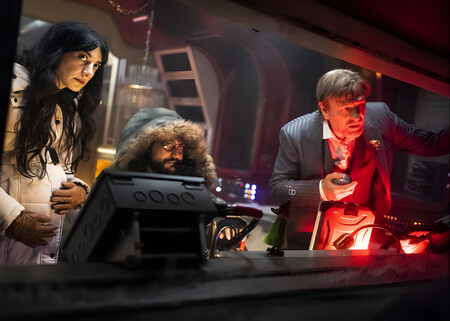
Critics have pointed out that while the film was a metaphor for revolution, the series is a study of governance. The transition of the series from TNT to AMC was cited by industry analysts as a prime example of the "streaming wars" and the volatility of content ownership in the 2020s. The fact that a high-budget, critically acclaimed show could be shelved for tax purposes (before being rescued by AMC) sent shockwaves through the television industry, highlighting the precarious nature of modern media production.
Broader Impact and Comparative Legacy
When compared to other dystopian works like V for Vendetta or Fahrenheit 451, Snowpiercer stands out for its focus on the physical logistics of survival. While V for Vendetta focuses on the ideology of resistance, Snowpiercer asks how that resistance manages its water supply the day after the revolution.
The series also serves as a gateway to the broader "K-Content" influence in Hollywood. Though the series is an American production, its DNA is inextricably linked to Bong Joon-ho’s vision. His influence is felt in the show’s "darkly comedic" moments and its refusal to provide easy moral answers. For viewers who have exhausted the three seasons available on Netflix, the 2013 film remains an essential companion piece, offering a more visceral, symbolic conclusion to the class struggle that the series explores with such granular detail.
In conclusion, Snowpiercer is more than a survival story; it is a complex simulation of human society under pressure. Its presence on Netflix provides a global audience with a mirror to their own societal anxieties, wrapped in the steel and steam of a 1,001-car locomotive. Despite the logistical hurdles of its final season’s distribution, the series remains a pinnacle of modern science fiction, proving that even at the end of the world, the wheels of politics and the struggle for justice never stop turning.

0 Comments