
 Nila Kartika Wati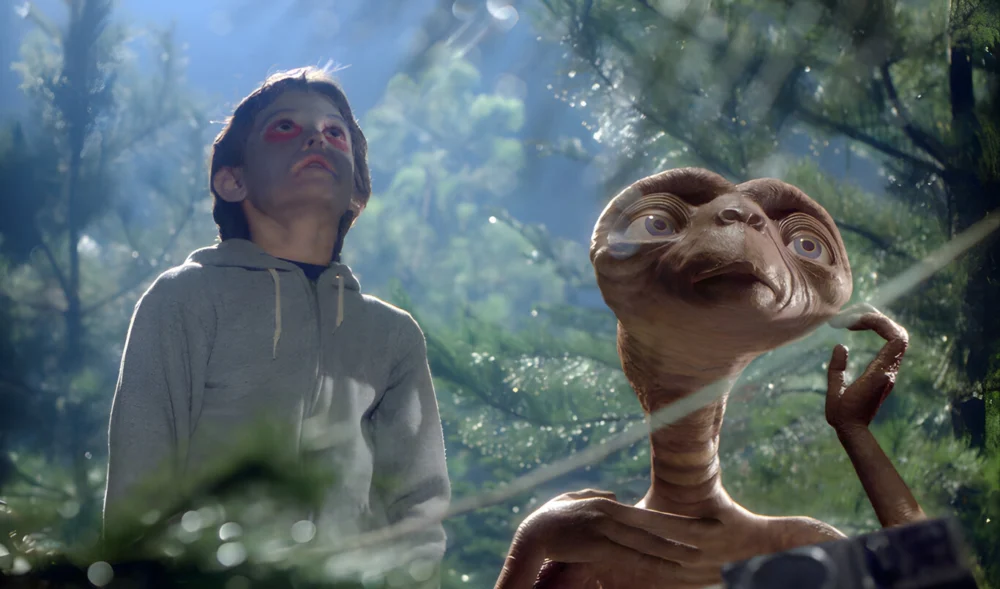
The resurgence of classic cinema in the digital age has reached a new milestone as Steven Spielberg’s 1982 opus, E.T. The Extra-Terrestrial, has officially entered the Top 10 most-watched films on HBO Max in Mexico and several other Latin American territories. Despite being over four decades old, the film’s arrival on the streaming platform has triggered a massive wave of viewership, outperforming several contemporary high-budget releases. This phenomenon underscores a growing trend within the streaming industry where legacy content—defined by high emotional resonance and universal themes—continues to serve as a primary driver for subscriber engagement.
The narrative of E.T. The Extra-Terrestrial follows Elliott, a ten-year-old boy living in suburban California, who discovers a gentle alien botanist stranded on Earth after his scouting party is forced to flee. As Elliott and his siblings, Gertie and Michael, work to keep the creature hidden from both their mother and the federal government, a psychic and emotional bond forms between the boy and the visitor. This connection serves as the emotional anchor of the film, culminating in the iconic quest to help the alien "phone home" and return to his planet.
The Genesis and Production of a Cinematic Icon
The origins of E.T. are deeply rooted in Steven Spielberg’s personal history. Following his success with Close Encounters of the Third Kind (1977) and Raiders of the Lost Ark (1981), Spielberg sought to create a more intimate story. The concept originated from an imaginary friend Spielberg created as a child to cope with his parents’ divorce in 1960. Working with screenwriter Melissa Mathison, Spielberg developed a script that balanced the wonder of science fiction with the grounded reality of a fractured suburban family.
From a technical standpoint, the production was a landmark in practical effects. At a time when computer-generated imagery (CGI) was in its infancy, the realization of the alien character fell to special effects artist Carlo Rambaldi. The E.T. puppet was a marvel of animatronics, costing approximately $1.5 million to develop—a significant portion of the film’s $10.5 million budget. Rambaldi designed the creature’s face by blending the features of physicist Albert Einstein, poet Carl Sandburg, and a pug, aiming to evoke a sense of ancient wisdom and immediate empathy.
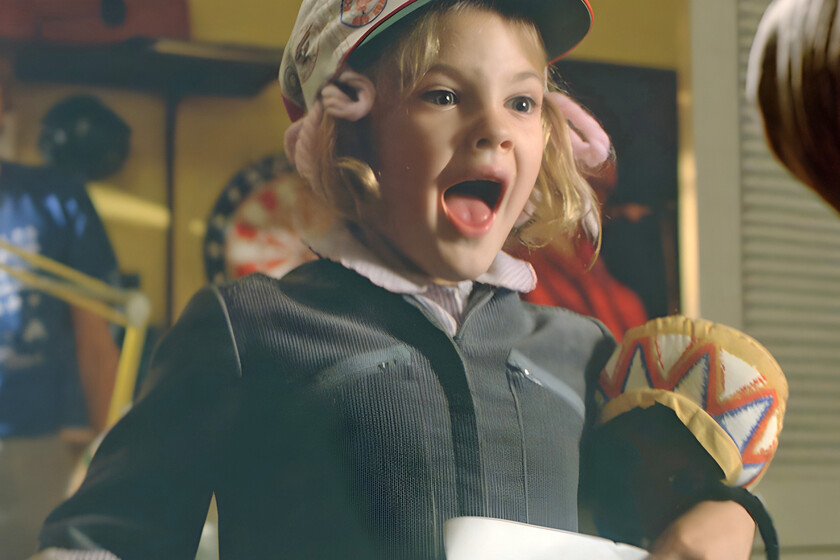
The film was shot largely in chronological order, a rarity in Hollywood production. Spielberg chose this method to allow the young actors, including a seven-year-old Drew Barrymore and Henry Thomas, to develop genuine emotional responses as the story progressed. This decision is frequently cited by film historians as the reason for the raw, authentic performances that continue to move audiences today.
A Chronology of Success: From 1982 to the Streaming Era
The trajectory of E.T. The Extra-Terrestrial is marked by consistent record-breaking achievements. Its premiere at the closing gala of the 1982 Cannes Film Festival received a standing ovation that lasted nearly ten minutes, signaling the global impact it would soon achieve.
- June 11, 1982: The film is released in the United States. It opened at number one and remained in that position for six consecutive weeks.
- January 1983: E.T. officially surpasses Star Wars (1977) to become the highest-grossing film of all time, a record it held for eleven years until Spielberg’s own Jurassic Park claimed the title in 1993.
- 1983 Academy Awards: The film received nine nominations, winning four Oscars for Best Original Score (John Williams), Best Sound, Best Sound Effects Editing, and Best Visual Effects.
- 2002 Re-release: For its 20th anniversary, a digitally altered version was released in theaters, though Spielberg later expressed regret over certain changes (such as replacing federal agents’ guns with walkie-talkies), leading him to insist that only the original version be preserved for future generations.
- 2024 Streaming Performance: Its debut on HBO Max has seen the film climb to the number four spot in Mexico’s daily movie rankings within 72 hours of its addition to the library.
Statistical Analysis and Critical Standing
The enduring popularity of E.T. is supported by nearly unparalleled critical data. On the review aggregator Rotten Tomatoes, the film maintains a 99% approval rating based on 143 reviews. Critics from the era, such as Roger Ebert, awarded it a rare four-star rating, calling it "a movie that brushes away our cautions and wins our hearts."

Financially, the film’s performance remains a case study in "legs"—the industry term for a film that maintains steady box office returns over a long period. In its initial theatrical run, E.T. earned $359 million in North America and $304 million internationally. When adjusted for inflation, its total lifetime gross of over $792 million places it among the top ten highest-grossing films in history.
According to data from Box Office Mojo and various streaming analytics firms, the film’s current success on HBO Max is driven by two distinct demographics: Gen X and Millennial parents engaging in "nostalgia viewing," and Gen Z audiences who are discovering the film through its influence on modern pop culture staples like Stranger Things.
Cultural Impact and Modern Influence
The legacy of E.T. extends far beyond the box office. It defined the "Amblin aesthetic"—a style characterized by suburban settings, a sense of wonder, and the perspective of children facing extraordinary circumstances. This aesthetic has become the blueprint for much of modern prestige television and cinema.
The Duffer Brothers, creators of the Netflix hit Stranger Things, have frequently cited E.T. as their primary influence. From the use of bicycles as symbols of childhood freedom to the depiction of shadowy government agencies, the DNA of Spielberg’s 1982 masterpiece is visible in the most popular media of the 2020s. Furthermore, the film’s score by John Williams is considered one of the most significant in cinematic history. The "Flying Theme" is used in music conservatories worldwide as a premier example of how leitmotifs can drive a narrative’s emotional arc.
Industry analysts suggest that the film’s return to the charts is also a reaction to the current saturation of "dark" or "gritty" science fiction. E.T. offers a counter-narrative of hope and radical empathy. "In an era of complex cinematic universes and cynical reboots, E.T. provides a singular, complete emotional experience," says film historian Marcus Thorne. "It reminds viewers that science fiction can be about connection rather than just conflict."
Broader Implications for the Streaming Market
The success of E.T. on HBO Max provides critical insights into the "Streaming Wars." As platforms like Netflix, Disney+, and Amazon Prime Video spend billions on original content, the high performance of "Gold Standard" library titles suggests that classic films are undervalued assets.
For Warner Bros. Discovery (the parent company of HBO Max), the inclusion of the Universal Pictures-produced E.T. (via licensing agreements) serves as a powerful retention tool. Data indicates that subscribers who watch "evergreen" classics are less likely to cancel their subscriptions than those who only sign up for a single new series. This has led to a strategic shift where platforms are competing more aggressively for the streaming rights to the Spielberg, Lucas, and Coppola catalogs.
Furthermore, the film’s success in the Mexican market highlights the universal nature of its themes. The story of a child seeking a friend and a lost soul seeking home transcends linguistic and cultural barriers, making it a reliable performer for global platforms.

Conclusion
The return of E.T. The Extra-Terrestrial to the cultural forefront via HBO Max is more than a fleeting moment of nostalgia; it is a testament to the film’s structural perfection and emotional honesty. As it continues to occupy a space in the Top 10 alongside modern blockbusters, it reaffirms Steven Spielberg’s status as the architect of the modern blockbuster. For the younger generation viewing it for the first time, it offers a lesson in the power of practical filmmaking and storytelling. For the industry, it serves as a reminder that while technology in cinema will always evolve, the human desire for stories about friendship, courage, and the "magic" of the unknown remains constant. E.T. has once again proven that it does not just belong to the year 1982, but to the history of art itself.



 Eva Lovia
 Julia Chirkova
 Julia Prastini
 Jia Lissa
 admin
admin