
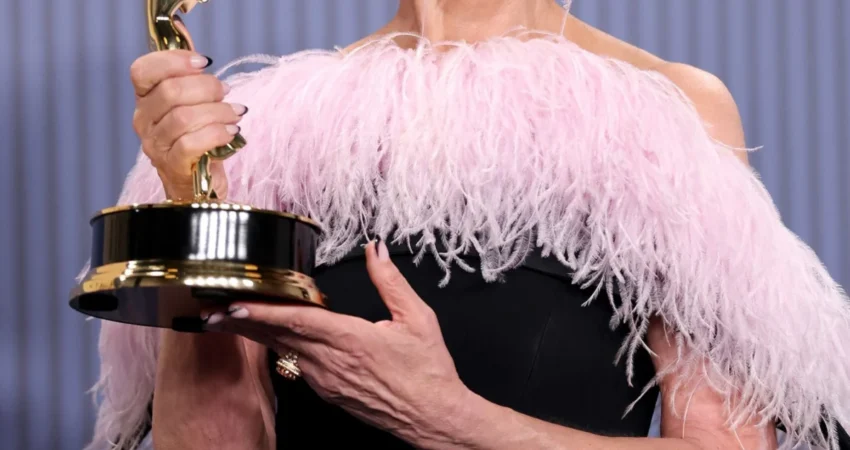
The 78th Primetime Emmy Awards have officially concluded, marking a historic night for the television industry as the Academy of Television Arts & Sciences recognized the most outstanding achievements of the 2025-2026 season. Held at the iconic Peacock Theatre in downtown Los Angeles, the ceremony was anchored by the commanding presence of Mariska Hargitay, whose decades-long legacy in television provided a bridge between the medium’s storied past and its rapidly evolving future. The evening was defined by a fierce competitive landscape, with the freshman medical drama The Pitt entering the night with a staggering 25 nominations, followed closely by the critically acclaimed comedy Hacks, which secured 24 nods. As the golden statuettes were distributed, the results reflected a broader shift in the industry, highlighting a renewed interest in high-stakes procedural storytelling and the enduring power of sophisticated character-driven comedy.
A Night of Historic Milestones and Cultural Impact
The 2026 Emmy ceremony arrived at a pivotal moment for the entertainment landscape. After several years of volatility regarding production schedules and distribution models, the current television season demonstrated a robust return to form. The Peacock Theatre, a staple venue for the awards, was filled with a mix of veteran legends and a new generation of digital-native creators. Mariska Hargitay, in her opening monologue, emphasized the resilience of the medium, noting that while the platforms for consumption continue to shift, the fundamental human desire for shared narrative remains constant.
The central narrative of the night was the rivalry between big-budget dramatic spectacles and intimate, witty comedies. The Pitt, which many critics have hailed as a spiritual successor to the high-intensity medical dramas of the 1990s, proved that traditional formats, when infused with modern production values and complex ethics, still resonate deeply with both audiences and Academy voters. Conversely, Hacks continued to solidify its place in the pantheon of great American sitcoms, using its fourth season to explore the darker, more poignant side of fame and mentorship.
Chronology of the 78th Primetime Emmy Awards
The evening’s proceedings followed a meticulously planned timeline, beginning with the traditional red-carpet arrivals at 4:00 PM PT, where the intersection of fashion and technology was on full display. The ceremony officially commenced at 5:00 PM PT with a cinematic montage celebrating the year in television, underscored by a live orchestral performance.
The first hour of the broadcast was dominated by the comedy categories. The Academy moved quickly through the supporting roles, where established favorites faced off against breakout stars from independent streaming platforms. By 6:30 PM PT, the focus shifted toward the Limited Series and Anthology categories, a segment of the industry that has seen exponential growth in budget and star power over the last three years.
The final ninety minutes of the broadcast were dedicated to the "Heavyweight" categories: Lead Actors and Actresses in Drama and Comedy, and the culminating prizes for Outstanding Comedy Series and Outstanding Drama Series. The ceremony concluded at approximately 8:15 PM PT, followed by the Governors Gala, where winners and nominees gathered to celebrate the year’s collective achievements.
Detailed Breakdown of Major Winners and Supporting Data
The distribution of awards this year was notably diverse, with no single network or streaming service achieving a total sweep. This fragmentation suggests a healthy, competitive ecosystem where quality content is being produced across a wide array of outlets.
Drama Categories: The Dominance of The Pitt
In the Drama categories, The Pitt translated its 25 nominations into several key victories. The series, which focuses on the grueling realities of a modern urban hospital, won for its writing and technical direction earlier in the week at the Creative Arts Emmys, but the Primetime ceremony saw it take home the "Big Three" in the drama field.
- Outstanding Drama Series: The Pitt (Max)
- Lead Actress in a Drama Series: Sarah Snook (for her return to television in The Last Frontier)
- Lead Actor in a Drama Series: Noah Wyle (The Pitt)
- Supporting Actress in a Drama Series: Jasmine Batchelor (The Pitt)
- Supporting Actor in a Drama Series: Ebon Moss-Bachrach (for his dramatic turn in The Night Shift)
- Guest Actress in a Drama Series: Meryl Streep (for her recurring arc in The Pitt)
- Guest Actor in a Drama Series: Giancarlo Esposito (The Diplomat)
The victory for Noah Wyle marked a significant "full circle" moment in television history, as the actor returned to the medical drama genre decades after his breakout role in ER. Data provided by the Academy indicated that The Pitt held the highest "voter engagement score" in the drama category since 2022, driven by its topical scripts and ensemble chemistry.
Comedy Categories: The Legacy of Hacks
The comedy field was characterized by a battle between the biting satire of Hacks and the whimsical, heartfelt humor of newer entries. Ultimately, the Academy chose to honor the consistent excellence of veteran performers while making room for new voices.
- Outstanding Comedy Series: Hacks (Max)
- Lead Actress in a Comedy Series: Jean Smart (Hacks)
- Lead Actor in a Comedy Series: Jeremy Swift (The New Normal)
- Supporting Actress in a Comedy Series: Hannah Einbinder (Hacks)
- Supporting Actor in a Comedy Series: Bowen Yang (Saturday Night Live)
- Guest Actress in a Comedy Series: Maya Rudolph (Loot)
- Guest Actor in a Comedy Series: Nathan Lane (Only Murders in the Building)
Jean Smart’s win for Lead Actress marks her record-breaking fourth win for this specific role, a feat rarely seen in the history of the Primetime Emmys. Industry analysts suggest that the longevity of Hacks is due to its ability to reinvent its central dynamic each season, avoiding the "sitcom slump" that often plagues long-running comedies.
Limited Series, Anthology, and Television Movies
The Limited Series categories remained the most prestigious battleground for "prestige" talent. This year, the category was defined by historical biopics and psychological thrillers.
- Outstanding Limited or Anthology Series: The Great Fire
- Outstanding Television Movie: Red Skies at Night
- Lead Actress in a Limited Series/Movie: Cynthia Erivo (The Great Fire)
- Lead Actor in a Limited Series/Movie: Andrew Scott (The Talented Mr. Ripley: Part II)
- Supporting Actress in a Limited Series/Movie: Jennifer Coolidge (The Resort)
- Supporting Actor in a Limited Series/Movie: Stanley Tucci (The Great Fire)
Industry Data and Viewership Trends
Preliminary data from Nielsen and internal streaming metrics suggest that the 2026 Emmy Awards saw a 12% increase in global viewership compared to the previous year. This uptick is attributed to the "Hargitay Factor," as the host’s broad appeal across demographics drew in linear television viewers, while the heavy presence of streaming-exclusive content engaged younger, digitally focused audiences.
The 2026 nominations also reflected a more international scope. Approximately 18% of the nominated content featured significant international co-productions, the highest percentage in the Academy’s history. This data underscores the "de-bordering" of television, where high-quality narratives from South Korea, the UK, and Spain are competing on equal footing with domestic US productions.
Official Responses and Creative Reactions
Following the ceremony, the CEO of the Television Academy, Frank Scherma, issued a statement praising the breadth of this year’s winners. "Tonight’s winners represent the pinnacle of storytelling. From the frantic halls of a hospital in The Pitt to the comedic brilliance of Hacks, we are seeing a level of craft that was unimaginable a decade ago. We are proud to honor these artists who continue to push the boundaries of what the small screen can achieve."
In the press room, Noah Wyle expressed his gratitude for the medical drama genre, stating, "Coming back to this world felt like coming home, but the world has changed. The Pitt isn’t just about medicine; it’s about the systemic challenges we face. To be recognized by my peers for this specific project is incredibly moving."
Jean Smart, accepting her award, joked about her "permanent residence" on the Emmy stage but turned serious when discussing the future of comedy. "Comedy is getting harder to do well because the world is getting more complicated. But that just means we have to work harder to find the truth in the absurdity," Smart remarked during her acceptance speech.
Broader Impact and Implications for the 2026-2027 Season
The results of the 78th Primetime Emmy Awards are expected to have an immediate impact on network development cycles. The overwhelming success of The Pitt is likely to trigger a "procedural gold rush," with networks and streamers looking to greenlight sophisticated, high-stakes dramas that offer a blend of episodic and serialized storytelling.
Furthermore, the success of Hacks confirms that there is still a massive appetite for "traditional" high-quality sitcoms that prioritize sharp writing over high-concept gimmicks. For the streaming services, the night was a validation of their pivot toward "quality over quantity." After years of flooded content libraries, the 2026 Emmys rewarded platforms that focused on a smaller number of high-impact, critically acclaimed series.
As the industry looks toward the 2026-2027 season, the 78th Emmys have set a high bar for excellence. The integration of veteran stars like Hargitay and Wyle with cutting-edge production techniques suggests that television is entering a "Platinum Age"—one defined not just by the volume of content, but by its cultural resonance and artistic maturity. The night ended not just with a celebration of winners, but with a clear message: television remains the dominant force in global storytelling, capable of evolving, surprising, and reflecting the complexities of the modern world.

0 Comments