
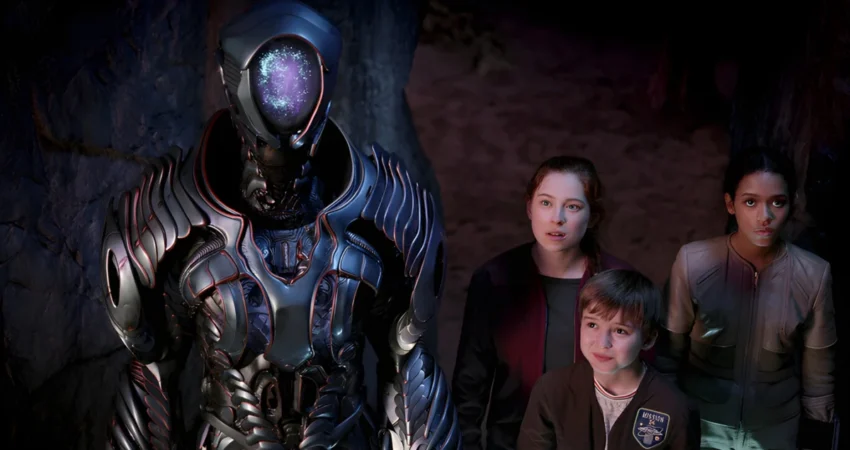
The landscape of modern television has been significantly shaped by the strategic revival of classic intellectual properties, a trend exemplified by the 2018 reimagining of Lost in Space. Originally conceived by Irwin Allen in 1965 as a space-age interpretation of The Swiss Family Robinson, the franchise underwent a high-budget transformation under the stewardship of Netflix and Legendary Television. This reboot, which spanned three seasons and 28 episodes between 2018 and 2021, represents a pivotal moment in streaming history, where visual effects parity with feature films became a standard requirement for prestige science fiction. Despite the saturated market of intergalactic narratives, Lost in Space managed to carve out a distinct identity by prioritizing familial dynamics and scientific problem-solving over traditional space-opera militarism.
The Historical Trajectory and Development Context
The journey of Lost in Space from a 1960s camp classic to a sophisticated 21st-century drama involved several decades of development attempts. Following the conclusion of the original series in 1968, the franchise remained largely dormant until a 1998 feature film, which, despite a significant budget, failed to ignite a long-term cinematic series. In the early 2000s, a pilot for a new series directed by John Woo was produced for The WB but was ultimately not picked up for a full season. It was not until 2014 that Legendary Television announced it was developing a new reboot with screenwriters Matt Sazama and Burk Sharpless.
Netflix officially ordered the series in 2016, positioning it as a cornerstone of its original programming lineup. The production was led by showrunner Zack Estrin, who aimed to maintain the "sense of wonder" of the original while grounding the physics and character motivations in a more contemporary reality. The narrative premise was updated to reflect a near-future Earth (the year 2046) facing environmental collapse following a celestial event known as the "Christmas Star." This catalyst necessitated the colonization of Alpha Centauri, setting the stage for the Robinson family’s mission aboard the Resolute.
Narrative Framework and Character Archetypes
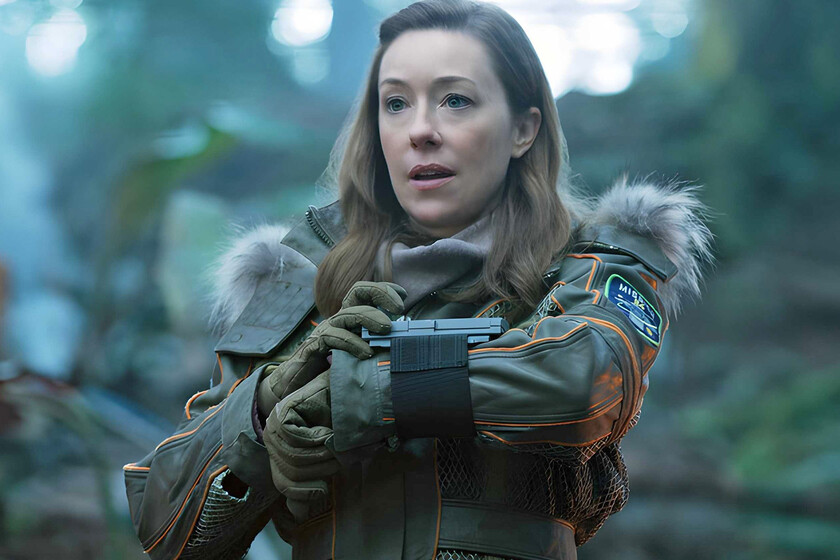
The 2018 iteration of Lost in Space centers on the Robinson family, whose selection for the 24th colonization mission is predicated on their diverse expertise. Unlike the original series, where the characters were often one-dimensional symbols of mid-century domesticity, the reboot introduces a complex family unit with internal frictions. John Robinson (Toby Stephens) is a former Navy SEAL whose military deployments created a rift with his children, while Maureen Robinson (Molly Parker) is an aerospace engineer and the primary strategist for the family’s survival.
The children—Judy, Penny, and Will—are similarly modernized. Judy Robinson (Taylor Russell) is a 18-year-old medical doctor whose competence often exceeds that of the adults around her. Penny Robinson (Mina Sundwall) serves as the narrative’s emotional anchor and chronicler, providing a more relatable, human perspective on the alien environments. Will Robinson (Maxwell Jenkins), the youngest, becomes the focal point of the series through his bond with an alien artificial intelligence, simply referred to as "The Robot." This relationship serves as the emotional core of the show, shifting the Robot from a subservient machine to a sentient being capable of moral growth.
Complementing the family are the series’ primary antagonists and supporting figures. Don West (Ignacio Serricchio) is reimagined as a blue-collar smuggler with a cynical worldview that eventually softens through his association with the Robinsons. Most notably, the character of Dr. Smith was gender-swapped and portrayed by Parker Posey. This version of Smith—actually a criminal named June Harris who stole her sister’s identity—provided a more psychological and manipulative threat than the comedic villainy of the 1960s.
Technical Execution and Visual Innovation
One of the most significant contributions of Lost in Space to the streaming medium is its technical ambition. The series was nominated for several Primetime Emmy Awards, specifically in the category of Outstanding Special Visual Effects, for every season of its run. The production utilized a combination of expansive practical sets and cutting-edge CGI provided by studios such as Image Engine, Cinesite, and Digital Domain.

The design of the Robot was a particular point of critical acclaim. Moving away from the "bubbly" aesthetic of the 1960s, the new Robot was designed to appear truly extraterrestrial, with a shifting, multi-limbed physiology and a face composed of a dynamic LED nebula. This design allowed the Robot to convey emotion through color and movement without the need for traditional facial expressions.
Filming locations also played a crucial role in the show’s visual fidelity. Much of the first season was filmed in British Columbia, Canada, utilizing the rugged terrain of the Squamish and Vancouver areas to represent the inhospitable alien planet. The use of natural light and real-world environments helped ground the high-concept science fiction elements, creating a visual language that felt tangible and lived-in.
Performance Metrics and Critical Reception
Upon its debut on April 13, 2018, Lost in Space garnered significant viewership numbers. According to Nielsen ratings at the time, the series attracted approximately 6.3 million viewers in the United States within the first three days of its release. This strong start was bolstered by a critical reception that praised the show’s production values and family-centric storytelling.
The series maintains a cumulative 84% approval rating on Rotten Tomatoes. Critics noted that while the show occasionally leaned into the tropes of the "survival drama," it excelled in its pacing and the chemistry of its ensemble cast. The second and third seasons saw an increase in critical favor, as the narrative expanded to include a larger fleet of survivors and deeper lore regarding the alien civilization that created the robots.
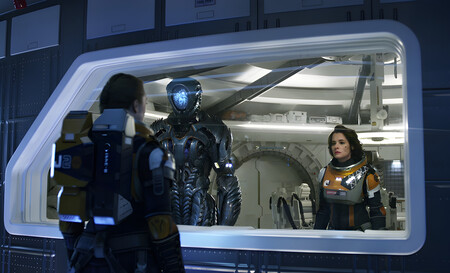
The series also received praise for its scientific literacy. While some liberties were taken for the sake of drama, the show frequently employed consultants to ensure that the challenges faced by the Robinsons—ranging from atmospheric chemistry to orbital mechanics—were rooted in theoretical science. This "harder" approach to sci-fi helped distinguish the series from more fantastical entries in the genre.
The Strategic Conclusion of the Series
In an era where many streaming series face abrupt cancellation, Lost in Space was notable for concluding on its own terms. In March 2020, Netflix renewed the series for a third and final season, allowing the writers to craft a definitive ending for the Robinson family. Showrunner Zack Estrin stated that he had always envisioned the series as a "three-part epic family adventure with a clear beginning, middle, and end."
The final season, released in December 2021, focused on the culmination of the conflict between the human colonists and the robotic legion. The narrative resolution emphasized the theme of cooperation over conquest, a message that resonated with the show’s primary demographic of families and science fiction enthusiasts. By providing a satisfying conclusion, the series ensured its longevity as a "marathon-able" library title for the Netflix platform.
Broader Impact and Genre Implications
The success of Lost in Space signaled a shift in how streaming platforms approach "all-ages" science fiction. It proved that there was a substantial audience for high-budget, sophisticated storytelling that avoided the grimdark cynicism prevalent in many contemporary dramas. The series’ influence can be seen in subsequent productions that attempt to balance spectacle with character-driven narratives.

Furthermore, the series demonstrated the viability of the "reboot" model when handled with creative reverence. By maintaining the core elements of the 1960s original—the family unit, the robot, and the theme of exploration—while updating the tone and production scale, Netflix managed to appeal to both nostalgic older viewers and a new generation of fans.
In the broader context of the "Streaming Wars," Lost in Space remains a benchmark for production quality. Its ability to compete visually with theatrical releases from franchises like Star Wars or Star Trek, while operating on a television schedule, showcased the maturing capabilities of digital production pipelines. As the industry continues to evolve, the series stands as a testament to the enduring power of the Robinson family’s journey and the timeless appeal of the "lost at sea" narrative, transposed to the final frontier.
Ultimately, the legacy of the 2018 Lost in Space is defined by its balance. It balanced the legacy of the past with the technology of the future, and it balanced the cold vacuum of space with the warmth of a family’s resolve. For the streaming industry, it serves as a case study in successful brand revitalization and a reminder that even in the vastness of the cosmos, the most compelling stories are often those that bring us back home.

0 Comments