
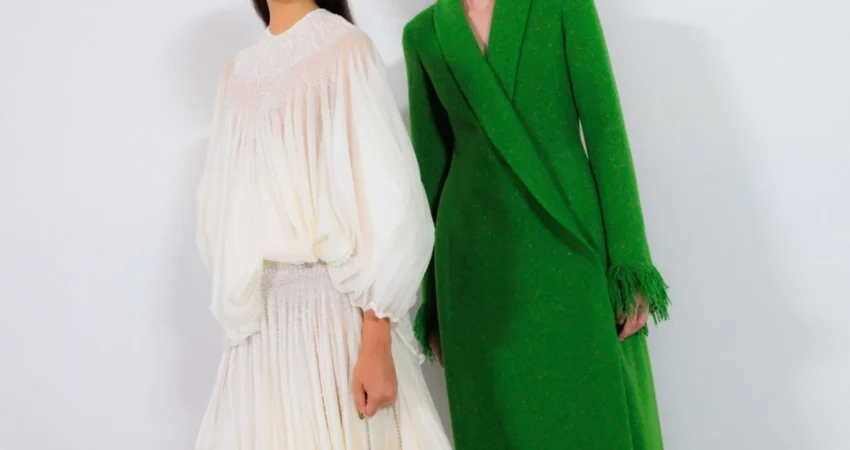
The transition into the Autumn-Winter 2026 season marks a pivotal moment in global fashion, where the psychological power of color is being leveraged to redefine the modern wardrobe. As the industry moves away from the fleeting aesthetics of summer, designers are embracing a palette that balances timeless neutrality with high-impact primary and secondary tones. This shift is not merely a change in visual preference but a strategic response to a global consumer base seeking both comfort and empowerment through their sartorial choices. According to data from industry leaders such as Pantone and trend-forecasting platforms like Pinterest, the upcoming season will be defined by a move toward "emotional dressing," where the choice of a saturated red or a muted steel gray serves as a projection of personal identity and professional intent.

The Strategic Role of Color in the 2026 Ready-to-Wear Market
The development of the Autumn-Winter 2026 collections began nearly two years ago, following a rigorous cycle of textile innovation and consumer behavior analysis. Industry analysts note that the color selection for this season reflects a "stabilizing" trend in the global market. After several years of experimental neon shades and the "dopamine dressing" craze, the 2026 landscape is returning to grounded, sophisticated hues that offer longevity. The economic implications are significant; by focusing on versatile colors like burgundy, olive, and chocolate brown, luxury houses are encouraging "investment dressing," where consumers purchase high-quality pieces intended to last for multiple seasons rather than a single trend cycle.

This season’s color story is anchored by the triumph of earthy bases, with brown emerging as the fundamental tone for the autumnal aesthetic. However, the true innovation lies in the "surprising illuminates"—shades like mint blue, fuchsia, and optimal white—that are designed to provide visual relief during the overcast days of the colder months.

The Neutral Powerhouse: Optimal White, Steel Gray, and the Grounding of Brown
While neutrals are often dismissed as "safe," the Autumn-Winter 2026 collections reimagine them as statements of extreme minimalism and corporate power.

Optimal White and Cloud Dancer
As dictated by Pantone, "Cloud Dancer" or optimal white has transitioned from a summer staple to a year-round essential. This tone represents purity, elegance, and a rejection of the "winter gloom." In Paris, Chanel integrated this shade into its iconic tweed suits and structured dresses, while in Milan, Moschino applied it to everyday staples like denim and basic tees. Dior utilized optimal white in suntuous pleated gowns, demonstrating the color’s ability to hold complex architectural shapes. Gucci and Tom Ford further solidified the trend by presenting pristine white sartorial sets, signaling a new era of "executive fashion" that prioritizes impeccable cleanliness and sharp lines.

The Versatility of Gray
Gray has evolved into the ultimate "style wildcard" for 2026. Moving beyond its association with dullness, the season showcases a spectrum ranging from "mouse gray" to "steel gray." Louis Vuitton led this movement with high-performance puffer jackets, while Prada and Bottega Veneta focused on heavy, elegant coats with exaggerated shoulders. The psychological impact of gray in the workplace cannot be overstated; it projects sobriety and sophistication. Retail data suggests that gray footwear, particularly the heel designs seen at Tory Burch, is expected to outperform traditional black options in the luxury segment this year.

Brown as the New Anchor
Brown is the definitive tone of the season. It encapsulates the "quiet luxury" aesthetic that has dominated the mid-2020s. Saint Laurent showcased the depth of this color through faux-mink and "Teddy" textures, while Ralph Lauren and Balenciaga utilized brown in both knitwear for daily use and glamorous evening dresses. The shift toward brown reflects a consumer desire for "organic" and "grounded" aesthetics, harmonizing with the natural environment of the season.

The Emotional Resonance of the Primary Palette: Saturated Red, Cobalt Blue, and Canary Yellow
Primary colors are the "protagonists" of the 2026 season, used by designers to evoke specific emotional responses and ensure visibility in an increasingly crowded fashion landscape.

The Power of Red
Red remains the most assertive color in the designer’s arsenal. From "Valentino Red" to "Cherry" and "Scarlet," the shade is being used to replace black as the go-to for evening empowerment. Carolina Herrera presented solid reds that complement a wide range of skin tones, appearing in high-neck blouses and structured skirts. Chloé, conversely, used red as a base for bohemian aesthetics, proving the color’s versatility. Market research indicates that red accessories—specifically handbags and footwear—see a 15% uptick in consumer interest during the transition to winter, as they provide an easy entry point for those intimidated by full-color looks.

Blue: Confidence and Chic Fun
The blue of 2026 is enthusiastic and diverse. We are seeing a range from "Mint Blue" to "Electric Cobalt," the latter almost bordering on purple. Diesel and Willy Chavarria have pushed the boundaries of blue in streetwear, using it in oversized sweaters and voluminous trousers. Bottega Veneta and Valentino have integrated blue into accessories, using the color to break up monochromatic outfits. Blue is strategically positioned as the "approachable" primary color, offering a sense of calm and confidence.

Yellow and the Radiance of Energy
Even in the coldest months, yellow will be unavoidable. Ranging from "Butter Yellow" to "Canary" and "Camel," this color projects energy and abundance. Jacquemus showcased yellow in full monochromatic looks, while Dior utilized it in delicate pleated dresses. The inclusion of yellow in Autumn-Winter collections is a tactical move to maintain consumer engagement during the retail "slump" of late January and February.

Sophistication Through Secondary Shades: Burgundy, Green, and Terracotta
Secondary colors are providing the "nuance" for the 2026 season, offering an alternative to the primary brightness while maintaining a high level of style.

The Reign of Burgundy (Black Cherry)
Burgundy, often referred to as "Black Cherry" on platforms like Pinterest, is the season’s favorite for closing the year with high-fashion credentials. It has appeared in velvet evening gowns, festive feathered pieces, and retro-style heels. Brands like Miu Miu, Proenza Schouler, and Michael Kors have demonstrated the tone’s versatility, applying it to both high-glamour leather and cozy puffer jackets.

The Natural Appeal of Olive and Moss Green
Green continues to be a staple, specifically in "Bottle," "Moss," and "Olive" variations. These shades are particularly effective for "boho-chic" aesthetics, as seen in the Chloé collections. Simone Rocha surprised the industry with theatrical olive-green dresses, while Alaïa focused on elegant moss-green overcoats. Industry experts suggest that the avoidance of "acid" or "neon" greens in favor of these muted tones reflects a more mature, refined market.

Orange and the Terracotta Evolution
Orange is being hailed as the "new black" for AW26, but with a caveat: the focus is on "Terracotta," "Amber," and "Carrot" tones rather than bright citrus. Saint Laurent, Zimmermann, and Victoria Beckham have lead the charge, integrating these earthy oranges into silk dresses and tailored trousers. This shift aligns with the broader trend of "warmth" in the winter wardrobe.

The Return of Opulence: The Champagne Effect
To conclude the season’s narrative, "Champagne" has emerged as the premier tone for luxury and glamour. This color is being utilized by Schiaparelli in "bandage" style dresses and by Balenciaga in suntuous "naked dresses" destined for the red carpet. Miu Miu, Balmain, and Khaite have also brought champagne into the daytime sphere, using it in elegant blouses and voluminous skirts. The "Champagne Effect" represents a market demand for subtle opulence—luxury that doesn’t need to shout to be recognized.

Chronology and Industry Impact
The rollout of these color trends follows a strict global schedule. The initial concepts were presented during the "Fashion Month" cycle in February and March 2026 across New York, London, Milan, and Paris. By July 2026, textile manufacturers had shifted production to meet these specific dye requirements, with a notable 20% increase in the use of sustainable, low-impact pigments for the brown and green palettes.

As these collections hit retail floors in September 2026, the impact is expected to be felt across all market tiers. High-street retailers are already adapting their inventory to mirror the "monochromatic" and "two-block" styling seen on the runways. The move toward a more sophisticated, diverse, and emotionally resonant color palette suggests that Autumn-Winter 2026 will be remembered as a season of transition—one where fashion looked back at its classic roots while boldly painting a new, colorful future.

0 Comments